
Updated October 2026
The short version
Basement painting in Naperville, IL covers three different jobs: finished drywall rooms, open-joist ceilings sprayed one color, and bare poured-concrete foundation walls. Concrete only takes paint once it is dry, so we check for moisture first; a wall that turns damp every spring needs the water problem fixed before any coating goes on.
Three kinds of basement, three different paint jobs
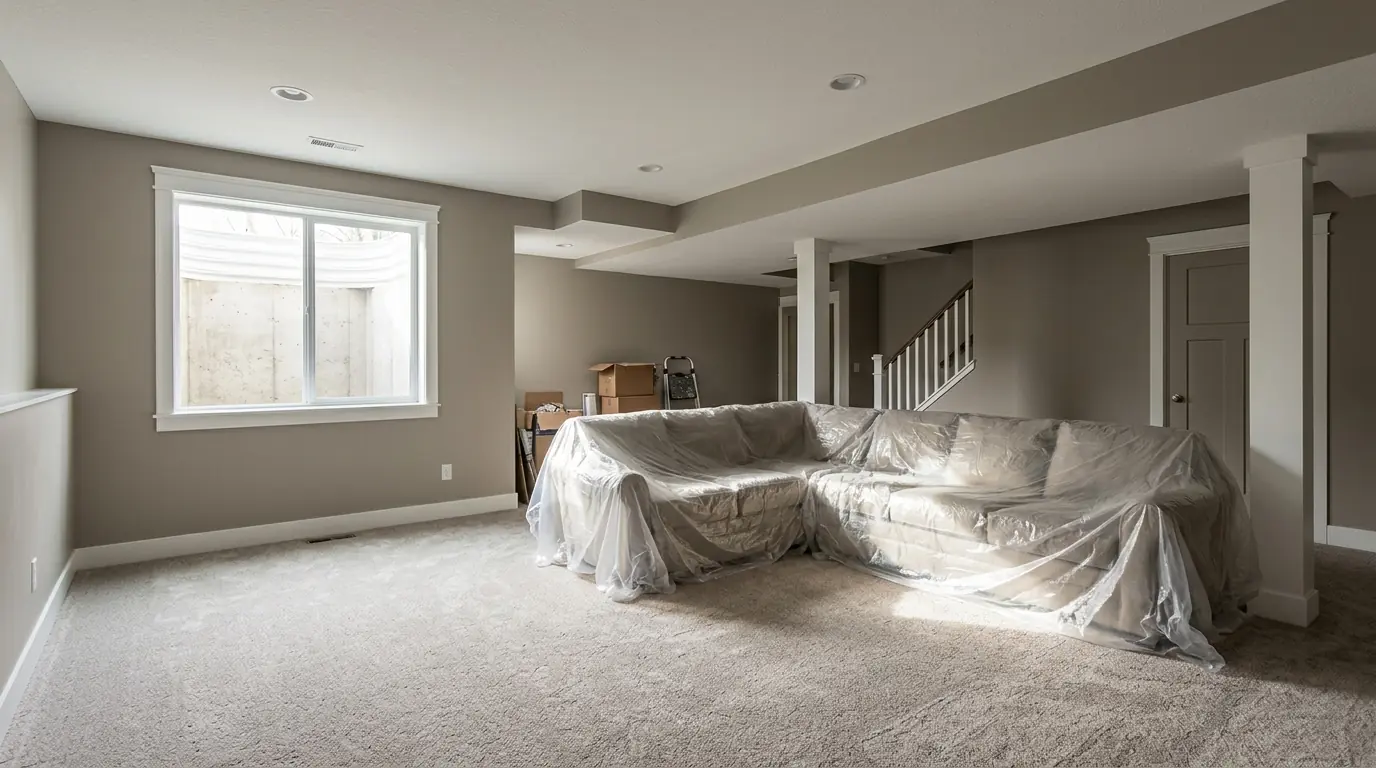
A finished basement paints like any other floor of the house, with one difference: less light, so colors read darker and patching shows less. An unfinished basement is a different trade. The ceiling is a maze of joists, ducts and wires, and the walls are bare poured concrete that can pass moisture from the soil behind it.
Before we quote concrete, we look for that moisture. White powder on the wall, peeling old paint or a damp smell all point to water moving through, and paint will not hold until it stops. A square of plastic taped to the wall for a day or two is a simple test we may ask you to run before the visit.
What moves the price of basement painting
Basements are priced by zone, because a sprayed ceiling, a finished bedroom and a bare wall are different work.
- Finished drywall area versus bare concrete
- An open ceiling to mask and spray, or none
- Moisture repairs or cleaning before concrete can be coated
- Clutter, shelving and stored items to move
- Low light, which means extra work lights for the crew
Published ranges, not our price. per square foot plus material, Naperville interiors: $1.40-$3.40 (source). These are area or national figures; we quote after we see the job.
Finished Basement Walls
Finished basements are usually family rooms, offices, guest rooms and a bathroom, built after the house and often in stages. We treat them like the rest of the interior: patch, spot-prime, two finish coats and enamel on the trim. Because basement light is low, we tend to suggest a color a step lighter than you would pick upstairs, and a scrubbable matte that hides the wall flaws raking light from small windows can show. Ceilings in finished rooms are usually flat white and get repainted at the same visit if they need it.
Exposed Joist Ceilings
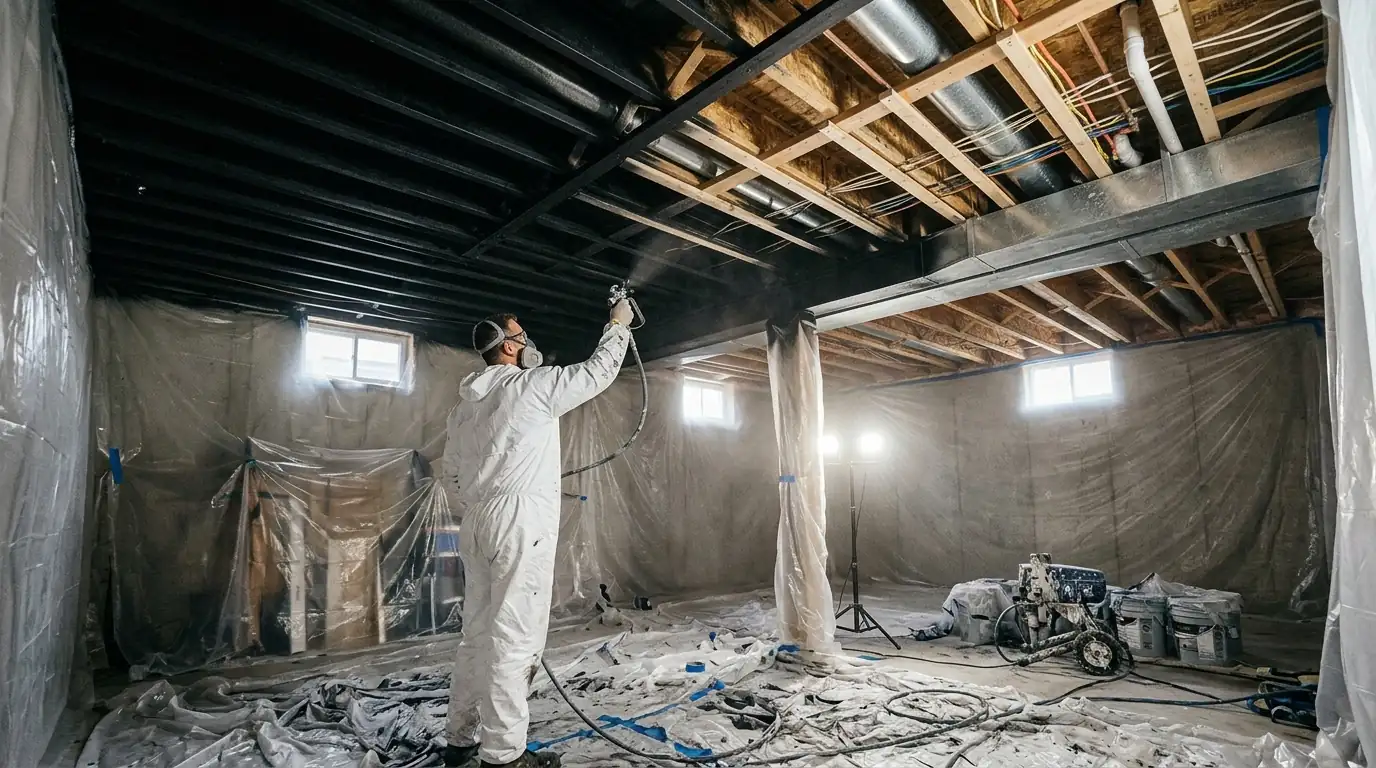
Spraying an open ceiling one color, usually black, charcoal or white, hides the ducts, pipes and wiring and makes an unfinished basement look intentional. Everything below gets masked, the room is cleared for the spray day, and the joists, subfloor, ducts and pipes all get coated in one pass. It is a fast way to turn a storage basement into a usable room without the cost of a drywall ceiling. Dark colors hide more; white makes a low basement feel taller but shows every wire and pipe.
Poured Concrete Foundation Walls
Bare foundation walls take a masonry primer and a paint made for concrete, but only after they pass a moisture check. White efflorescence gets scrubbed off, any old peeling paint is scraped back, and cracks that leak are a job for a waterproofing contractor before we start. Painted concrete brightens a laundry or workshop and makes the walls easier to keep clean, as long as the water stays on the outside. Floors are a separate coating job with their own prep, which we quote on its own page.
Basements in Naperville's 1980s and 1990s houses
On the District 203 side of Naperville about 71 percent of homes were built between 1970 and 1999, and a house from that era often has a basement finished in stages: builder drywall in one room, a newer office in another, a bare utility corner by the furnace. We walk each zone separately and price it that way, so you can do the finished rooms now and the concrete later.
How a basement job runs
- 1
Check for moisture
Concrete walls get a look for efflorescence, peeling and dampness.
- 2
Clear and mask
Stored items moved, floors and fixtures covered, ceilings masked for spraying.
- 3
Repair and prime
Drywall patched, concrete cleaned, masonry primer where needed.
- 4
Paint or spray
Ceiling first, then walls and trim.
- 5
Walk-through
We check every zone with you under work lights.
Signs a basement wall is not ready for paint
White powder on concrete
Efflorescence is salt left behind by water moving through the wall.
Paint peeling in sheets
Old paint lifting off concrete usually means moisture behind it.
A musty smell after rain
Damp air points to a wall or floor that needs attention first.
Dark patches at the base
Water wicking up from the floor joint will push paint off.
How long the basement is out of use
A finished room paints like an upstairs room: furniture moves to the middle and the space comes back as each room is done. An open ceiling is different, since everything underneath is masked and the room is cleared for the day it is sprayed, plus drying time before the plastic comes down. Concrete walls wait on the moisture check, so they are often scheduled as a second visit.