Updated October 2026
The short version
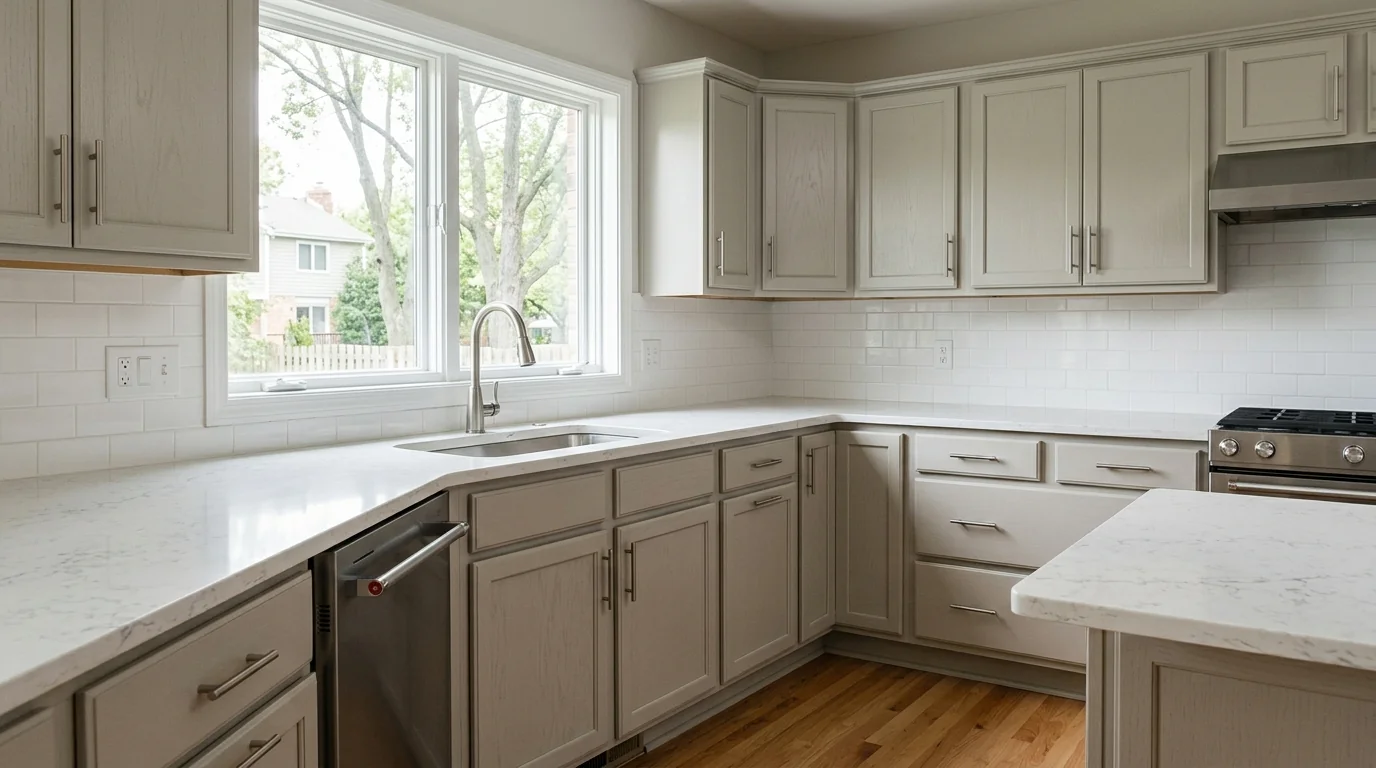
Kitchen cabinet painting in Naperville, IL usually means 1980s or 1990s oak cabinets getting a bonding primer and a hard enamel. Most of the work is prep: degreasing, deglossing and filling the grain where you want it smooth. Skipped prep is why painted cabinets chip.
Why prep decides whether painted cabinets last
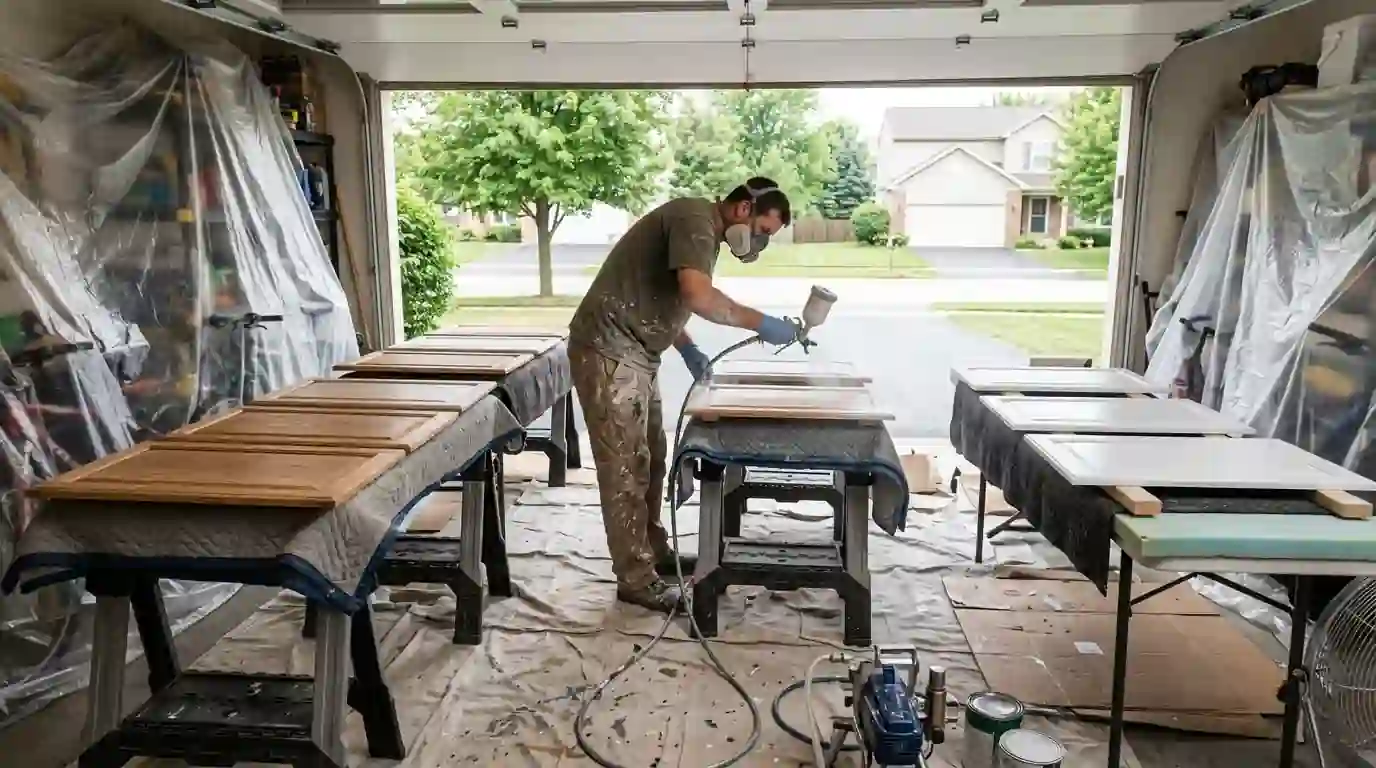
Cabinet faces near the stove carry a film of cooking grease, and builder cabinets left the factory under a hard clear coat. Paint grips neither. So every door, drawer front and frame is degreased, scuffed and coated with a bonding primer, then finished in two coats of a cabinet enamel such as Sherwin-Williams Emerald Urethane or Benjamin Moore Advance.
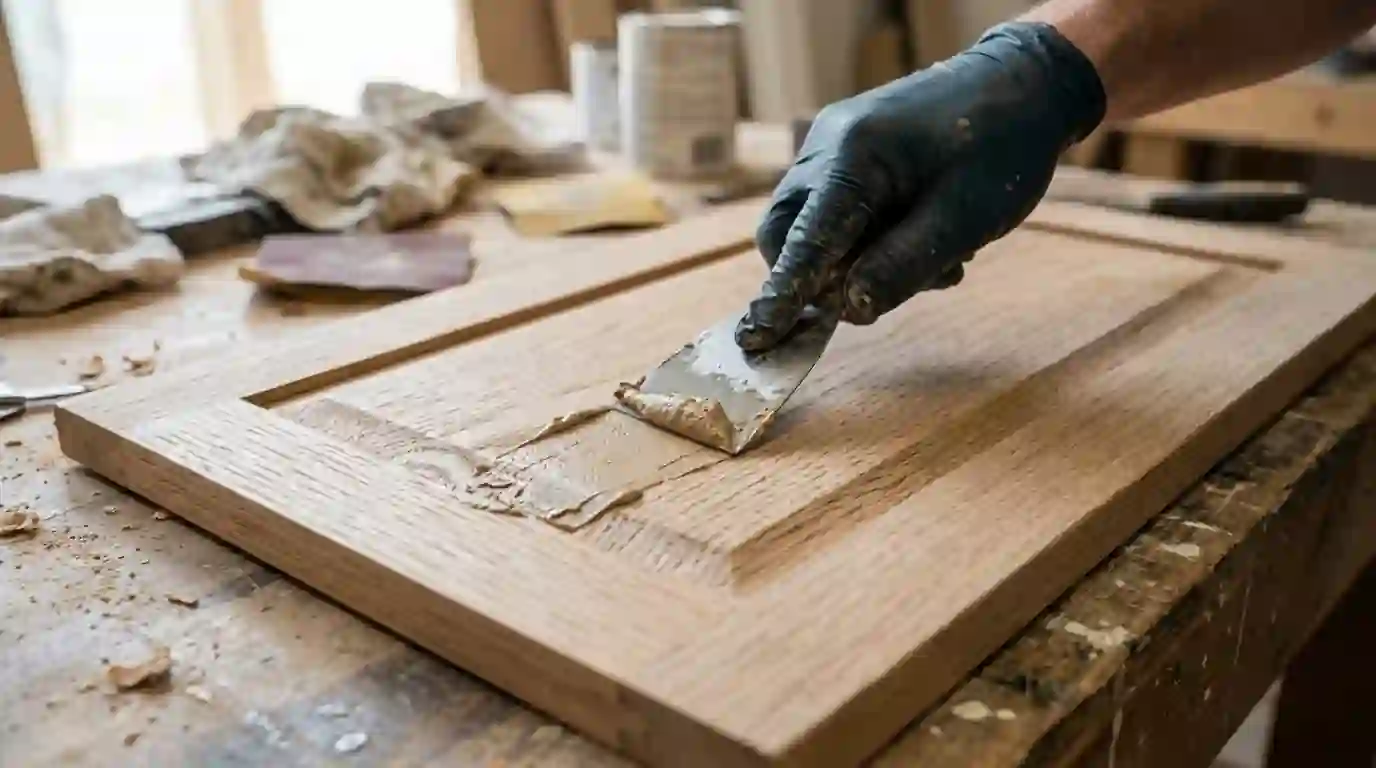
Oak adds one more decision. Its open grain shows through paint as a fine texture. Some people like that it still reads as wood; others want a smooth, sprayed look, which means filling the grain first.
Brushed in place or sprayed: two ways to finish cabinets
| Method | The finish | The trade-off |
|---|---|---|
| Brushed and rolled in place | Fine brush texture up close | Less disruption; doors stay on or come back the same day |
| Sprayed doors, brushed frames | Smoothest finish on the faces | Doors come off for longer and need a dust-free place to cure |
| Grain filled before primer | Flat, furniture-smooth oak | Extra labor on every door and drawer front |
What moves the price of painting cabinets
Cabinet jobs are priced on the pieces and the prep, not kitchen size.
- The count of doors, drawer fronts and end panels
- Whether the oak grain is filled or left showing
- Painting cabinet interiors and shelves, or only the outsides
- Repairs to chipped edges, swollen sink bases or loose face frames
- New hardware that needs fresh holes drilled and old ones filled
- A second color for an island or uppers
Oak Cabinets to Painted
This is most of our cabinet work. Doors and drawers come off and get labeled by position, the boxes and frames are cleaned and scuffed in place, and everything gets a bonding primer. Oak's grain either stays visible or is filled, your call at the estimate. The finish coat is a cabinet enamel rather than wall paint, because wall paint stays soft for weeks and sticks wherever a door closes against a frame. The result looks like a new kitchen, with the same sound boxes underneath.
Two-Tone Islands
A dark island with lighter perimeter cabinets is the color plan we are asked for most. It is the same prep and primer, with two finish colors on the order and careful masking where an island panel meets a light end panel or the floor. If you are unsure about the darker color, we paint one sample door first so you can see it next to your counters and floor in your own light. Navy, deep green and charcoal are the usual island picks.
New Hardware and Hinge Holes
Changing knobs to pulls, or pulls to a different length, leaves old holes behind. We fill and sand them before primer so they disappear under the enamel, then drill for the new hardware with a jig so every pull lines up from door to door. Hinges are cleaned or replaced to match, and every door is adjusted after rehanging so the gaps run even and nothing rubs. Bring the new hardware to the estimate if you have it, since pull spacing decides where the holes go.
Cabinet Interiors and Shelves
Painting the inside of cabinets is optional and priced separately, since it roughly doubles the surface on each box. Most people paint the interiors of glass-front doors and open shelving, where they show, and leave closed boxes in their original finish. Shelves get a hard enamel so dishes and cans do not stick to fresh paint, and we let them cure before anything goes back. If you plan to paint interiors someday, doing it now with the doors already off saves a second round of setup.
Builder oak in Naperville kitchens
Naperville's housing boom ran through the 1980s and 1990s, when roughly two-thirds of the homes counted at the 2000 census went up, and plenty of those kitchens still have their original oak boxes. The boxes are usually sound, which is the whole point of painting them. The clear coat is often worn thin around the sink base and the handles, so those spots get the most sanding before primer.
How a cabinet job runs
- 1
Count and label
Every door and drawer gets a number so it goes back where it came from.
- 2
Clean and scuff
Degreaser first, then a scuff sand so primer can bite.
- 3
Prime and fill
Bonding primer everywhere, grain filler where you chose smooth.
- 4
Two coats of enamel
Light sanding between coats for an even finish.
- 5
Rehang and adjust
Hardware on, hinges set, gaps checked door by door.
Painting cabinets yourself: where it usually goes wrong
Reasonable as a DIY project
- A single bathroom vanity
- A color you can live with brush marks in
- Doors you can lay flat to dry for days
Where pros earn their fee
- Grease left on the faces, so the paint peels
- Wall paint instead of cabinet enamel, so doors stick
- Spraying, masking and hinge adjustment on 30 or more pieces