Updated October 2026
The short version
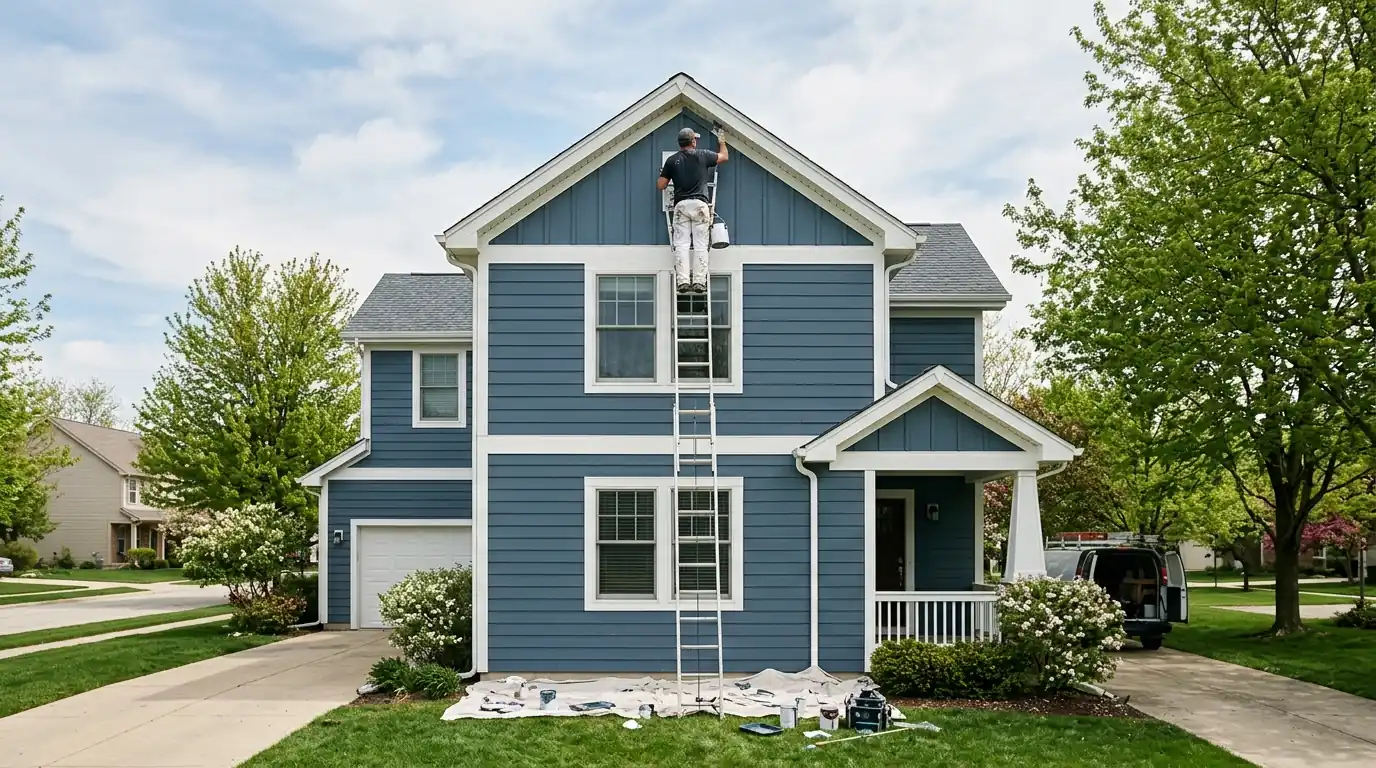
Exterior house painting in Naperville, IL runs from late April into October, between the area's average last and first freezes. A full repaint covers washing, scraping loose paint, priming bare wood, caulking open joints and two coats on the body, trim and doors. Most of the price, and most of the result, comes from that prep.
What a full exterior repaint involves
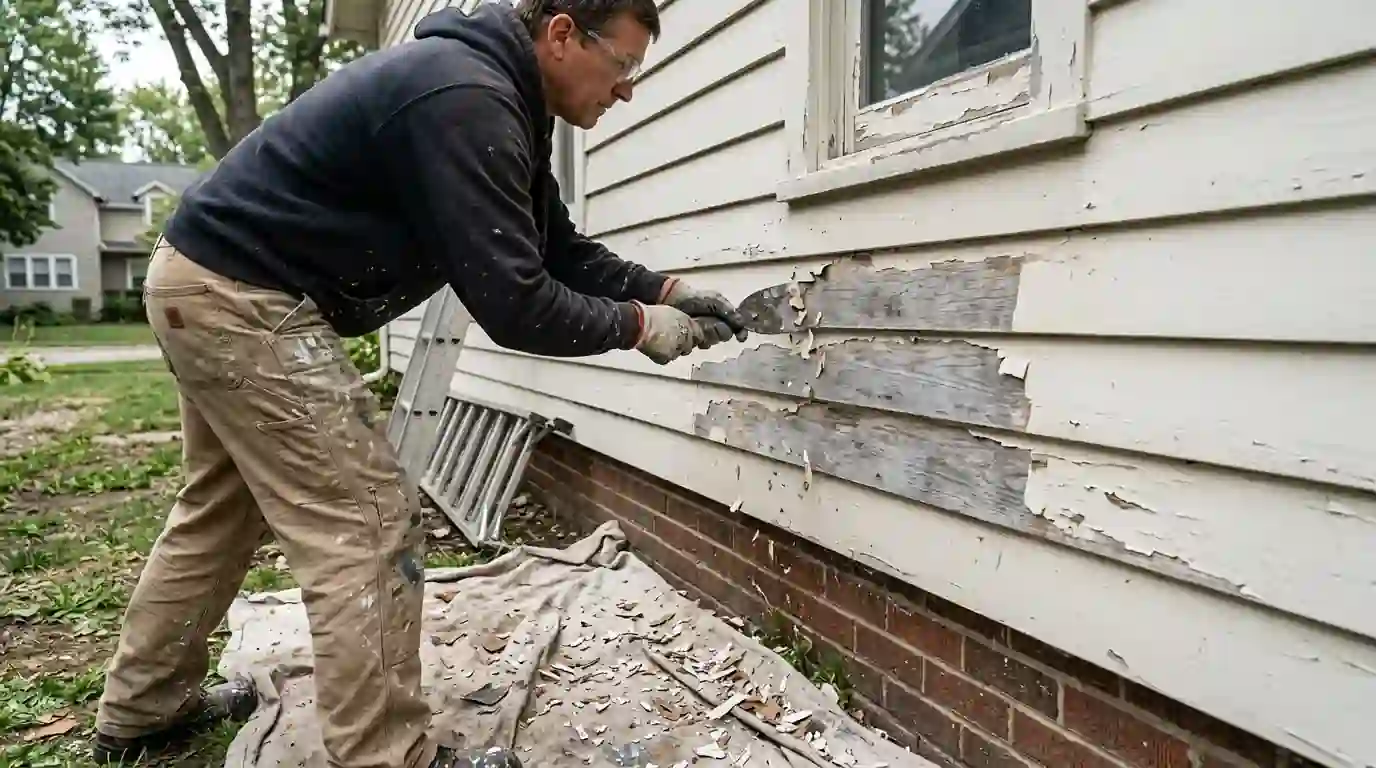
Paint on the outside of a house fails from the edges in: at joints, on window sills, at the bottom of siding near the grass, and anywhere water sits. So a repaint starts with finding and fixing those spots. Every wall is washed, loose paint is scraped to a sound edge, soft wood is replaced, bare wood is primed and open joints are caulked before any finish coat goes on.
The finish is two coats of a quality exterior acrylic, chosen for the siding and the sun it gets. Lines such as Sherwin-Williams Duration or Benjamin Moore Aura cost more per gallon than contractor-grade paint and hold color longer on south and west walls, which is where an exterior shows its age first.
Full repaint, partial repaint or touch-ups
| Scope | When it fits | The trade-off |
|---|---|---|
| Full repaint | Paint failing on several sides, or a color change | The biggest job; resets every surface at once |
| Partial repaint | South and west walls faded, the rest sound | Faded walls repainted corner to corner to avoid patchy color |
| Trim and touch-ups | Siding fine, trim and doors peeling | Cheapest; buys time before a full repaint |
What moves the price of an exterior repaint
Exteriors are priced by wall area, height and prep, more than by the size of the house on paper.
- Wall area and the number of stories
- Scraping, sanding and priming on peeling surfaces
- Soft trim, sills and siding boards to replace
- The number of colors: body, trim, doors and accents
- Access over decks, roofs, steep grades and landscaping
Full Repaints, Body, Trim and Doors
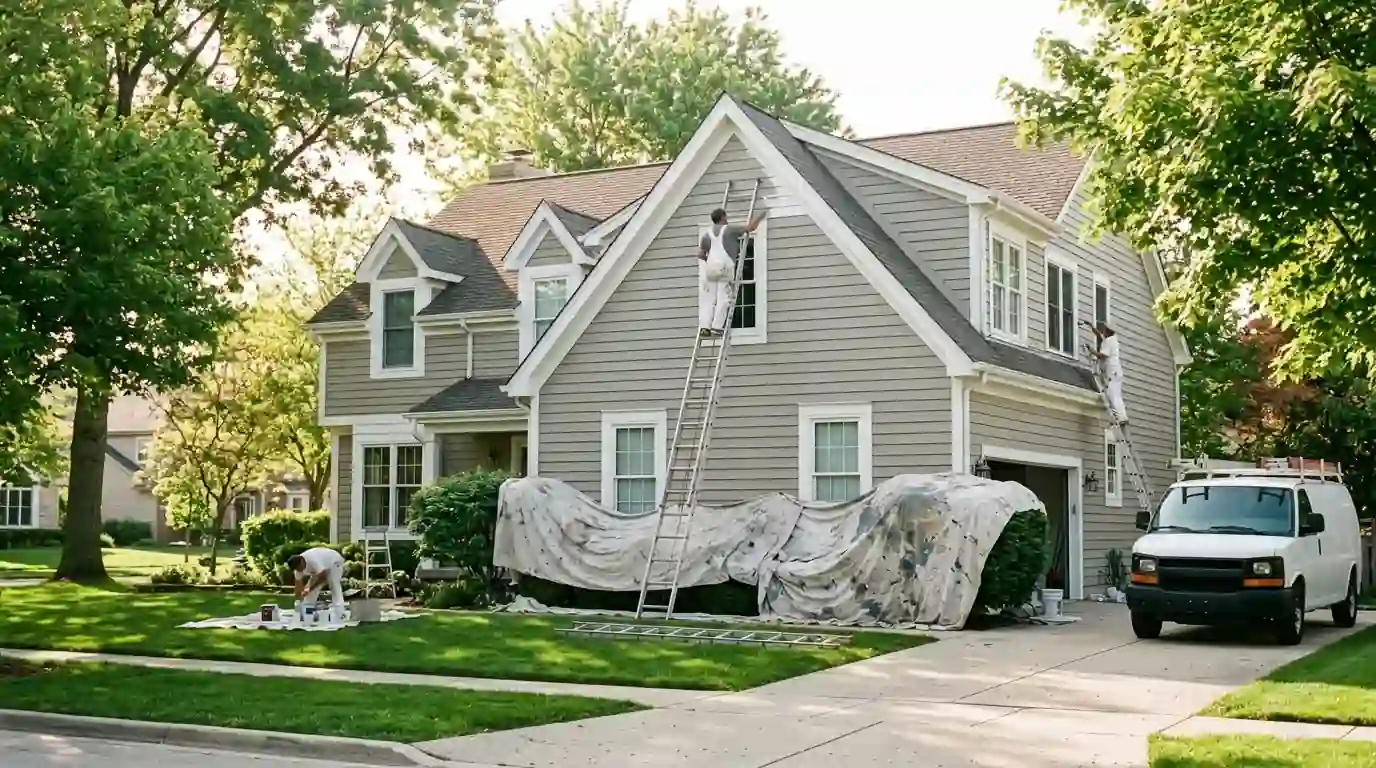
A full repaint runs in a set order: wash every wall and let it dry, scrape and sand loose paint, replace soft wood, prime bare spots and caulk open joints. Then the body gets two coats, the trim gets two coats of a harder enamel, and the doors are done last so they are not handled while wet. Windows, fixtures, walks and plants are covered every day, and colors are confirmed in writing before the first gallon is ordered so there are no surprises on the wall.
Color Changes on Two-Story Homes
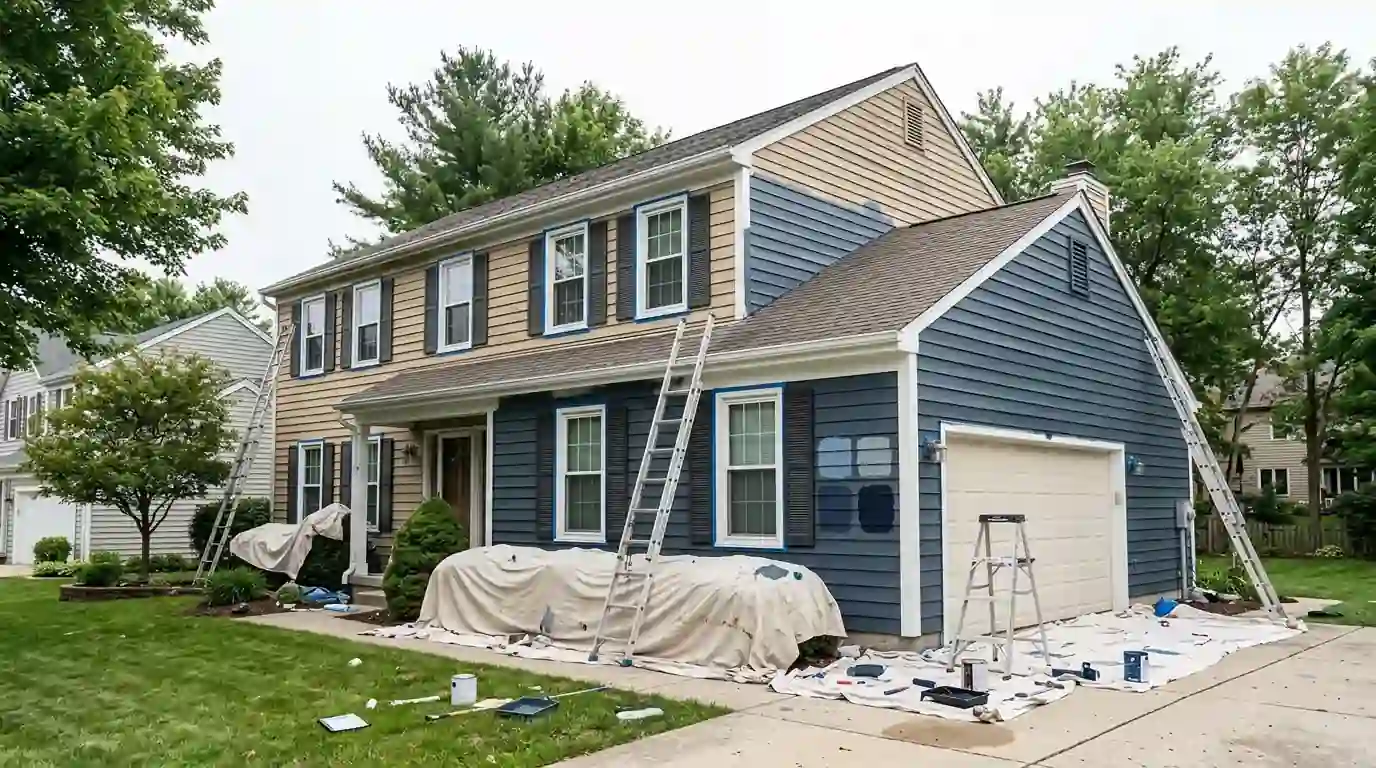
A color change on a two-story house is the biggest exterior decision most people make, and it is hard to judge from a chip. We brush large samples on a north wall and a south wall, since the same color looks different in shade and in full sun. Dark-to-light changes may need a tinted primer, and many neighborhoods want HOA approval first. Once the colors are set, the job runs like any full repaint, with the new color on every face.
Partial Repaints and Touch-Ups
Not every exterior needs a full repaint. Often the south and west walls have faded and chalked while the north and east sides still look fine. We repaint the worn walls corner to corner, never in patches, so the new paint ends at a natural break where the color shift will not show. Trim-only repaints and door refinishing fall in the same category, and they are a sensible way to stretch a few more years out of a sound paint job.
Exterior repaints across DuPage and Will County
Naperville sits in two counties, roughly 71 percent in DuPage and 29 percent in Will, and on the District 203 side of town about 71 percent of homes were built between 1970 and 1999. A typical exterior here is on its second or third paint cycle, so the prep reflects age: more scraping on original trim, more caulk at joints that have opened, and primer on every patch of bare wood before color goes on.
What is included in an exterior repaint
- Wash of every wall, then full dry time
- Loose paint scraped to a sound edge
- Soft trim and siding boards replaced
- Primer on bare wood and chalky areas
- Caulk at trim joints and gaps
- Windows, fixtures, plants and walks protected
- Two coats on the body and the trim
- A walk around the house and touch-ups
How an exterior job runs
- 1
Walk the house
Every peeling spot, soft board and color noted on the estimate.
- 2
Wash and dry
Dirt, chalk and mildew off; a dry day before scraping.
- 3
Prep and repair
Scrape, sand, replace soft wood, prime and caulk.
- 4
Two coats
Body first, then trim, then doors.
- 5
Final walk
Around the house together, with touch-ups on anything you mark.
Signs the exterior is ready for paint
Peeling and flaking
Paint lifting at sills, joints and the bottom of siding boards.
Chalk on your hand
A white powder on faded paint means the binder has broken down.
Uneven fading
South and west walls noticeably lighter than the north side.
Cracked caulk and bare wood
Open joints and gray wood let water in behind the paint.