Updated October 2026
The short version
Metal railing painting in Naperville, IL works when the rust is dealt with first: loose rust and failing paint come off by wire brush or grinder, remaining rust gets a converter or rust-inhibiting primer, and two coats of exterior enamel go over it. Painting over active rust only hides it for a season.
Why rust comes back through paint
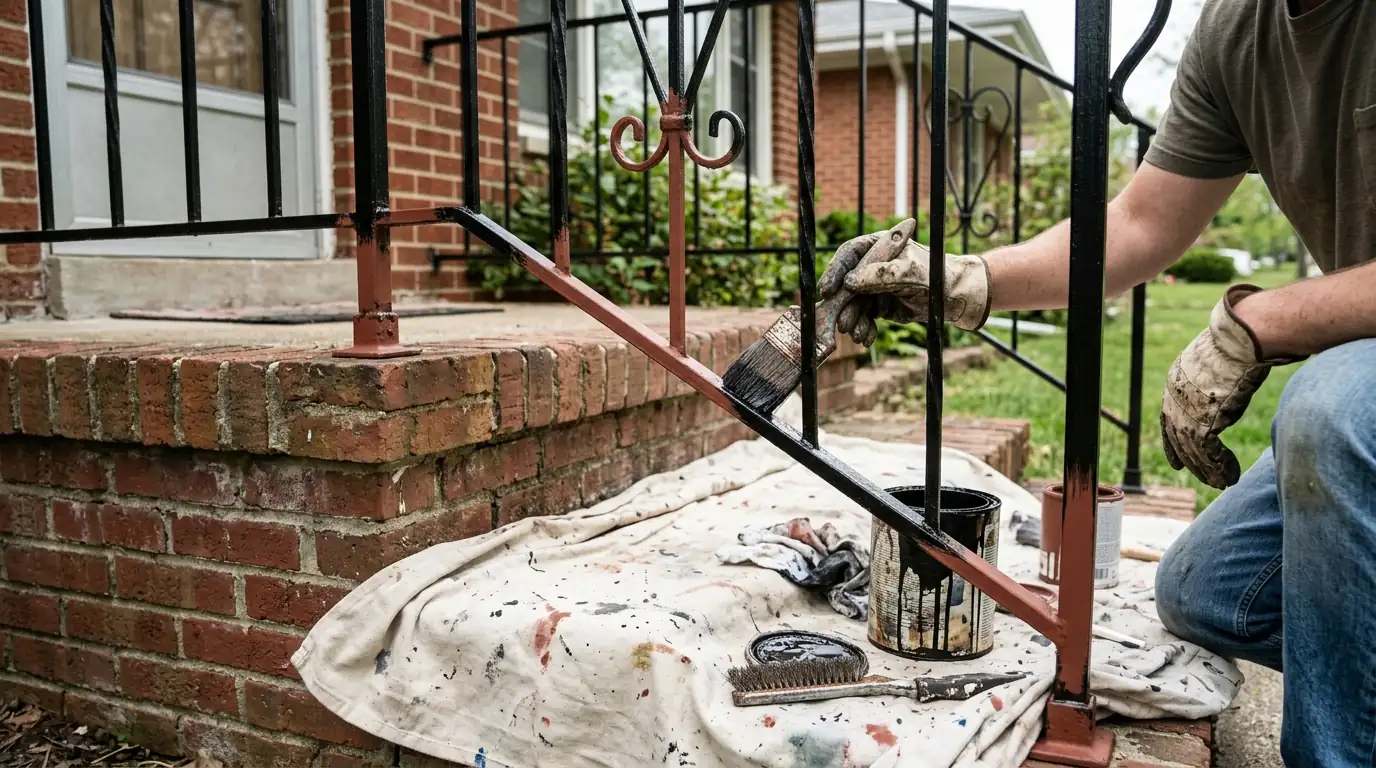
Rust spreads under paint. Once water reaches bare steel at a chip or a weld, rust forms and lifts the coating around it, and new paint over that only seals moisture in. That is why a railing painted every spring still bubbles by fall. The fix is removing loose rust down to firm metal or tight rust, then stopping what is left before any paint goes on.
We wire-brush or grind the loose rust and failing paint, treat remaining rust with a converter or a rust-inhibiting primer, and finish with two coats of exterior enamel. Products such as Rust-Oleum's rust-inhibiting primers and enamels are made for exactly this, and they hold up far better than wall paint on metal.
What moves the price of railing and iron painting
Metal work is priced by length and detail, since every picket and scroll is hand work.
- Linear feet of railing or fence
- Scrolls, pickets and decorative detail
- How much rust has to come off
- Bolt-down bases and posts that need extra prep
- Color: black and dark colors versus custom
Rusting Stair Rails
Front stair rails take water, road salt tracked from the driveway and daily hands, and they rust first at the bases and welds. We grind and brush those spots to firm metal, treat the rust, prime, and finish the whole rail so the color is even. Where a base has rusted badly at the concrete, we will tell you if the post needs repair by a metal fabricator before paint, since paint cannot hold a failing weld together. Handrails get a final coat that cures hard, since they are gripped every day.
Wrought Iron Fences
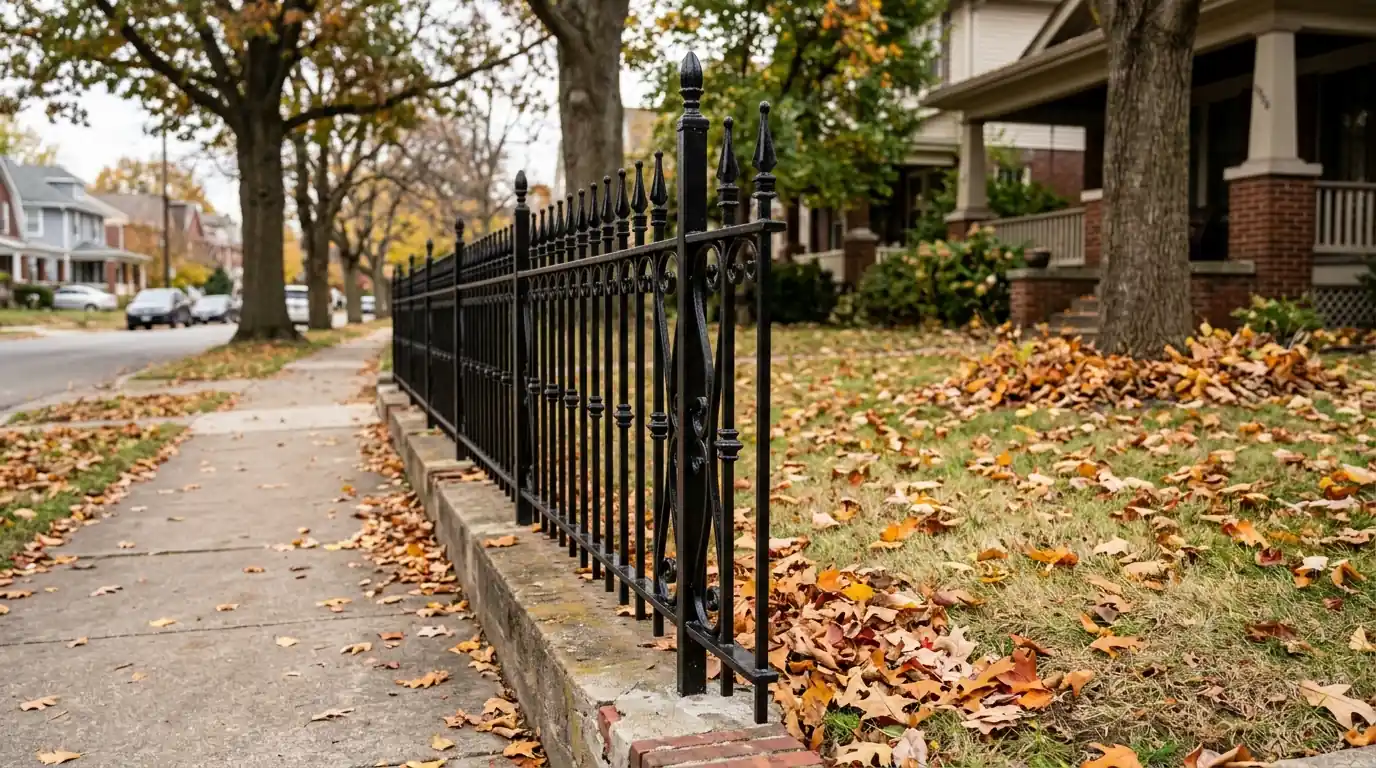
Iron fences have hundreds of surfaces: pickets, rails, finials and scrolls. We brush and scrape each section, treat rust, and brush the primer and enamel into every joint, since a sprayer misses the backs of pickets and wastes paint on the lawn. Plants along the fence line are tied back or covered. Satin black is the usual color; it hides small imperfections better than gloss and still looks crisp from the street. Gates are painted open so the hinge side and latch get full coverage too.
Light Poles and Mailbox Posts
Metal light poles, lamp posts and mailbox posts are small jobs on their own, so they are often added to a railing or fence visit. They rust at the base where grass trimmers chip the paint and water sits. We protect the fixtures and the glass, treat the rust, prime and repaint, and can match the color to the railings so everything at the front of the house reads as one set. House numbers and fixture glass are masked so they stay crisp and readable.
When metal painting fits the Chicago-area season
Metal primers and enamels need dry surfaces and mild temperatures to cure, and steel stays colder than the air on cool mornings. O'Hare averages its last spring freeze around April 23, and the National Weather Service puts the typical first fall freeze for most of the Chicago area between about October 11 and 20, so outdoor metal work fills the months between. Railings painted in late fall are scheduled for warm afternoons.
How we paint metal railings and fences
- 1
Inspect
Rust, loose posts and failing welds noted.
- 2
Remove loose rust
Wire brush or grinder down to firm metal.
- 3
Treat and prime
Converter or rust-inhibiting primer on every bare spot.
- 4
Two coats of enamel
Brushed into every joint and picket back.
- 5
Clean up
Steps and walks cleaned of dust and drips.
Signs the metal needs attention
Bubbles in the paint
Rust is growing underneath and lifting the coating.
Orange streaks on concrete
Rust running off a railing base onto the steps.
Flaking at welds and joints
Water has reached bare metal where pieces meet.
Loose or wobbly posts
Rust at a base can weaken it; that needs repair first.
Painting metal yourself: what to weigh
A short rail is a fair DIY job if the rust is light. Two things make it harder.
Fine for a homeowner
- A short stair rail with light surface rust
- A mailbox post
- Touching up chips before rust starts
Better left to us
- Long fences with scrolls and pickets
- Heavy rust that needs grinding
- Railings with loose posts or broken welds