Updated October 2026
The short version
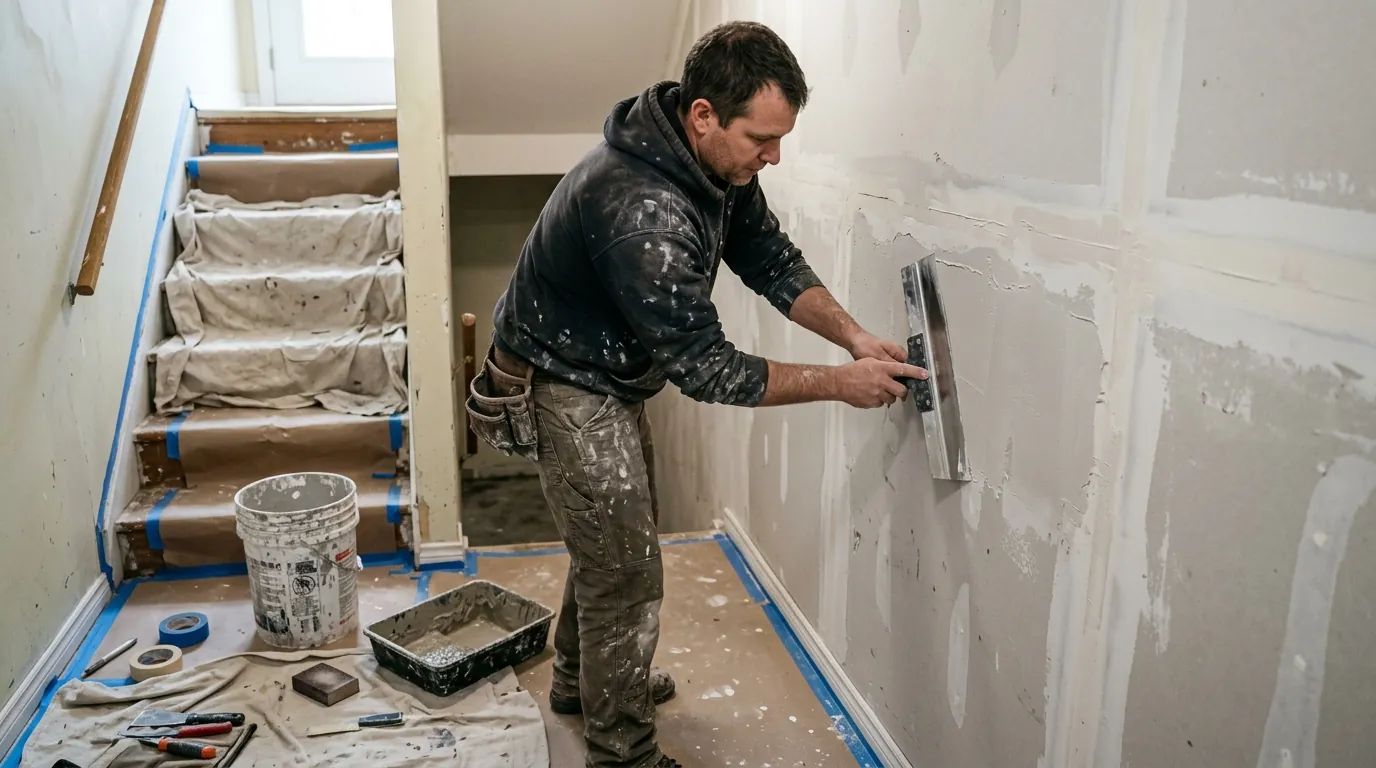
Drywall repair in Naperville, IL is finished for paint: nail pops are reset with screws, holes get a backed patch, cracks are taped, and every repair is feathered wide and sanded so no outline shows. We prime repairs before painting, because bare compound absorbs paint differently and flashes through as a dull patch.
Why a good patch disappears and a bad one shows
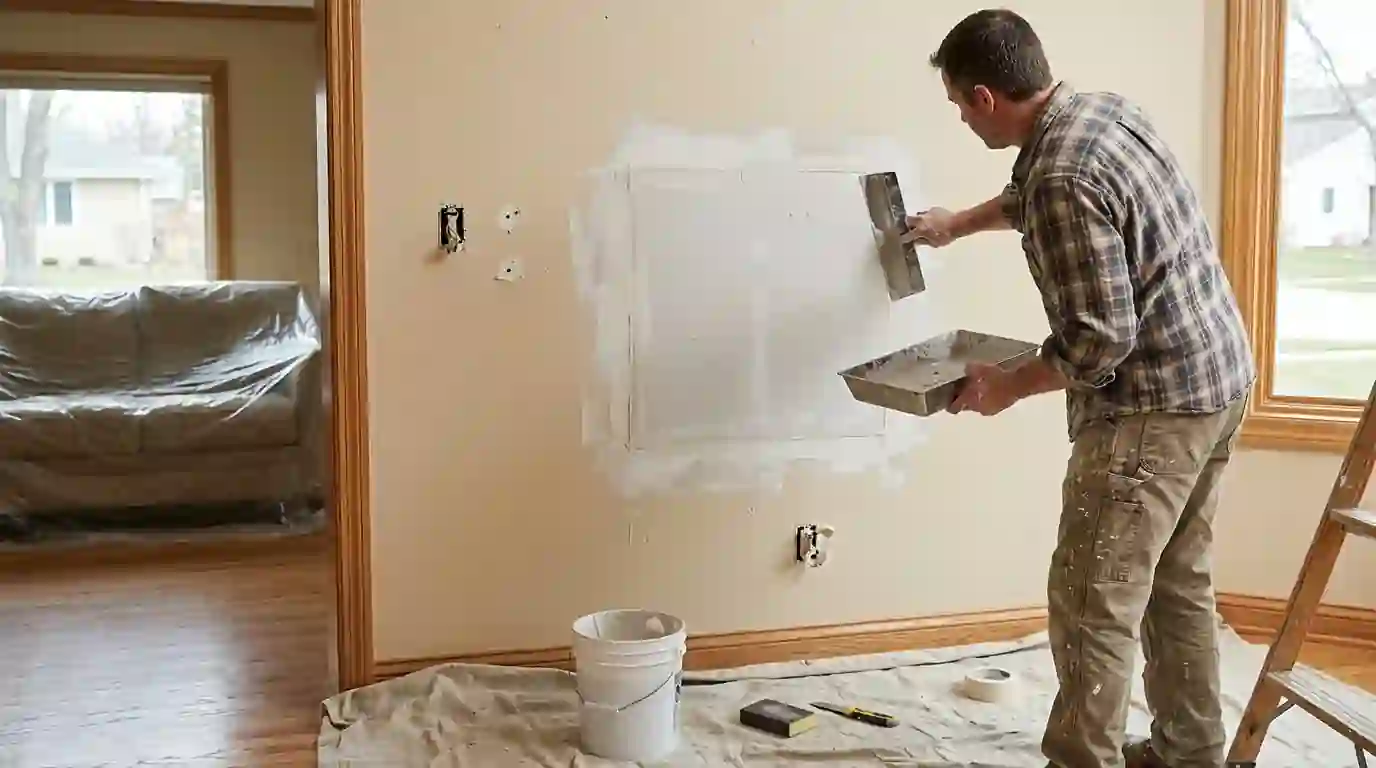
A drywall patch is judged in raking light, the low sunlight that crosses a wall in the late afternoon. A patch that is not feathered wide enough shows as a bump, and compound that was not primed shows as a dull square through the new paint. So the work is in the finishing: thin coats spread well past the repair, careful sanding, and primer before paint.
The other half is fixing the cause where there is one. Nail pops come back if the nail is just filled over; a crack over a door returns if it is only spackled. We reset fasteners with screws and tape cracks so the repair holds.
What moves the price of drywall repair
Drywall repair is priced by the number and type of repairs, plus the paint to finish them.
- The number of holes, cracks and nail pops
- Large holes that need backing or a new panel piece
- Corner bead that has to be cut out and replaced
- Texture matching on knockdown or orange-peel walls
- Repainting the whole wall so the repair blends
Nail Pops and Screw Pops
Nail pops are the small round bumps that appear along studs as framing lumber dries and shifts. Filling over them does not work; the nail keeps pushing out. We drive a drywall screw just above and below each pop to pull the panel tight, set the old nail below the surface, and cover both with thin coats of compound. In houses with dozens of them, typically on long walls and ceilings, it is often faster to fix them all in one room-by-room pass.
Holes from Anchors and TV Mounts
Small anchor holes are filled and sanded. Larger holes, from TV mounts, doorknobs or removed shelving, need backing: we cut the hole square, add a backer or wood strips behind it, fit a drywall piece, then tape and finish the seams. For very large damage, a full section of panel is replaced between studs. Moving a TV mount leaves a cluster of holes that are best repaired together so the patch reads as one smooth area. Outlet and switch openings near a repair are reset so the cover plates sit flat.
Cracked Corner Bead
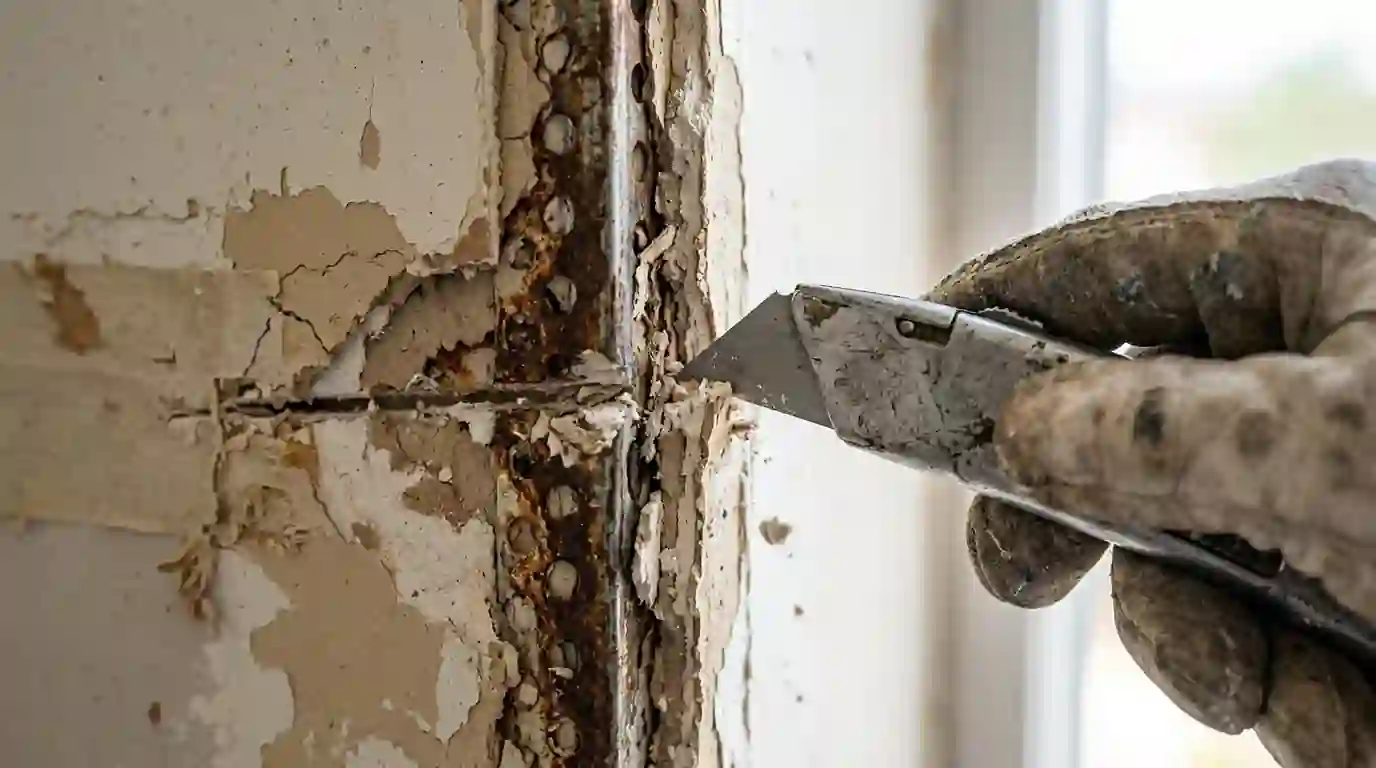
Corner bead is the metal or vinyl strip that forms outside corners. When it is hit by furniture or a vacuum, the compound over it cracks and the bead can dent or pull loose. Patching over a damaged bead does not last. We cut out the damaged section, fasten new bead, and finish it with several coats of compound feathered onto both walls, then sand it straight so the corner reads as one clean line. Wall anchors left in the drywall are removed or set below the surface first.
Cracks Over Doors and Windows
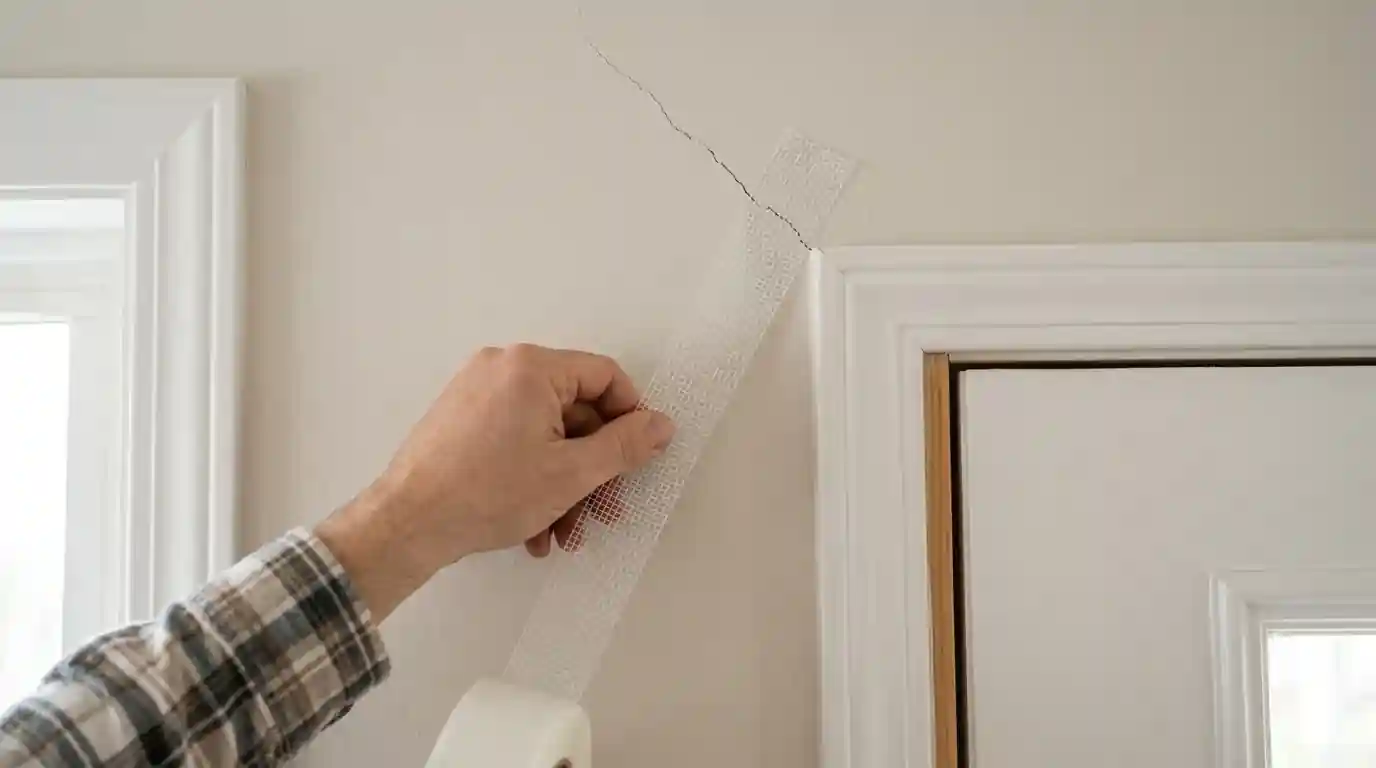
Diagonal cracks running up from the corners of doors and windows are the most common drywall crack in a house. They follow the joints where the drywall pieces meet over the opening and reopen as the house moves with the seasons. Spackle alone comes back. We open the crack, embed paper or mesh tape, and feather compound well past it so it can flex without showing. If a crack keeps widening, we will tell you so you can have the structure looked at.
Drywall in Naperville's 1980s houses
At the 2000 census the typical Naperville house had been built in 1986, and drywall that has been through decades of seasons, settling and furniture moves shows it the same way everywhere: nail pops along studs, cracks off the corners of doors, dented corner bead in halls and stairways. We usually find more repairs than a homeowner noticed, so we walk the room with a light before quoting.
How we repair drywall
- 1
Find every repair
We walk the room with a light and mark each spot.
- 2
Fix the cause
Pops screwed tight, damaged bead cut out.
- 3
Patch and tape
Backed patches, taped cracks.
- 4
Feather and sand
Thin coats spread wide, sanded smooth.
- 5
Prime
Repairs primed so paint does not flash.
When a drywall problem is more than a patch
Cracks that keep widening
Ongoing movement may need a structural look first.
Soft or stained drywall
Water damage needs drying and replacement, not filling.
Sagging ceiling panels
Loose fasteners or water weight; keep clear underneath.
Many pops in one area
Framing moving or fasteners failing; fix them as a group.
Patching drywall yourself
Small holes are a fine homeowner job. Larger repairs are where the finish starts to show.
Fine for a homeowner
- Nail holes and small anchor holes
- Small dents with lightweight spackle
- Priming a patch before touch-up paint
Better left to us
- Holes larger than a doorknob that need backing
- Corner bead replacement
- Texture matching on knockdown or orange-peel walls