Updated October 2026
The short version
Fence staining in Naperville, IL is outdoor-season work, booked from late April into October while nights stay above freezing. Cedar and pressure-treated pine both need washing and brightening first, then a penetrating stain on both sides. Most deck professionals recommend restaining exposed wood every two to three years, and fences follow a similar cycle.
Why fences need both sides done
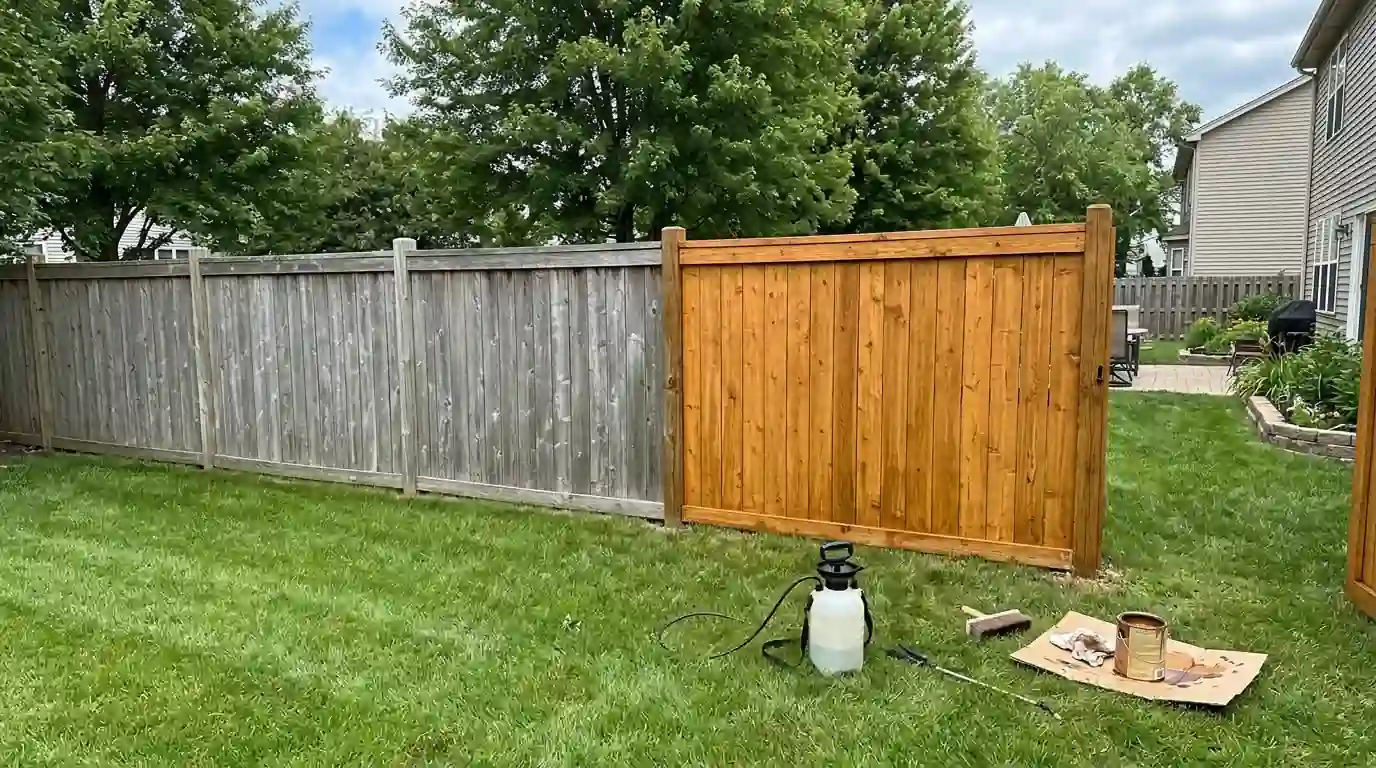
A fence weathers on both faces, and the side you do not see from the house is often the one that faces south or west and takes the most sun. Staining only your side leaves the other face, and the bottom edges near the grass, soaking up water. We stain both faces and the post tops, with your neighbor's okay when the fence sits on the line.
The work is simple but weather-bound: wash off the gray and mildew, brighten the wood, wait for it to dry, then spray and back-brush a penetrating stain so it soaks in rather than sitting on top. Penetrating stains from lines like Cabot, Sikkens and Penofin fade rather than peel, which makes the next restain much easier.
What is included in a fence staining job
- Plants and shrubs along the fence covered
- Siding and neighbors' property shielded
- Wash to remove gray and mildew
- Wood brightener on cedar
- Full dry time before stain
- Stain sprayed and back-brushed
- Both faces and post tops, as quoted
- Cleanup along the fence line
Cedar Privacy Fences
Cedar takes stain beautifully once the gray layer is washed off and a brightener restores the color. A semi-transparent stain keeps the grain visible and comes in natural cedar tones, browns and grays. We back-brush after spraying so the stain works into the rough-sawn surface instead of pooling, and we keep overspray off your siding, plants and your neighbor's yard with shields and drop cloths along the line. Post tops get an extra coat, since rain sits there and soaks into the end grain.
Pressure-Treated Pine Fences
New pressure-treated pine is wet from the treatment and needs to dry before it will take stain, often for a season or more after it is built. Once dry, it stains well, though pine absorbs unevenly, so a slightly more pigmented stain gives a more even color than a clear sealer. We check the wood's moisture before we book, so you are not paying for a coat that will not soak in. If it is already dry and gray, it gets the same wash and brightener as cedar before stain.
Painted Picket Fences
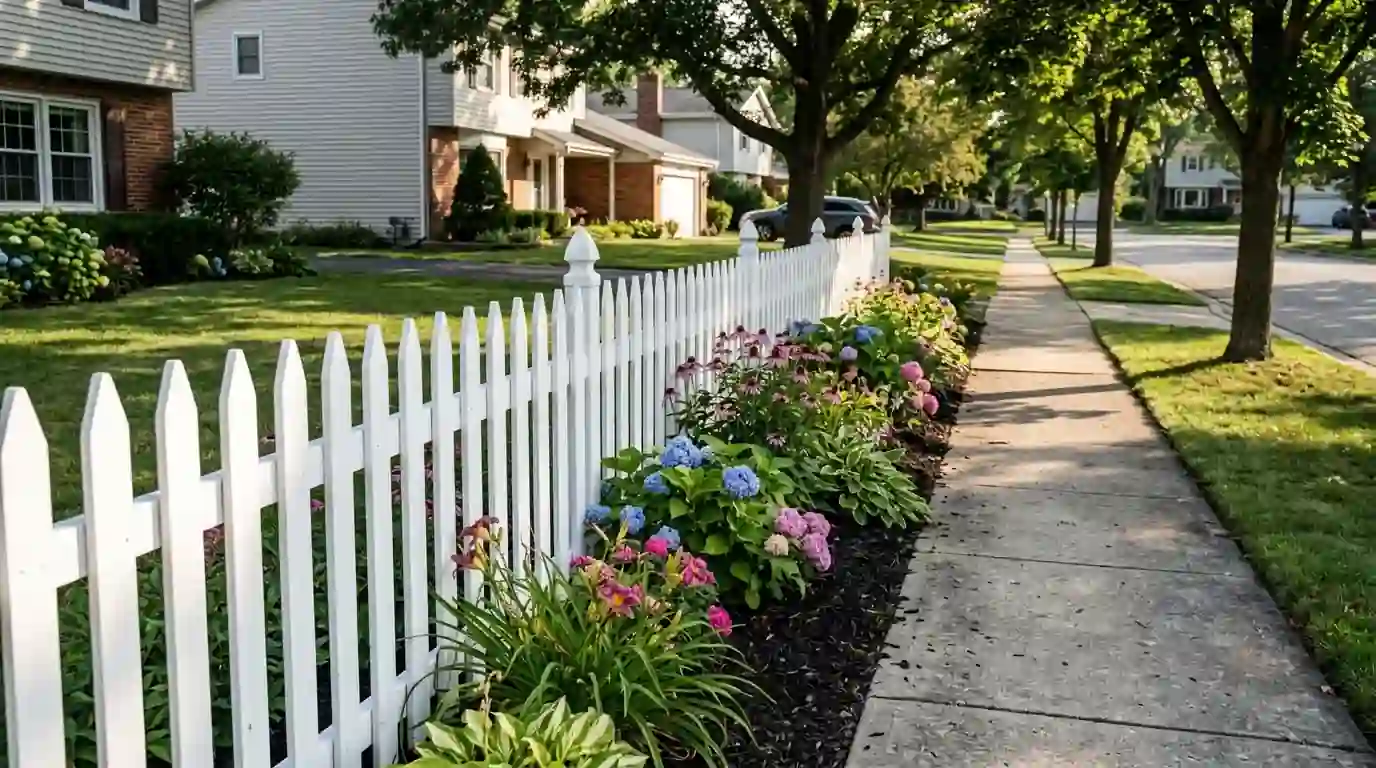
Picket fences are usually painted rather than stained, and the work is closer to exterior trim: scrape loose paint, sand rough edges, prime bare wood, then two coats of exterior enamel. Every picket has four faces and a top, so it is detailed work. We check the bottom rails and post bases for soft wood, since that is where picket fences rot first. Gates are taken off their hinges where practical so all four edges and the latch side get paint.
Staining fences out toward the Fox River
Our head office in Gilberts covers the Fox Valley side of the map, where fall arrives a little earlier: on clear, calm nights a few spots west of the Fox River drop into the upper 20s before the city does. The National Weather Service puts the typical first freeze for most of the Chicago area between about October 11 and 20, so fence work out west fills the earlier part of fall.
How we stain a fence
- 1
Protect the line
Plants, siding and the neighbor's side shielded.
- 2
Wash and brighten
Gray and mildew off, color back in the wood.
- 3
Dry
Stain waits for dry wood and a dry forecast.
- 4
Spray and back-brush
Both faces, post tops and gates.
- 5
Clean up
Shields down, overspray checked, yard cleared.
What moves the price of fence staining
Fences are priced by length, height and how many faces get stain.
- Linear feet and fence height
- One side or both sides
- Gray, mildewed or previously coated wood
- Plants, shrubs and grass along the fence line
- Gates, post caps and lattice tops
How long a fence job takes
Most of a fence job is waiting on the wood. Washing and brightening happen first, then the wood has to dry fully before stain goes on, which usually means two separate visits a few dry days apart. Stain itself goes on quickly with a sprayer and back-brushing. Rain in the forecast pushes the stain day, never the other way around.