Updated October 2026
The short version
Porch painting in Naperville, IL uses a porch and floor enamel on floors and steps, which handles foot traffic and standing water far better than house paint. Columns and railings are scraped, primed and painted in exterior enamel, with column bases checked for rot. The work runs from late April into October, between the spring and fall freezes.
Why porches need floor-grade coatings
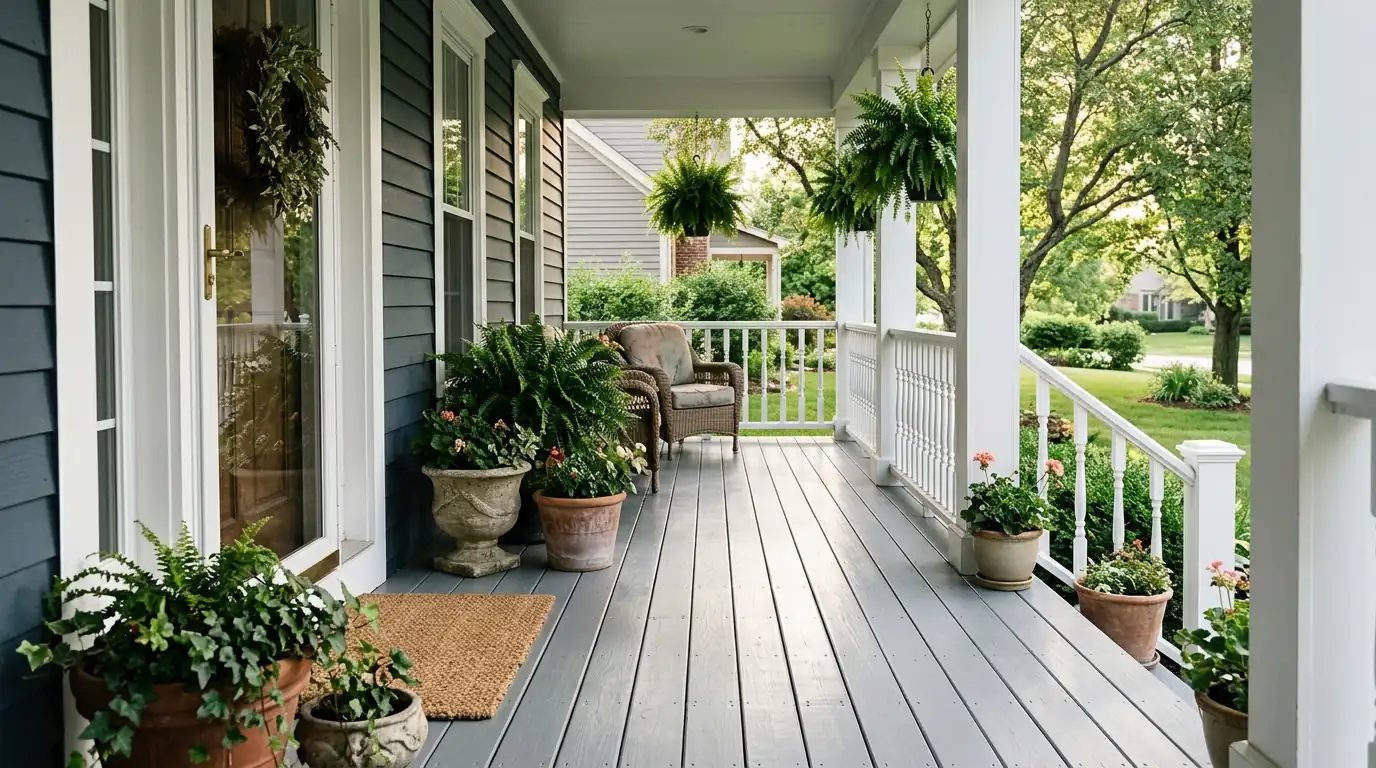
A porch floor gets walked on, rained on and shoveled, so ordinary exterior house paint wears through at the doorway and the top step within a season. A porch and floor enamel is formulated to take foot traffic and standing water, and adding a fine grit to the final coat on steps helps grip in wet weather. Columns and railings take weather but not wear, so they get a hard exterior enamel like the trim.
Prep matters more on a porch than anywhere else. Peeling floor paint is scraped and sanded, cupped or soft boards are noted for repair, and the gaps between boards are cleaned so water drains through instead of sitting on the paint.
Paint, solid stain or clear finish on a porch floor
| Finish | Look | The trade-off |
|---|---|---|
| Porch and floor enamel | Solid color, classic porch look | Most durable on traffic; needs recoating where worn |
| Solid deck stain | Opaque color with some wood texture | Easier to recoat; can peel if applied heavily |
| Penetrating stain or clear | Wood grain visible | Shows wear sooner; suits covered porches best |
What moves the price of porch painting
Porches are priced by the floor area, the steps and the railing and column count.
- Floor area and the number of steps
- Peeling paint to scrape and sand
- Columns: wood, fiberglass or wrapped
- Railing and spindle count
- Rotted boards or column bases to repair first
Porch Floors and Steps
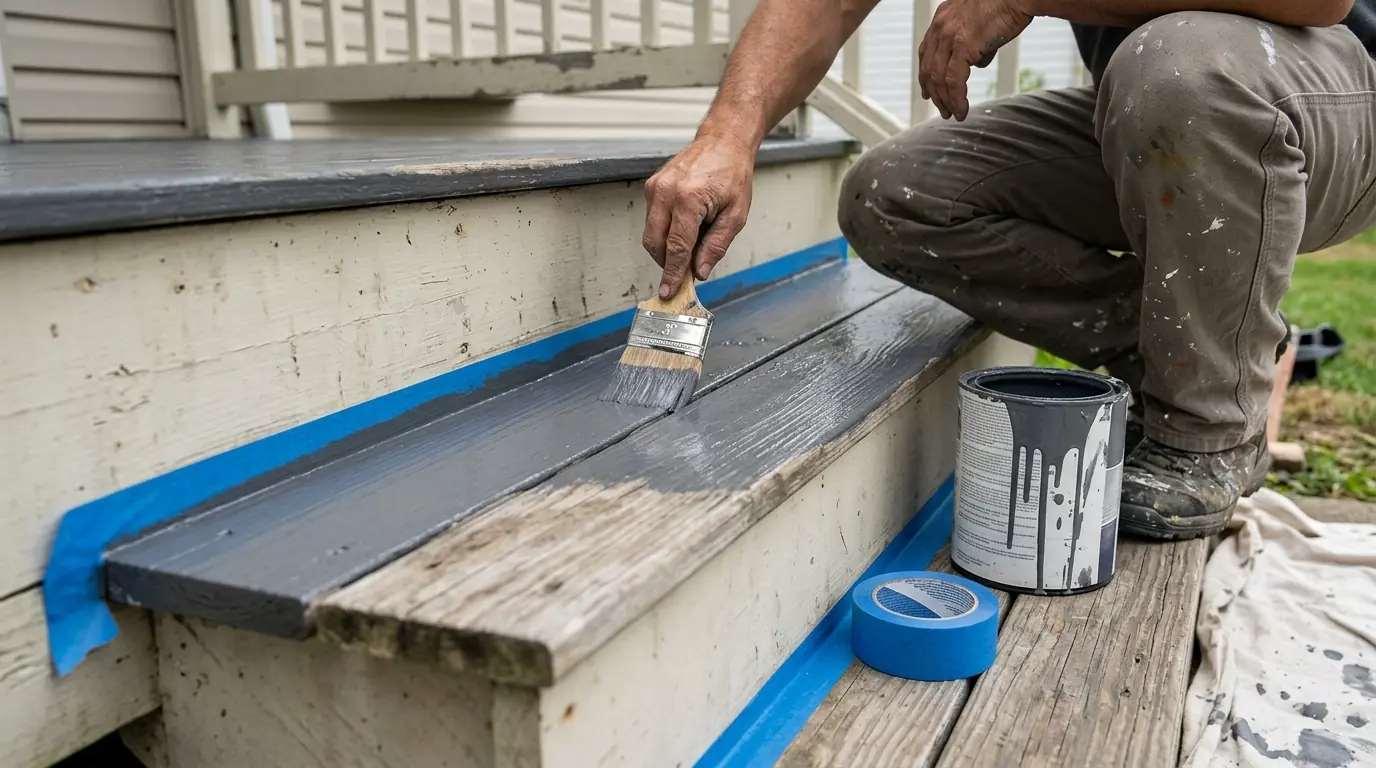
Porch floors are scraped and sanded wherever paint is peeling, washed, and left to dry fully, since paint over damp boards fails first. Bare wood gets primer, and two coats of porch and floor enamel go on in the color you choose, usually gray, which hides dirt. Steps get a fine anti-slip grit in the last coat. We plan the order so you always have a way in and out of the house, painting half the steps at a time when needed.
Columns and Posts
Porch columns rot at the base, where water sits on the porch floor around them. We check every base, repair or replace rotted plinths, caulk the joints and repaint. Hollow wood columns get vented bases where possible so they can dry out. Fiberglass and composite columns are cleaned, scuffed and painted with a primer suited to them. Wrapped posts with loose trim pieces are refastened before painting, so the finish does not crack at the seams. Column caps are checked too, since water can enter from the top as well.
Wood Railings and Spindles
Railings and spindles take weather on every face, and the top rail takes hands. We scrape loose paint, sand rough spots, prime bare wood and brush two coats of exterior enamel into every spindle and joint, never spraying where overspray would land on the floor and siding. Loose spindles and wobbly rail sections are refastened first. A top rail in a darker or stained finish is a popular detail that also hides wear from hands. Hardware such as house numbers and lights is masked or removed before painting starts.
Porches on Naperville's older homes
The Naperville Historic District, created in 1986, covers roughly 320 to 350 structures and includes Greek Revival and Italianate houses, styles where the porch, its columns and its railings carry much of the character. Owners there need a Certificate of Appropriateness before most exterior alterations, so we repaint porches in their existing colors and profiles unless a change has been approved.
How we paint a porch
- 1
Inspect
Floor boards, column bases and railings checked.
- 2
Scrape and repair
Loose paint off, soft wood replaced.
- 3
Wash and dry
Floor cleaned and fully dried.
- 4
Prime and paint
Columns and railings first, floor last.
- 5
Steps with grit
Anti-slip grit in the final coat on steps.
Signs the porch needs attention
Worn paths on the floor
Bare wood at the door and top step soaks up water.
Soft column bases
Rot where columns sit on the porch floor.
Peeling on the steps
Paint lifting on treads and risers.
Loose railings
Wobbly rails need refastening before paint.