Updated October 2026
The short version
Interior painting in Naperville, IL is booked all year, and a typical job covers walls, ceilings and trim in one visit. We patch and spot-prime first, paint top down, and price each room on its own line so you can shrink the scope to fit a budget.
What an interior repaint covers in a Naperville house
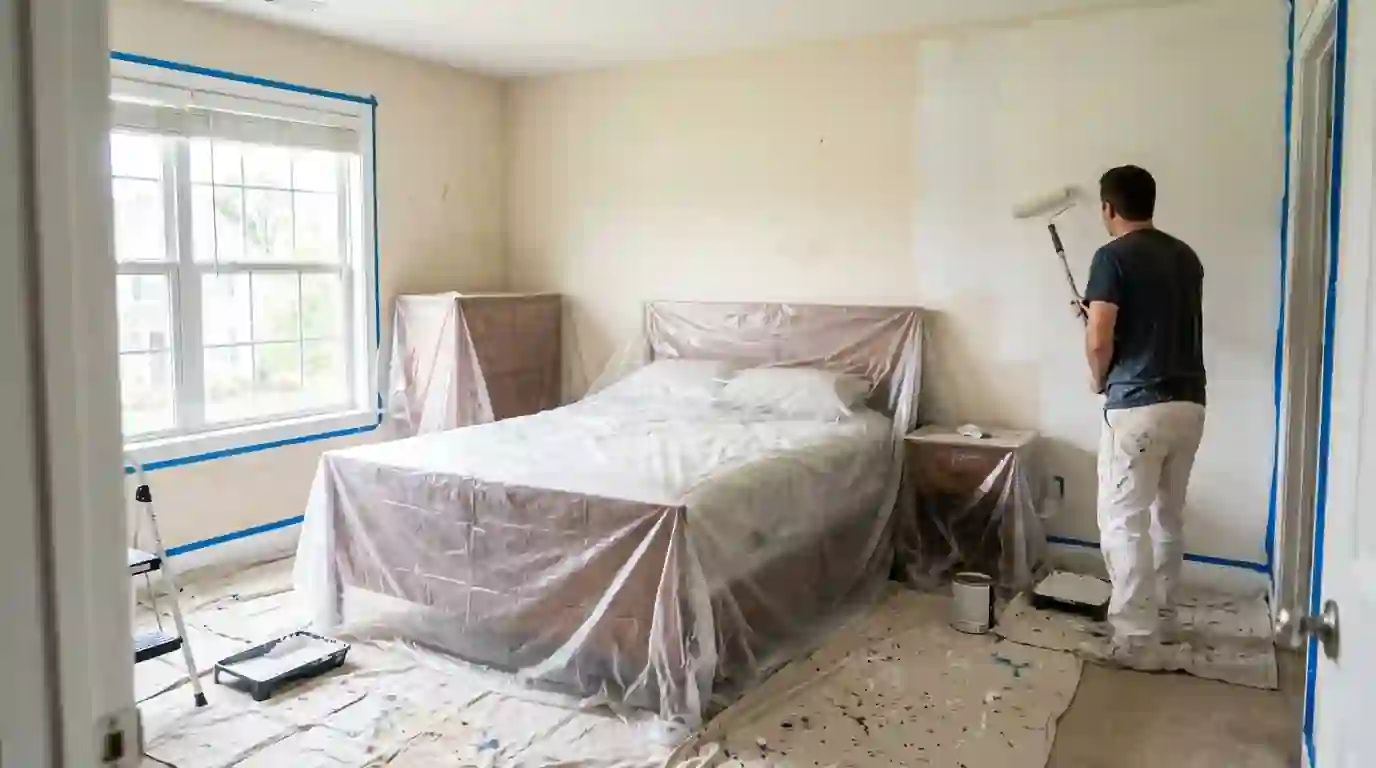
Most Naperville interiors we walk were built between 1970 and 1999: drywall under builder flat paint, oak or painted trim, and a two-story space somewhere. That shapes the job more than the color does. Builder flat scuffs and burnishes, so the new finish is normally a washable matte or eggshell, and stairwell walls need planks rather than a stepladder.
We repaint one bedroom or every room on a floor. Either way the scope is written room by room, with patching, priming and trim on separate lines, so you can see what each part costs and drop the rooms that can wait.
Picking a sheen for each room
| Sheen | Where it works | The trade-off |
|---|---|---|
| Flat or matte | Ceilings and quiet bedrooms | Hides wall flaws best; scrubbable mattes hold up better than old builder flat |
| Eggshell | Living rooms, halls, family rooms | Wipes clean; shows patching a little more |
| Satin | Kids' rooms, mudrooms, baths | Takes scrubbing; shows roller marks if prep is rushed |
| Semi-gloss | Trim, doors, built-ins | Hard and washable; highlights every dent |
What moves the price of an interior repaint
Floor area is only a starting point.
- Wall and ceiling area, which runs well past floor area in two-story rooms
- How much patching and stain-blocking primer the walls need
- Ceiling height, especially foyers and stairwells
- The number of colors, since every change means cutting in again
- Trim and doors, which take longer per foot than walls
Single Rooms and Bedrooms
A single room is the most common call we get: a nursery before a due date, a teenager's room once the posters come down, an office that turned into a guest room. We fill the anchor holes, spot-prime anything stained, roll the ceiling if it is part of the scope, put two coats on the walls and a coat of enamel on the trim. Furniture goes back where it was, and the outlet covers go back on the outlets they came from.
Whole-Floor Repaints
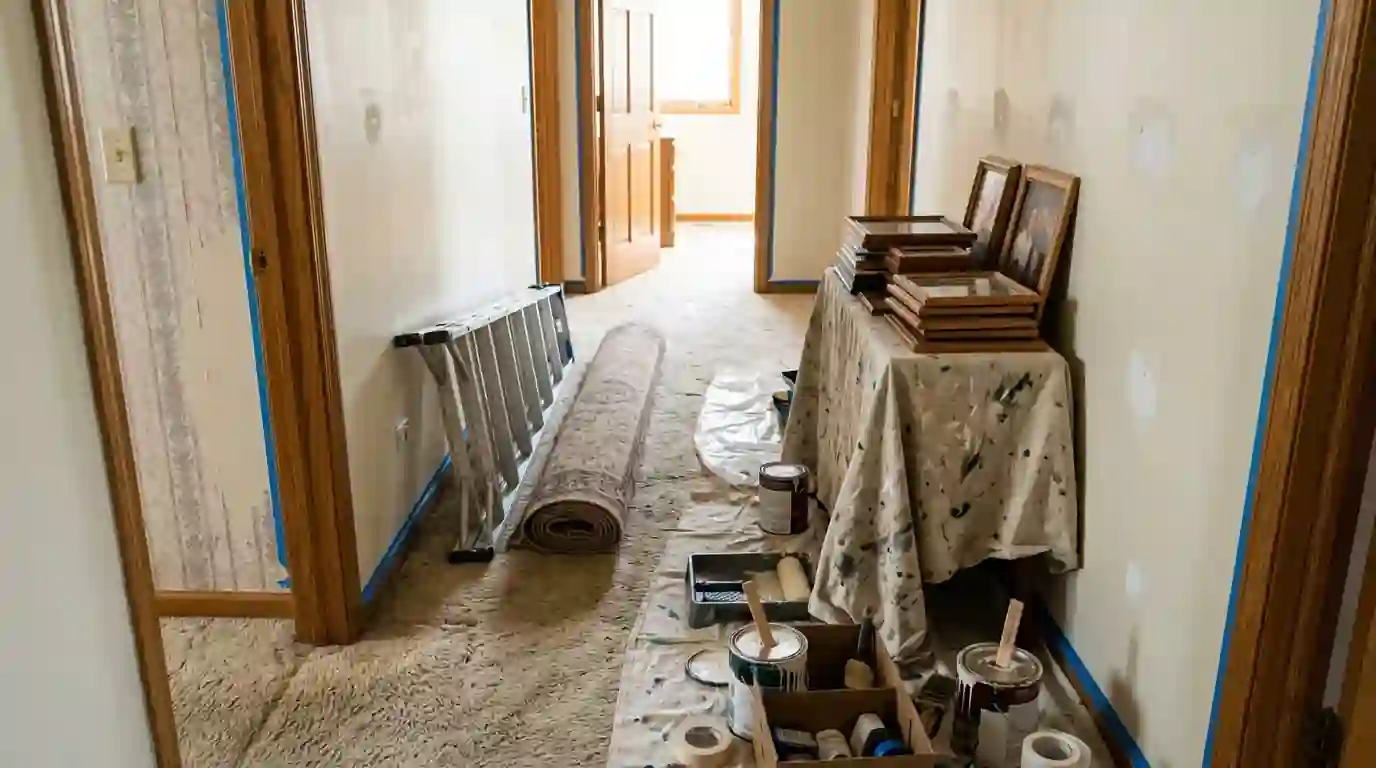
On a full floor we work in an order that keeps the house usable: bedrooms one or two at a time, then halls, then the main living space. Colors are confirmed for every room before the first can is opened, so the paint order arrives in one trip and the crew is not waiting on a store run. Trim on a full floor is usually the biggest single line, and it is where most of the visible improvement comes from.
Dark-to-Light Color Changes
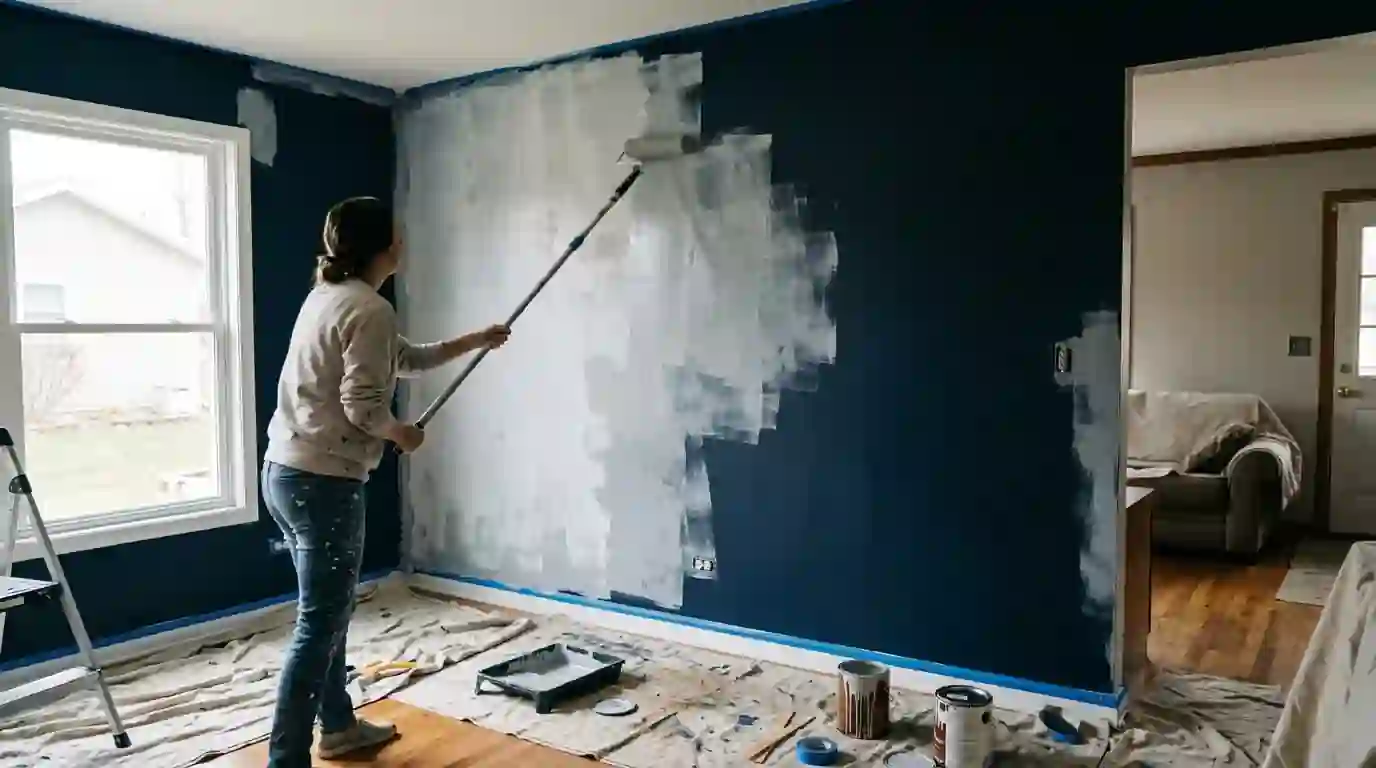
Going from navy, red or deep green to a light neutral takes more than two coats of the new color. We put down a gray or tinted primer first, which blocks the old color in one pass and keeps the finish coats even, so the light color reads true instead of muddy. It costs more than a same-shade repaint because of that extra coat, and we list it as its own line on the estimate so the difference is easy to see.
Painting While You Live There
Most interior jobs happen with people living in the house. We agree on which rooms are off-limits each day, keep a clear path to the kitchen and baths, and close up every evening with cans sealed, brushes washed and furniture back within reach. Low-odor paint lines from Sherwin-Williams and Benjamin Moore help when someone in the house is sensitive to smell, and we open windows when the weather allows. Pets stay in a room we are not working in that day.
Interior jobs in Naperville's 1980s and 1990s houses
On the District 203 side of Naperville about 71 percent of homes were built between 1970 and 1999, and at the 2000 census the city's median house dated to 1986. In practice that means original builder paint on many walls, oak trim that has gone orange with age, and drywall seams that telegraph through flat paint in low afternoon light. We plan a full round of spot-priming on those walls instead of assuming two coats will hide everything.
What is included in an interior repaint
- Furniture moved to the middle and covered
- Floors covered with canvas drop cloths
- Outlet and switch covers removed and bagged
- Nail holes and dents filled and sanded
- Stains and patches spot-primed
- Two finish coats on walls
- Ceilings and trim when they are in the scope
- Daily cleanup and a final walk-through
How an interior job runs, start to finish
- 1
Walk the rooms
We measure walls and ceilings and note anything that needs repair or stain-blocking.
- 2
Protect and prep
Furniture covered, floors and fixtures masked, holes filled and sanded.
- 3
Prime what needs it
Patches, water marks and dark colors get primer so they stay hidden.
- 4
Ceilings, walls, then trim
Top down, so a drip only lands on a surface not yet finished.
- 5
Walk-through
We go room by room with you and touch up anything you mark.