Updated October 2026
The short version
Plaster repair in Naperville, IL comes up mostly in homes built before 1970, which make up about 18 percent of houses on the District 203 side of town. Hairline cracks get taped and skimmed, loose plaster is screwed back to the lath with plaster washers, and only plaster that has truly failed gets cut out and patched.
Why plaster cracks keep coming back
Plaster walls were built in layers over wood lath, and the first coat squeezed through the gaps in the lath to form keys that hold the wall on. Over decades of settling, humidity swings and door slams, some of those keys break. The plaster then flexes when anything moves, and a crack that was filled with spackle opens again within a season.
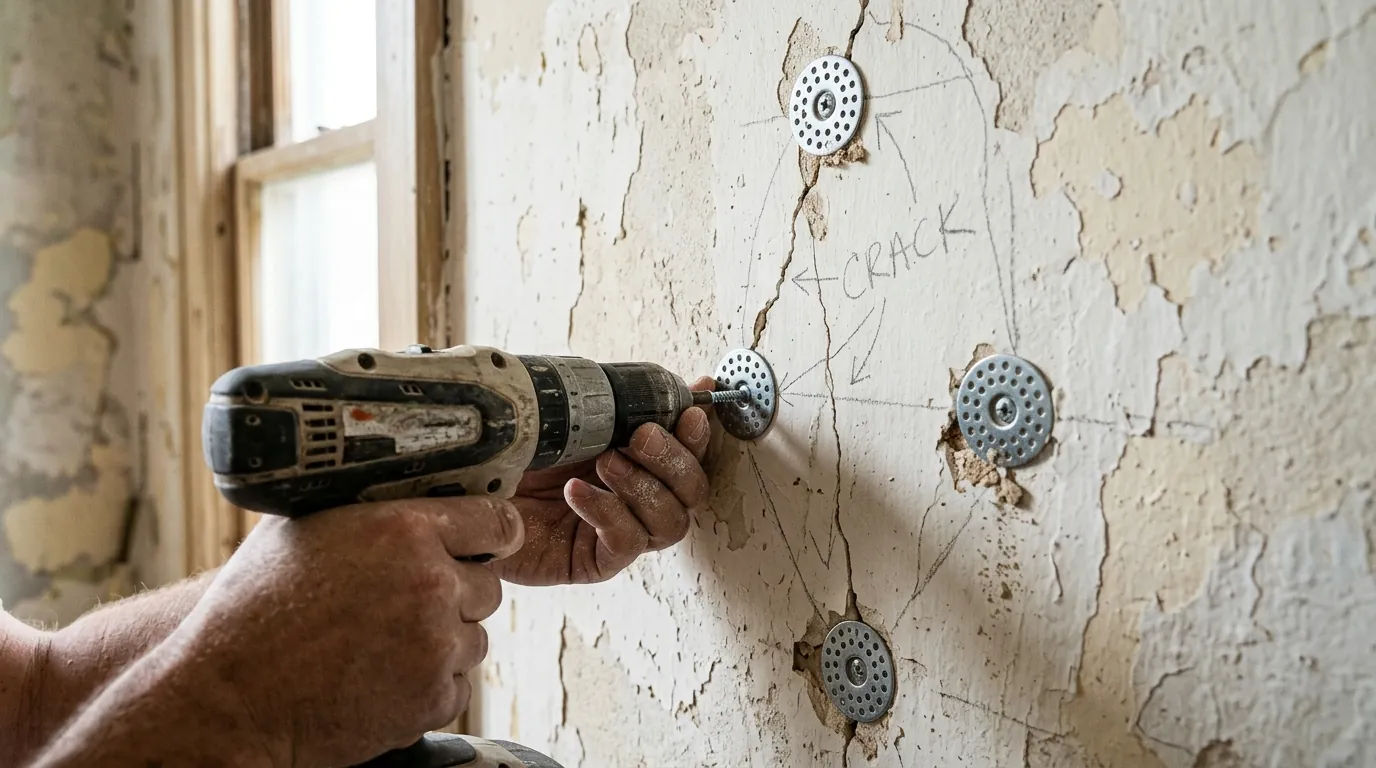
So the repair starts behind the crack, not on it. We find the loose area by pressing, reattach it to the lath with plaster washers, and only then fill and skim with a setting compound that bonds to plaster.
What changes the price of plaster repair
Plaster jobs vary more than drywall repair, because the extent of loose plaster only shows once the wall is pressed and tapped.
- How far loose plaster extends past the visible crack
- Ceilings, which take more washers and more care
- Whether failed plaster has to be cut out and patched
- A full skim coat across the wall or only at the cracks
- Lead testing and dust control in homes built before 1978
Cracked Lath-and-Plaster Walls
Straight cracks from the corners of doors and windows, and long diagonal ones across a wall, are the usual pattern in older houses. We open the crack slightly so compound can get in, reattach any loose plaster on either side, embed fiberglass mesh tape, and skim it flush with a setting compound. Once primed and painted, the line is gone, and it stays gone because the wall underneath no longer moves. Ceilings get the same repair with more washers, since gravity works against them.
Loose Plaster That Has Lost Its Keys
If a section of wall moves or sounds hollow when you press it, the keys behind it have broken. Plaster washers, thin perforated disks driven with screws into the lath, pull the plaster back tight. We set them in a grid across the loose area, skim over them, and the wall is solid again without tearing it out. This is the step most patch jobs skip, and it is why their cracks return. Badly loose ceilings can also get adhesive injected behind them first.
Skim Coats Over Old Plaster
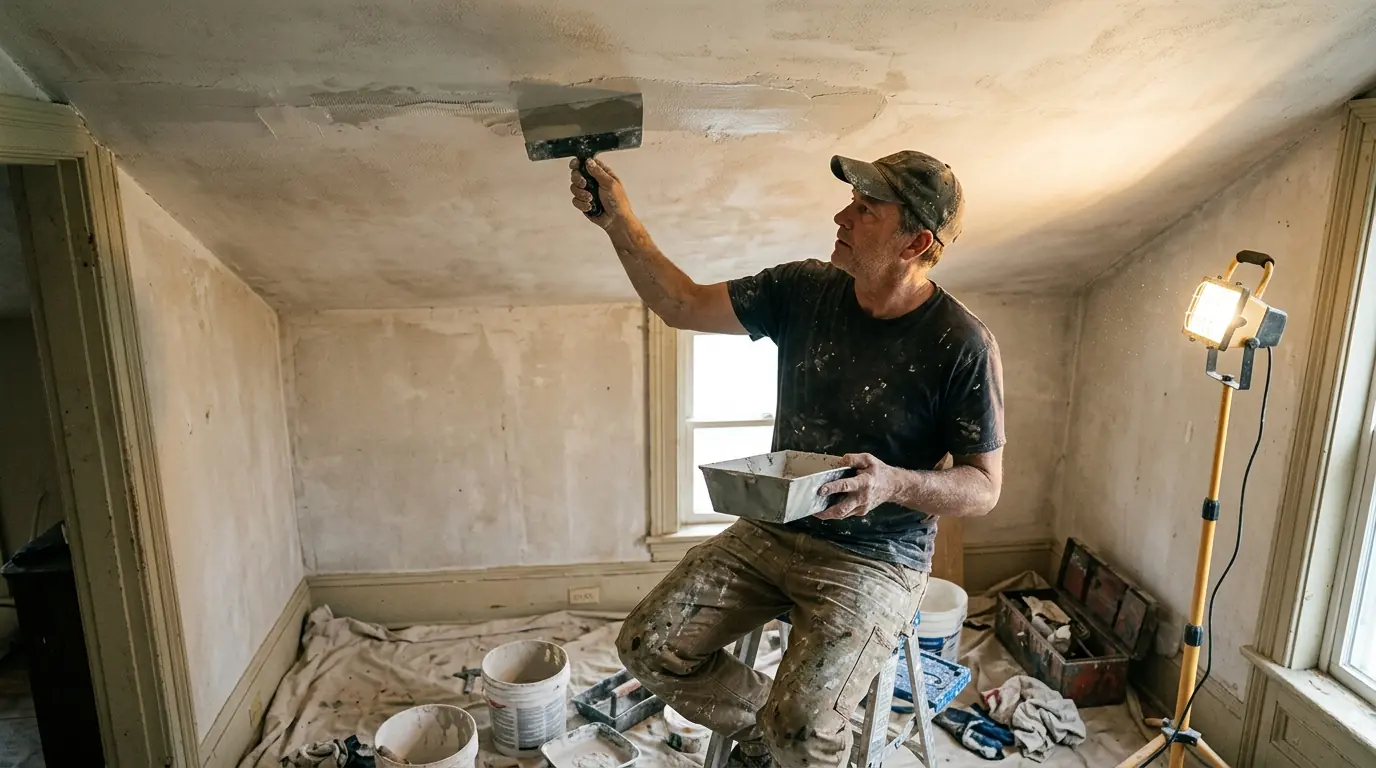
Walls with many small cracks, old patches and uneven paint layers often look better with a full skim coat than with dozens of spot repairs. A thin coat of setting compound across the whole wall, sanded smooth, gives a fresh surface for primer while keeping the plaster underneath, along with its sound-deadening mass. It is the closest thing to a new wall without demolition, and it costs far less than replacing plaster with drywall. Two thin coats usually do it.
Where plaster walls turn up around Naperville
Most plaster we repair is in and around the Naperville Historic District, which the city created in 1986 and which covers roughly 320 to 350 structures, and in the older blocks near downtown. On the District 203 side of town about 18 percent of homes date from before 1970. Because those houses are also old enough for lead paint, a lead test comes before any sanding.
How we repair plaster
- 1
Press and tap
We map how far the loose plaster runs past each crack.
- 2
Reattach
Plaster washers and screws pull loose sections back to the lath.
- 3
Tape and fill
Mesh tape and setting compound in the cracks.
- 4
Skim and sand
Thin coats feathered out until the wall is flat.
- 5
Prime
A primer suited to plaster so the paint dries evenly.
Signs the plaster needs more than a fill
Cracks that reopen after painting
If a filled crack comes back within a season, the plaster on either side is moving.
Bulges or soft spots
A section that gives when pressed has lost its keys to the lath.
Spiderweb cracks on ceilings
Many fine cracks radiating from one point usually mean a loose area above.
Crumbling at corners
Powdery plaster at outside corners and door frames needs cutting back and patching.
Should you patch plaster yourself?
Small fills are fine. Two things make plaster different from drywall.
Fine for a homeowner
- A single hairline crack in a sound wall
- Nail holes from pictures
- Touching up a previous repair that is holding
Better left to us
- Loose or bulging sections that need washers
- Ceilings, where falling plaster is a real risk
- Sanding in homes built before 1978, where paint may contain lead