Updated October 2026
The short version
Cedar siding staining in Naperville, IL starts by washing off the gray weathered layer and brightening the wood so the stain soaks in evenly. Semi-transparent stain shows the grain and fades rather than peels; solid stain hides more and lasts longer on weathered wood. Exterior staining runs from late April into early October, when wood is dry and nights stay above freezing.
Why cedar needs washing before stain
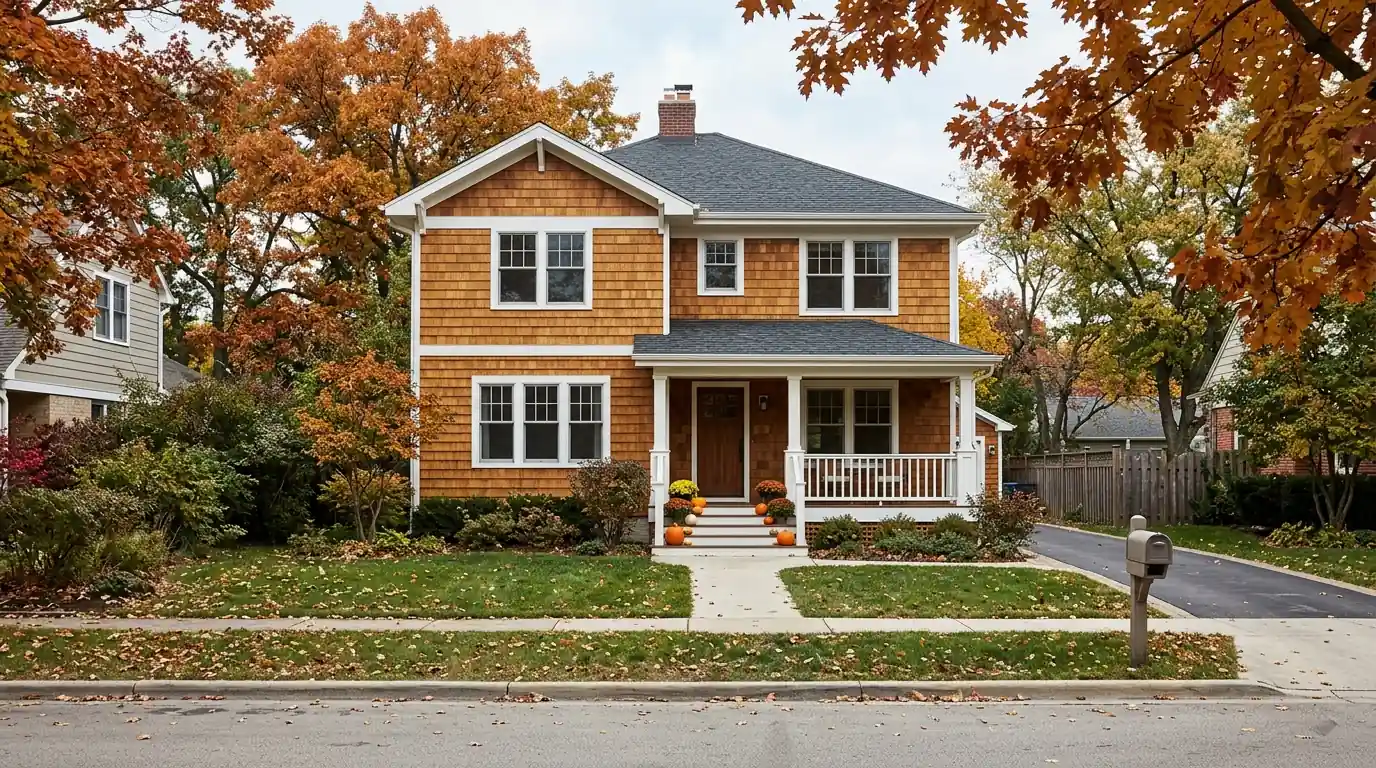
Cedar turns gray because sunlight breaks down the wood fibers at the surface. Stain applied over that gray layer sits on damaged fibers and fails early. So the first step is washing with a cleaner made for wood, followed by a brightener that restores the color and helps the stain penetrate evenly.
After a full dry, stain is sprayed and then back-brushed so it works into the rough-sawn face and the gaps between shakes. Penetrating stains such as the semi-transparent lines from Cabot, Sikkens and Penofin soak in and fade over time, which makes the next recoat simpler than repainting a peeling film.
Semi-transparent, solid stain or paint
| Finish | How it looks | The trade-off |
|---|---|---|
| Semi-transparent stain | Grain and texture show through | Fades evenly; recoated more often |
| Solid-color stain | Covers the grain, keeps texture | Lasts longer on weathered wood; can peel if applied thick |
| Paint | Solid film, smooth color | Hides cedar's character; peels if moisture gets behind |
What moves the price of cedar staining
Cedar is priced by wall area, with washing and repairs listed separately.
- Siding area and the number of stories
- Shakes, which take more time than lap siding
- Heavy graying or mildew to clean
- Old film finishes to strip
- Trim colors and caulking
Semi-Transparent Stain
Semi-transparent stain is what most people picture on cedar: color added, grain still visible. It penetrates instead of forming a film, so it weathers by fading rather than peeling, and a recoat is just a wash and another coat. We pick the tone with you from samples brushed on a hidden section of your own siding, since cedar color varies board to board and the same stain looks different on different houses. Windows and roof edges are shielded from overspray throughout.
Solid-Color Stain
Solid stain hides the grain but keeps the texture of the wood, and it covers weathered or uneven cedar better than semi-transparent stain. It is the usual choice when siding has been stained several colors over the years or has patches of repairs. It forms a thin film, so it is applied in two thin coats rather than one heavy one, which is what keeps it from peeling. Trim is usually done in a contrasting color. Color changes from a dark stain to a light one need solid stain rather than semi-transparent.
Shakes and Board-and-Batten
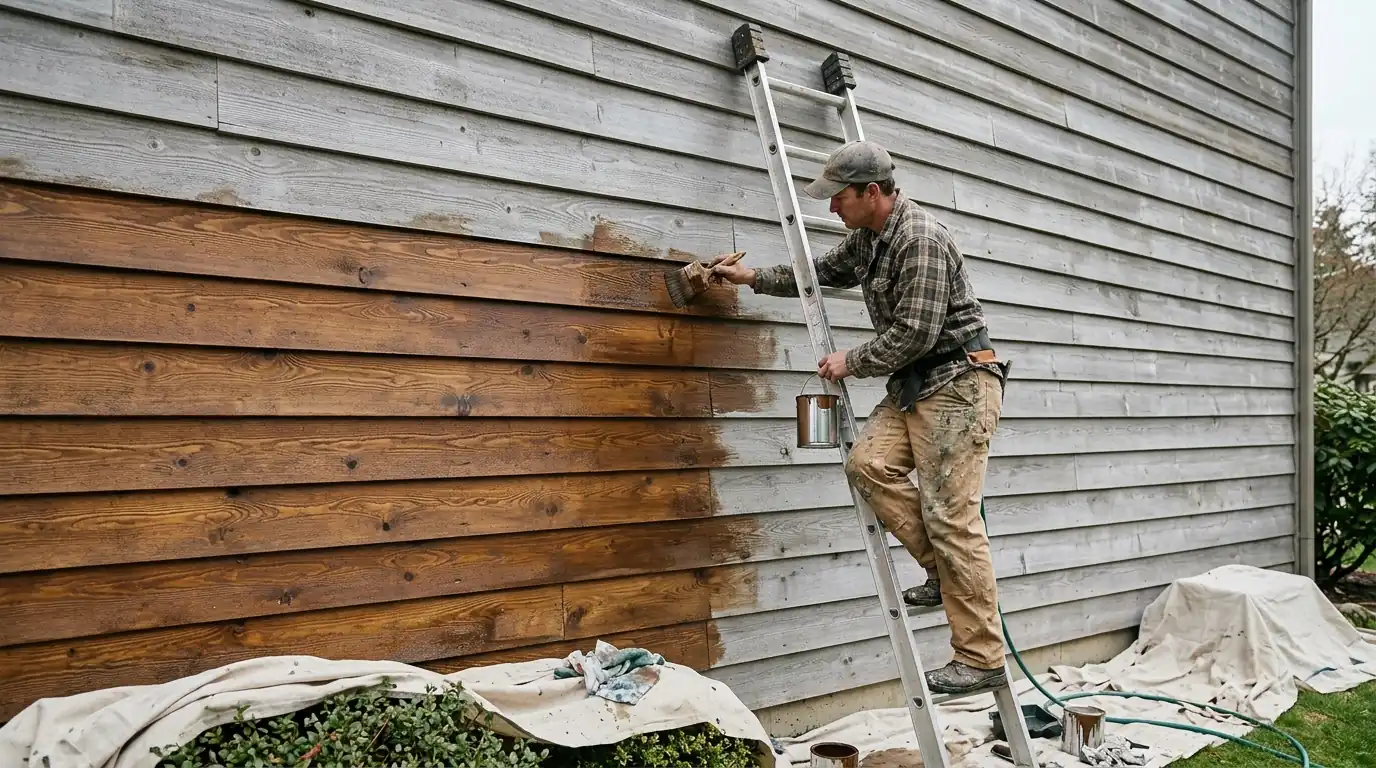
Cedar shakes have many edges and gaps, and stain has to reach all of them, so they are sprayed and then back-brushed shake by shake. Board-and-batten siding has deep vertical joints where water runs down, and those get extra attention. Both take longer than lap siding, and the estimate reflects that. Any split or cupped shakes are noted; we replace a few as part of the job and quote larger repairs separately. Shake ends at corners and around windows get an extra coat, since they absorb the most.
Staining cedar in a short outdoor season
The National Weather Service puts the typical first fall freeze for most of the Chicago area between about October 11 and 20, and on clear, calm fall nights a few spots west of the Fox River drop into the upper 20s before the city does. Stain needs dry wood and mild nights, so cedar jobs out toward the Fox Valley are best finished by late September, with Naperville-side jobs running a little later.
How we stain cedar
- 1
Sample
Stain tones brushed on a hidden section of your siding.
- 2
Wash and brighten
Gray layer removed, color restored.
- 3
Dry
Wood dried fully before stain.
- 4
Stain
Sprayed and back-brushed into every board and shake.
- 5
Trim and cleanup
Trim finished, plants and walks cleaned.
Signs cedar needs stain
Gray, weathered wood
Sunlight has broken down the surface fibers.
Water soaks in
Splash the siding; if it darkens instead of beading, the finish is gone.
Black spots or mildew
Shaded walls staying damp need cleaning and stain.
Cupping or splitting shakes
Dry, unprotected shakes start to curl and crack.