Updated October 2026
The short version
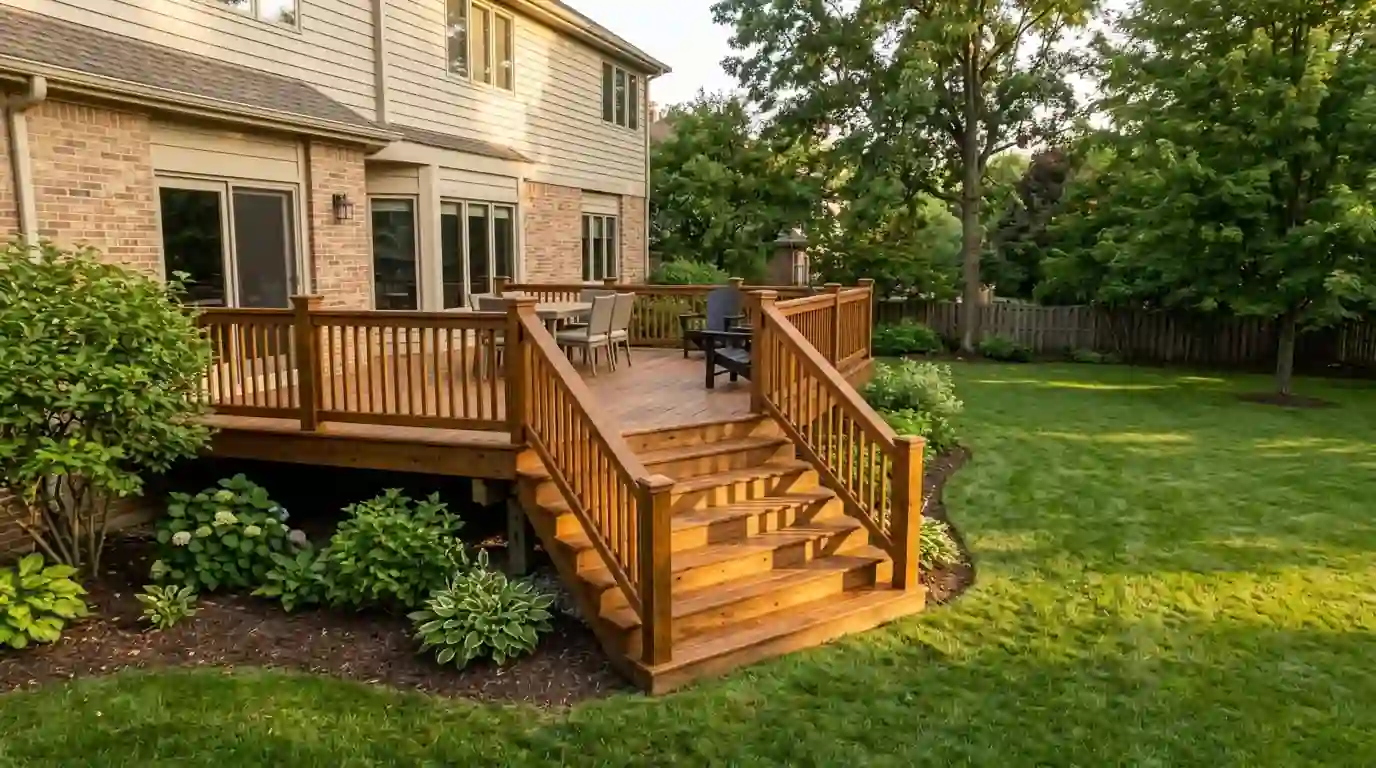
Deck staining in Naperville, IL is maintenance on a cycle: most deck professionals recommend restaining every two to three years. We wash and brighten the wood, wait for it to dry, and apply a penetrating stain to boards, rails and stairs. Cost guides put a typical staining job at about $540-$1,250, and the work runs from late April into October.
Why a deck needs stain every few years
A deck is the only part of a house you walk on that sits outside all year. Sun breaks down the wood surface and the stain on it, rain and snow soak in, and the boards gray, check and splinter. A penetrating stain slows all of that by blocking UV and repelling water, but it wears off the walking paths and stair treads first, which is why decks are on a cycle.
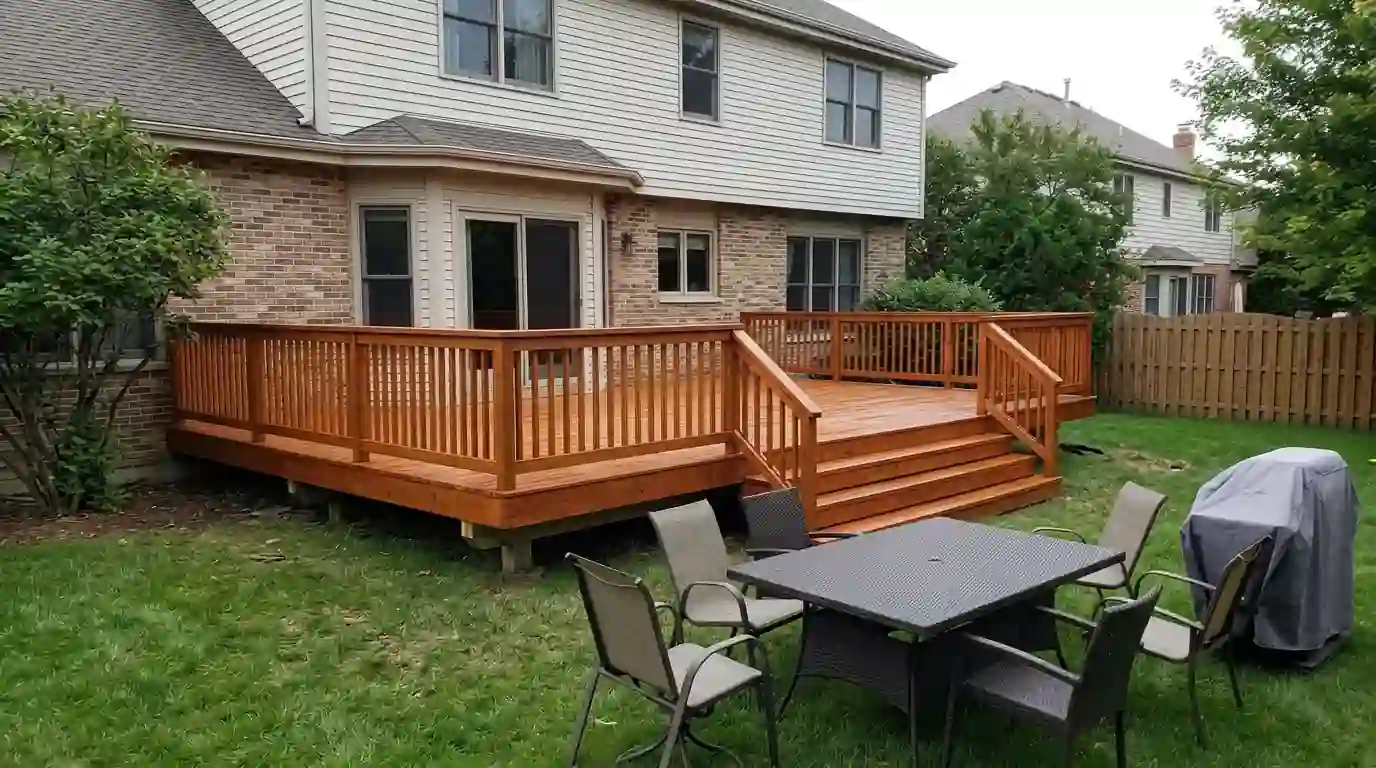
When a deck still has an even, worn stain and no peeling, it only needs a maintenance restain: wash, brighten, dry, stain. Lines such as Cabot, Sikkens and Penofin make penetrating stains that fade rather than peel, so the next cycle is the same simple job. If the old finish is peeling in patches, the deck needs stripping first, which is a restoration job.
What is included in deck staining
- Furniture and grills moved off the deck
- Plants and siding protected
- Wash to remove gray and mildew
- Brightener to restore wood color
- Full dry before stain
- Loose boards and nails reset
- Stain on boards, rails and stairs
- Cleanup of the deck and yard
Semi-Transparent Stain
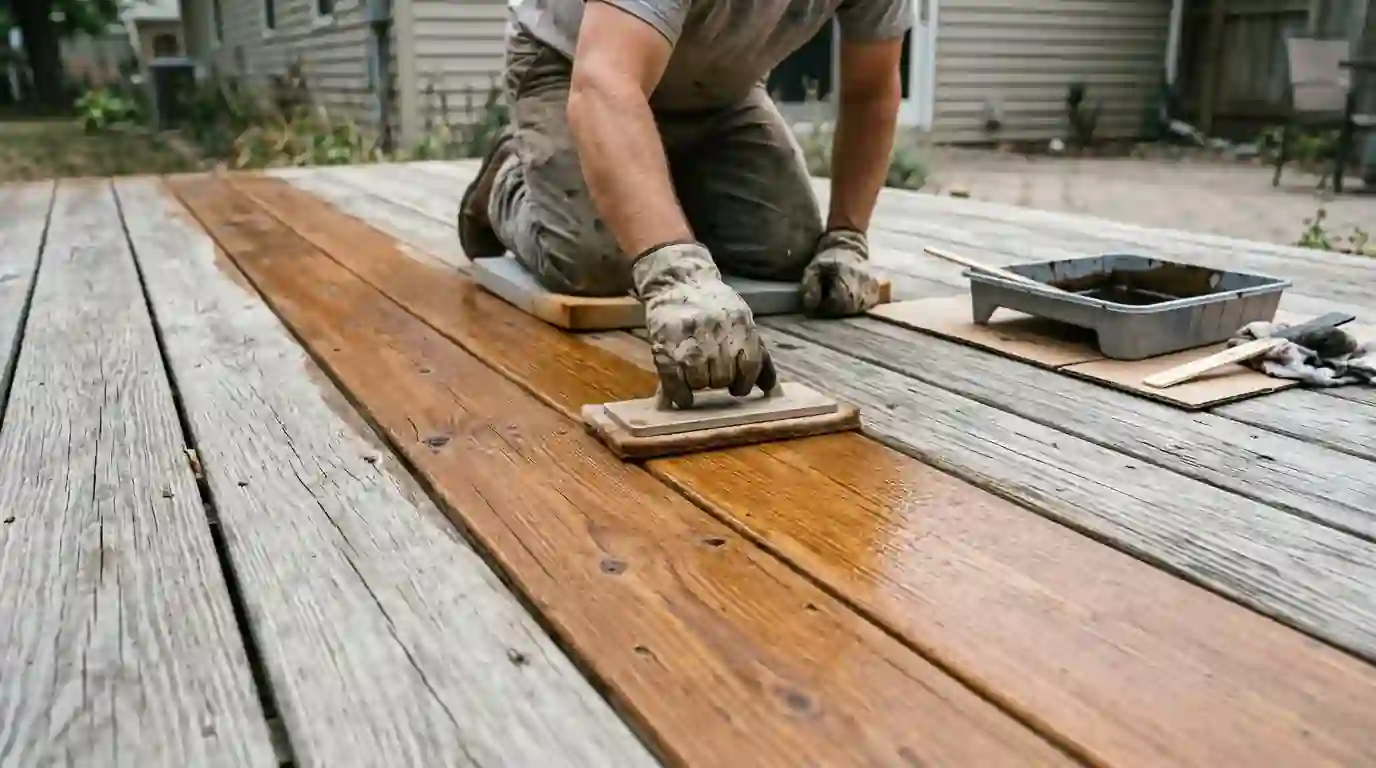
Semi-transparent stain is the usual choice for decks in good shape. It adds color and UV protection while letting the grain show, and because it soaks in rather than forming a film, it fades gradually instead of peeling. That makes recoating straightforward: a wash, a dry day and another coat. Cedar tones, browns and grays are the common choices. We apply it to boards, rails and stair treads, working a few boards at a time so laps do not show.
Solid-Color Deck Stain
Solid stain hides the grain and covers boards that have weathered unevenly, been patched with newer lumber, or carry old color you want to cover. It forms a thin film, so it is applied in thin coats to avoid peeling, and it lasts longer between recoats on rails and vertical surfaces than on the walking boards. A common combination is solid stain on railings and spindles with semi-transparent stain on the deck floor, where foot traffic wears any film. Railing tops get an extra coat, since they take the most sun and hands.
Sealer on New Lumber
New pressure-treated lumber is wet from treatment and will not take stain until it dries out, often for a season or more after the deck is built. In the meantime, a clear water-repellent sealer protects it without trapping moisture. We check new decks with a moisture meter and recommend the right step: sealer now and stain later, or stain once the wood is ready. New cedar and composite decks have their own needs, which we check before quoting. Composite boards are cleaned rather than stained, following the maker's guidance.
Staining decks between Chicago-area freezes
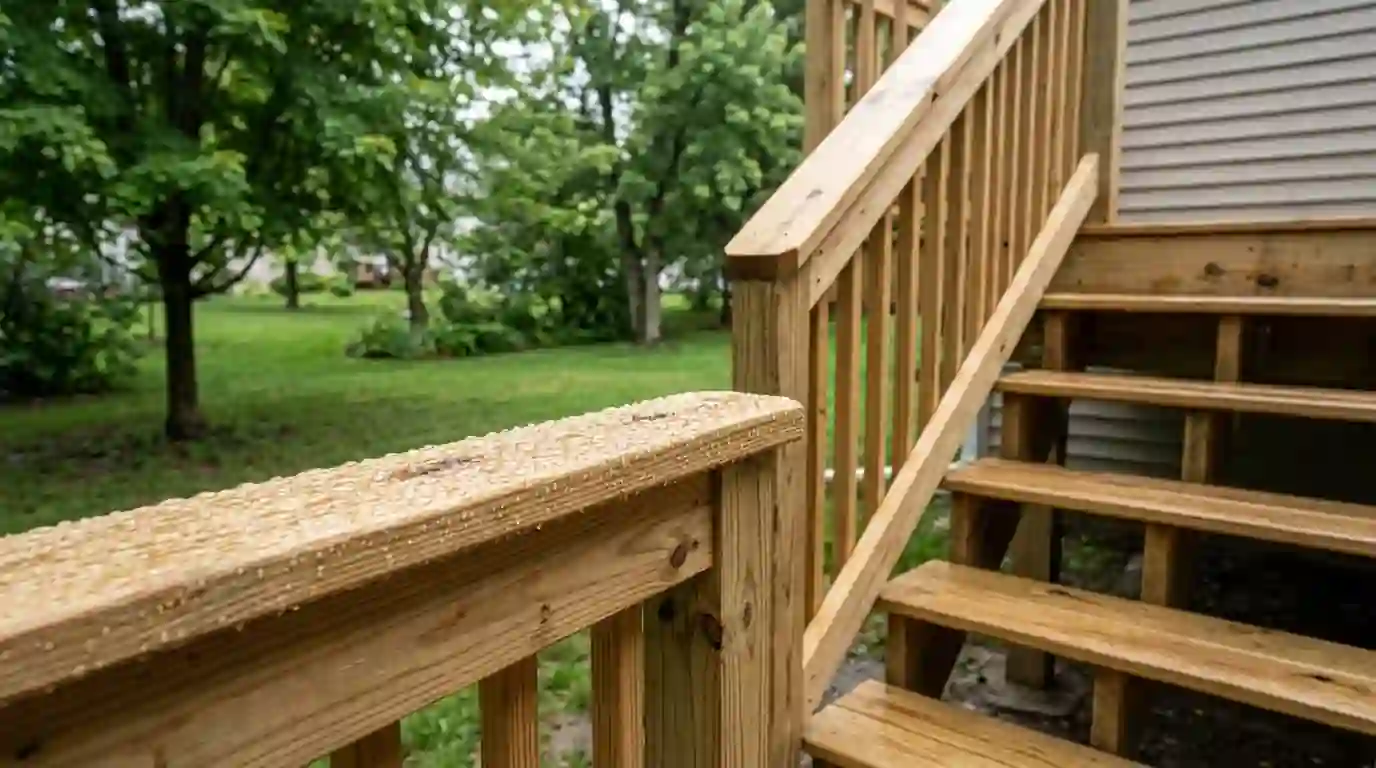
Most deck professionals recommend restaining every two to three years, and around here that work has to fit between freezes: the National Weather Service puts the typical first fall freeze for most of the Chicago area between about October 11 and 20. Wood needs a dry day after washing and mild nights after staining, so deck jobs fill the late spring and summer calendar first and the September dates go quickly.
Signs your deck is ready for stain
Water soaks in
Splash the boards; if they darken instead of beading, the stain is gone.
Gray, faded boards
Sun has broken down the surface and the color.
Splinters and checks
Dry, unprotected wood cracks along the grain.
Bare paths at doors and stairs
Foot traffic wears the stain off first.
How we stain a deck
- 1
Inspect
Boards, nails and old finish checked.
- 2
Wash and brighten
Gray and mildew off, color restored.
- 3
Dry
A dry day or more before stain.
- 4
Stain
Boards, rails and stairs coated evenly.
- 5
Return the deck
Furniture back once the stain is dry.
What moves the price of deck staining
Deck staining is priced by area, with rails and stairs adding the most hand work.
- Deck area and the number of levels
- Railings, spindles and stairs
- Washing gray or mildewed wood
- Semi-transparent versus solid stain
- Boards that need replacing before stain
How long a deck job takes
Most of a deck job is drying. Washing and brightening come first, then the wood needs a dry day or more before stain, so the work is usually two visits. Stain then needs its own dry time before foot traffic and furniture. Rain in the forecast moves the stain day, and we watch the forecast with you so the deck is not stained the day before a storm.