Updated October 2026
The short version
Wood rot repair in Naperville, IL comes before any exterior painting: soft wood is cut back to sound material, replaced with new primed boards or rebuilt with an epoxy filler for small areas, and every cut edge is primed so water cannot get back in. Then the repair is caulked and painted with the rest of the trim.
Why rot has to be fixed before paint
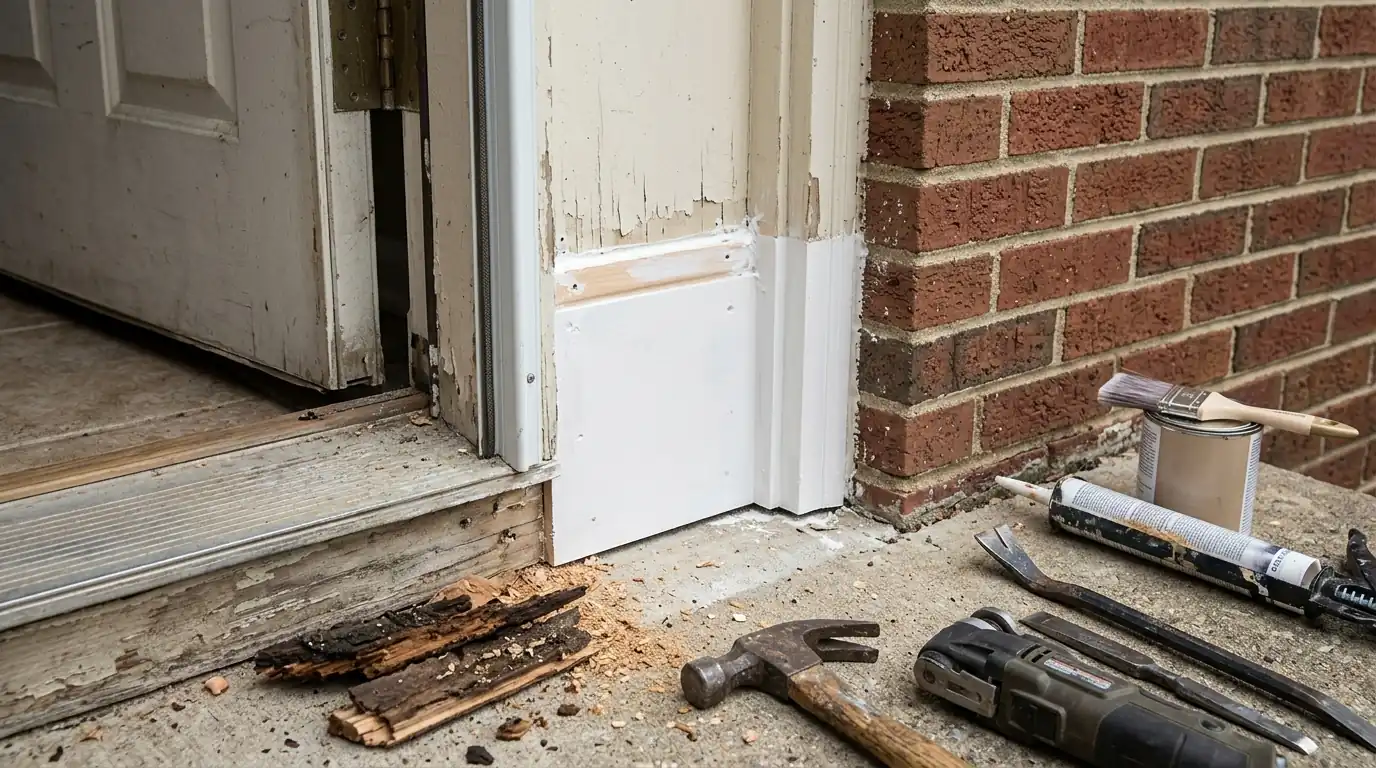
Rot starts where water sits: the bottom of door jambs, the outer edge of window sills, the ends of fascia boards behind gutters, and anywhere trim meets a roof or a step. Once the wood is soft, it cannot hold paint, and painting over it traps moisture and speeds the decay. A repaint over rotted trim looks good for a season and then peels in the same spots.
So rot repair is part of the prep on almost every exterior job we do. We probe suspect areas, cut back to sound wood, and decide whether to replace the piece or rebuild a small area with an epoxy wood filler. Every new piece is primed on all sides, including the back and ends, before it goes on.
What moves the price of rot repair
Rot repair is priced per repair, since every sill and jamb is a different size of job.
- How far the rot extends past what you can see
- Replacing whole boards versus epoxy repairs
- Custom profiles that need matching
- Height, such as fascia and rake boards
- Paint to match the surrounding trim
Rotted Trim Boards and Brickmold
Trim boards and the brickmold around doors and windows rot at their lower ends first, where rain runs down and sits. We cut out the soft section, splice in new wood with a joint that sheds water, or replace the full piece when the rot runs long. Composite or PVC trim is an option for spots that will always stay wet, since it does not rot. Every joint is caulked and the repair is primed and painted to match the rest of the trim.
Window Sills and Door Jambs
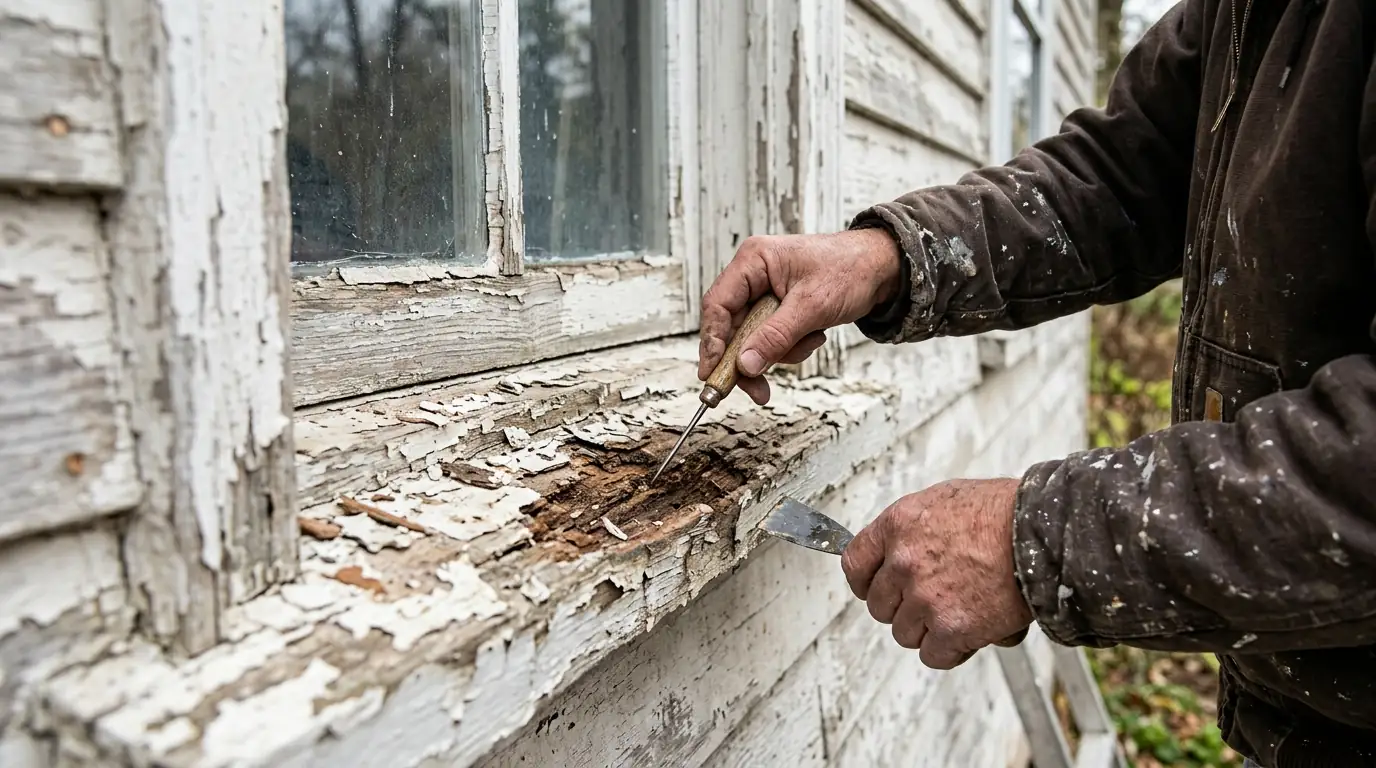
Sills hold water on their flat surface and rot from the outer edge inward; door jambs rot at the bottom, where they meet the threshold and stoop. Small areas can be dug out, consolidated and rebuilt with a two-part epoxy wood filler that is shaped and sanded to match the profile. Larger damage means replacing the sill nose or splicing in a new jamb bottom. Either way the repair is sealed so water runs off it instead of soaking in.
Fascia and Rake Boards
Fascia boards sit behind the gutters, and a gutter that overflows or leaks at a seam soaks them for years. Rake boards along the gable ends rot where they meet the roof edge. We take down the gutter section where needed, replace the rotted fascia lengths with primed boards, and rehang the gutter, or coordinate with your gutter installer. Fixing the gutter problem matters too; otherwise the new fascia rots on the same schedule. Soffit vents are checked at the same time, since blocked vents trap moisture.
Houses reaching repair age near Mecan Drive
Houses along Mecan Drive in south Naperville, across from Springbrook Prairie, were built in the mid-1980s, and a 2026 listing on the street noted siding and gutters replaced in 2024. That is typical for homes of that age: the original trim has been through decades of freeze, thaw and gutter overflow. When siding or gutters are replaced, it is the right moment to check the trim and fascia behind them for rot.
What is included in a rot repair
- Probing to find the full extent
- Rotted wood cut back to sound material
- New wood or composite cut to fit
- All sides of new wood primed
- Epoxy rebuilds for small areas
- Joints caulked
- Repair painted to match
- Gutter issues pointed out
How we repair rotted wood
- 1
Probe and mark
Every soft spot found and marked.
- 2
Cut back
Rot removed to sound wood.
- 3
Replace or rebuild
New primed wood or epoxy filler shaped to match.
- 4
Seal
Joints caulked, cut ends primed.
- 5
Paint
Repair painted with the surrounding trim.
Signs of rot to look for
Paint peeling in one spot repeatedly
Moisture behind the paint keeps pushing it off.
Soft wood under a screwdriver
Press the bottom of jambs and sill edges.
Dark staining or swelling
Wood that stays wet darkens and swells before it softens.
Gaps where trim meets siding
Open joints let water into the end grain.