Updated October 2026
The short version
Deck restoration in Naperville, IL is for decks where old stain is peeling or patchy, so a new coat would fail. We strip the old coating, brighten the wood, sand the raised grain, swap soft or split boards and restain from bare wood. Bob Vila's cost guide, citing Angi, puts stripping at about $1.50-$3 per square foot.
When a deck needs restoring, not just restaining
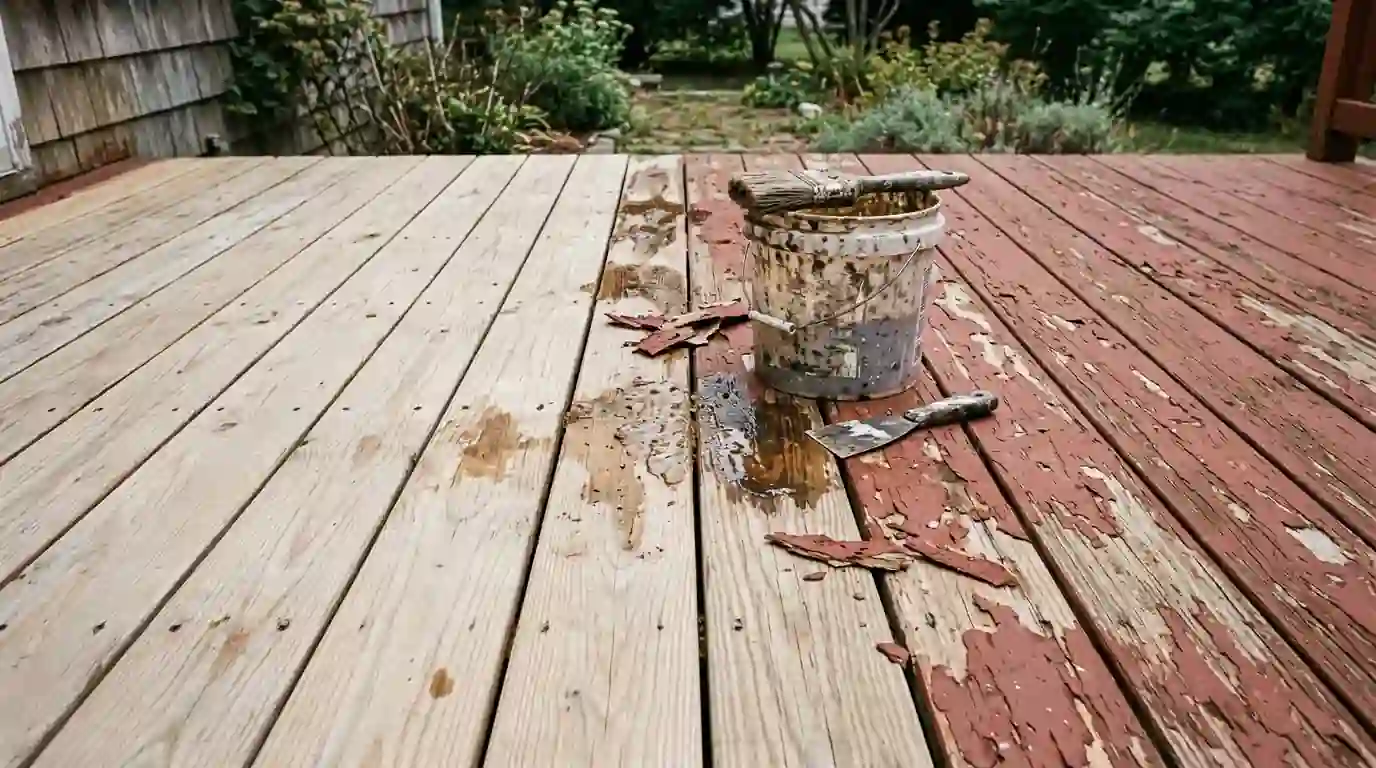
A deck that was coated with a solid stain or deck paint eventually peels in patches. Recoating over that only adds weight to a failing film, and it peels again within a season or two. The answer is to take the deck back to bare wood and start over with a penetrating stain that soaks in and fades rather than peels.
Restoration costs more than a maintenance restain, because stripping, neutralizing and sanding are real labor. In exchange, the next restain is simple: wash, dry and recoat, without scraping.
Restain or restore: which your deck needs
| What you see | The job | Why |
|---|---|---|
| Faded but even color, no peeling | Wash and restain | The old stain is wearing away evenly |
| Peeling in patches | Strip and restore | New stain will not hold on a failing film |
| Gray, splintery, rough boards | Brighten, sand and restain | Raised grain needs sanding first |
| Soft or split boards | Replace boards, then restore | Stain will not save rotted wood |
What moves the price of deck restoration
Restoration is priced by deck area and the condition of the coating coming off.
- Deck area, stairs and railings
- Solid stain or paint, which is harder to strip than semi-transparent
- Sanding raised grain on gray, weathered boards
- Boards that need replacing first
- The stain you choose for the new finish
Stripping Peeling Stain
We apply a deck stripper suited to the coating, let it work, then scrub and rinse the softened stain off the boards, rails and spindles. Solid stains and deck paints can take more than one round. A brightener follows to neutralize the stripper and bring back the wood's color. Plants, siding and the lawn below are wet down and covered before any chemical goes on, and rinse water is controlled. The deck then sits until it is fully dry before any sanding or stain.
Sanding Raised Grain
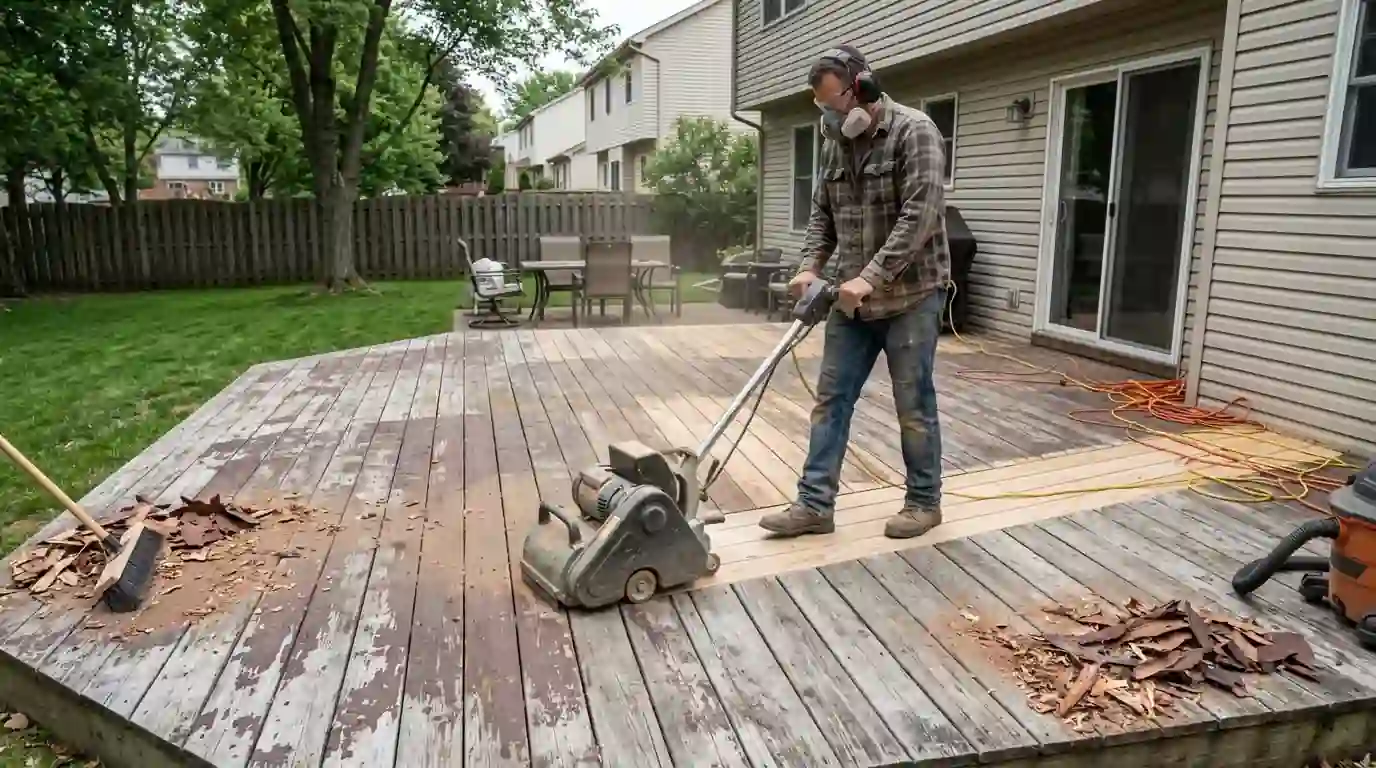
Stripping and washing raise the wood grain, leaving the boards fuzzy and splintery. Once the deck is dry, we sand the deck surface with a floor sander and hand-sand rails and spindles, which opens the wood so new stain soaks in evenly and leaves the surface smooth underfoot. Sanding also takes off the last traces of old coating that the stripper missed in the grain. Stair treads and the top rail get extra attention, since those are the surfaces hands and bare feet touch most.
Board Swaps Before Stain
Boards that are soft, split or cupped badly are replaced before stain, since no coating saves rotted wood. We match board width and type, fasten the new boards and let them dry with the rest of the deck. New pressure-treated boards look lighter at first, and a pigmented stain helps blend them in. Structural problems with joists or posts are a job for a deck builder, and we will tell you if we see them. Popped nails are reset or swapped for deck screws while we are on the boards.
Restoring decks before the first frost
The National Weather Service puts the typical first fall freeze for most of the Chicago area between about October 11 and 20. A stripped deck has to dry fully before stain, and stain needs mild nights to cure, so restoration jobs fill the summer and early fall. Most deck professionals recommend restaining every two to three years after that, which keeps the deck from needing another full strip.
How we restore a deck
- 1
Inspect the boards
Mark soft, split and cupped boards to replace.
- 2
Strip and rinse
Old coating off, plants and siding protected.
- 3
Brighten and dry
Wood neutralized and dried fully.
- 4
Sand
Floor sander on the deck, hand sanding on rails.
- 5
Stain
A penetrating stain from bare wood.
Stripping a deck yourself: the trade-offs
Many homeowners wash and restain their own decks. Stripping is where it gets harder.
Reasonable as a DIY job
- Washing and restaining a sound deck
- A small deck with a semi-transparent stain to remove
- Hand-sanding a few rough boards
Where pros earn their fee
- Stripping solid stain or deck paint
- Running a floor sander without gouging boards
- Protecting plants and siding from stripper