Updated October 2026
The short version
Interior wood staining in Naperville, IL is usually a refresh, not a strip: we clean the wood, scuff the old finish, blend stain into worn spots and lay two fresh clear coats so trim, doors and built-ins look new while the grain stays visible. Full stripping is reserved for wood whose finish has failed or whose color you want to change.
Refreshing stained wood instead of painting it
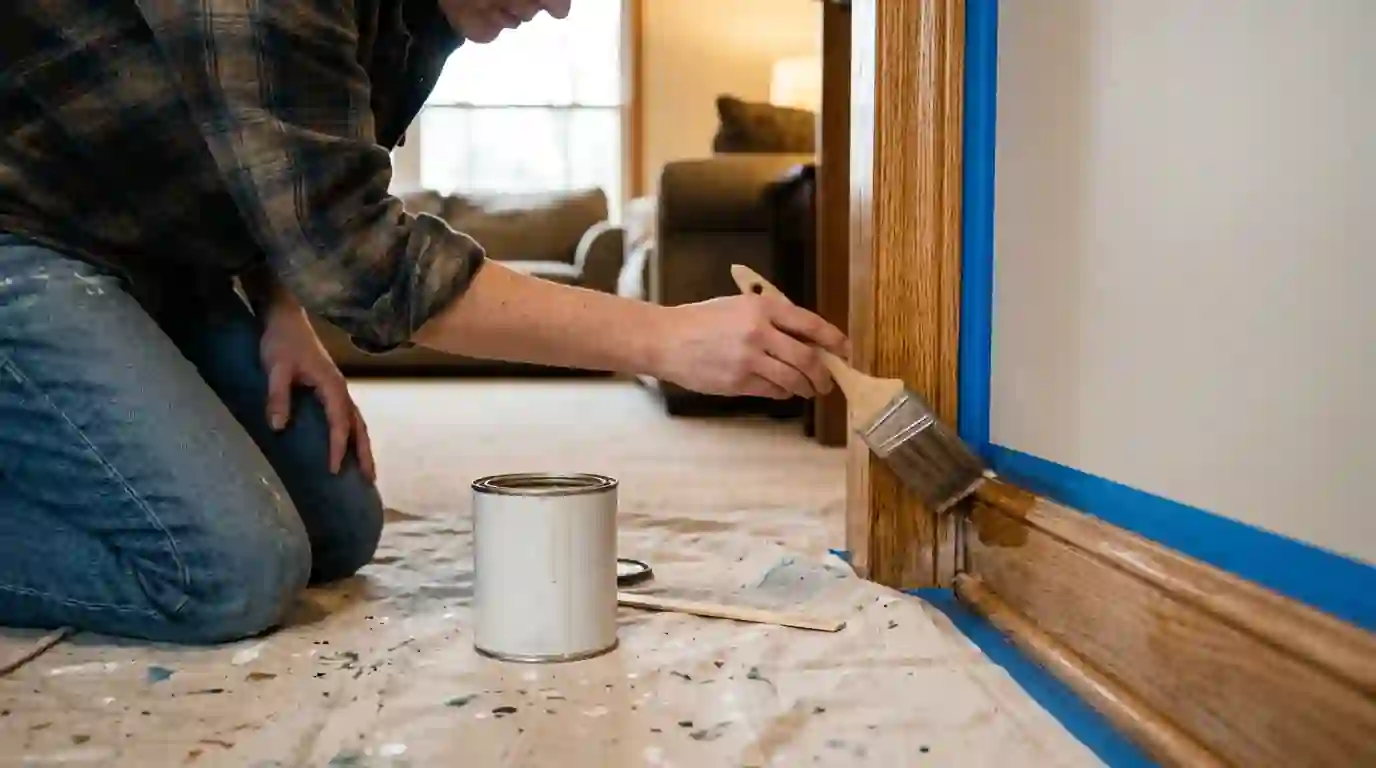
Stained trim and doors wear in predictable places: the edges of door casings, the faces of baseboards where vacuums hit, the area around knobs and the tops of handrails. The color under the clear coat is usually fine; it is the clear coat that has worn through and let the wood go gray or dirty. That means most stained woodwork can be refreshed without stripping it.
We clean the wood, scuff the old finish so the new coat bonds, blend stain into the worn spots to match the surrounding color, and apply two clear coats in the sheen you choose. The result keeps the grain and the warmth people chose stained wood for in the first place.
Refresh, restain or paint over stained wood
| Approach | What changes | Best for |
|---|---|---|
| Clean and recoat | Sheen and protection; color stays | Woodwork with worn clear coat but good color |
| Gel stain or toner | Color shifts a shade or two | Orange or uneven oak you want warmer or darker |
| Strip and restain | Any color, back to bare wood | Failed finishes or a big color change |
What moves the price of wood refinishing
Wood work is priced by the pieces and by how much of the old finish has to come off.
- Linear feet of trim and the number of doors
- Refreshing the clear coat versus stripping
- Worn spots that need stain blended in
- Built-ins with shelves, doors and detail
- Moving furniture and protecting floors
Stained Trim Refresh
Baseboards, casings and crown in stained wood are refreshed in place. We clean off years of dust and hand oils with a wood-safe cleaner, scuff the old clear coat, blend stain into any spots that have worn to bare wood, and brush on two coats of a clear finish. Satin is the usual sheen; it hides small scratches better than gloss. Walls are masked along every edge, so this job pairs well with a wall repaint if you want both done in one visit.
Wood Interior Doors
Stained interior doors wear most around the knob and along the latch edge. We take doors down where it helps, lay them flat so the finish levels without runs, and refinish both faces and all four edges, including the top and bottom that nobody sees but that let moisture in. Hinges and knobs are removed and bagged, and doors are rehung and checked so they close cleanly. Six-panel doors take the most time because every panel edge is detail work.
Built-Ins and Bookcases
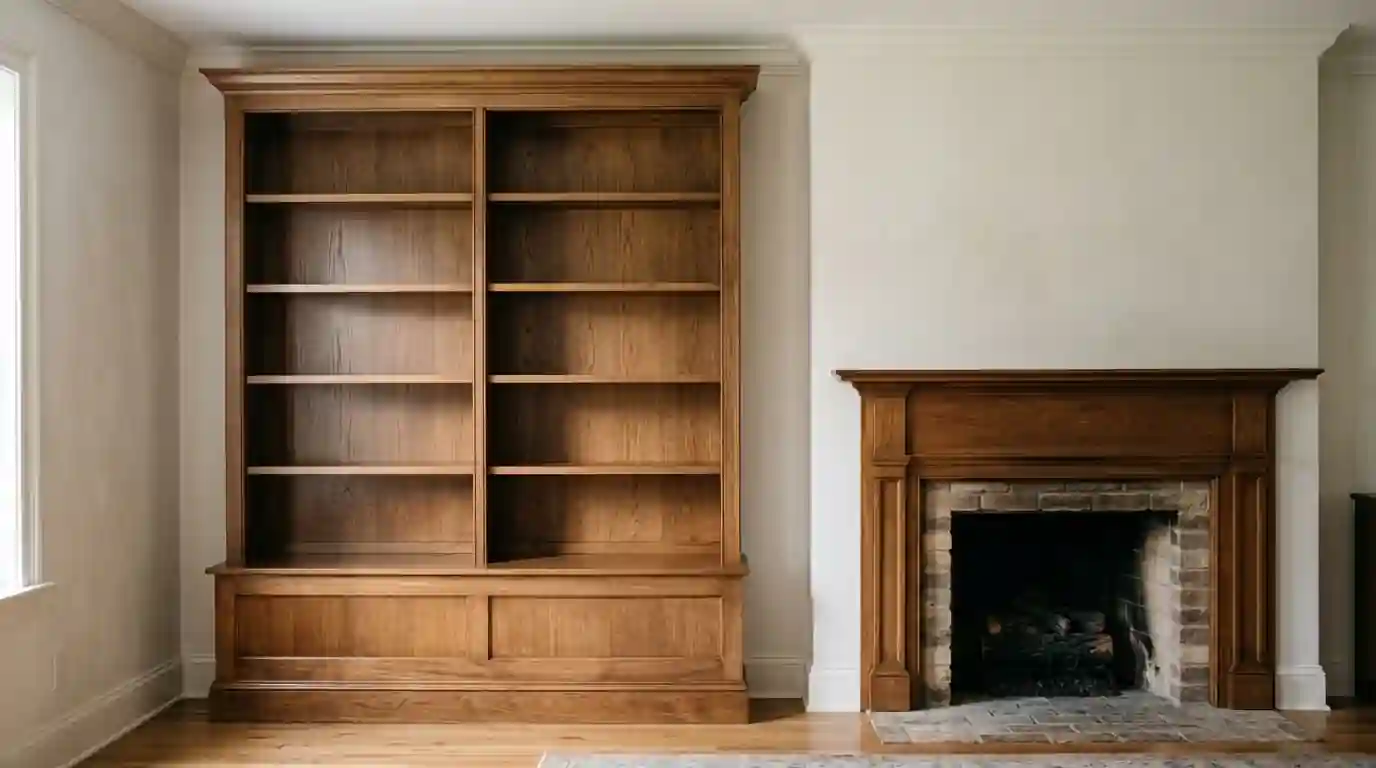
Built-in bookcases, window seats and the cabinetry around fireplaces are often the best wood in the house and the most worn. Everything comes off the shelves, the shelves are cleaned and scuffed, and worn edges get stain blended back in before clear coats. Shelves get a harder finish so books and decor do not stick. If you would rather paint a built-in than keep it stained, that is a cabinet-style paint job with a bonding primer, which we quote separately.
Original woodwork in Naperville's older homes
The Naperville Historic District, created in 1986, covers roughly 320 to 350 structures, and its architectural styles include Greek Revival and Italianate houses. In homes like these, original stained woodwork is part of the character a buyer pays for, and painting over it is hard to undo. Refreshing the clear coat and blending stain into worn spots keeps that woodwork original while making it look cared for again.
What is included in a wood refresh
- Floors and furniture covered
- Walls masked along every edge
- Wood cleaned of oils and grime
- Old clear coat scuffed for bonding
- Stain blended into worn spots
- Two clear coats in your sheen
- Hardware removed and replaced
- Doors rehung and checked
How a wood refresh runs
- 1
Test a spot
We clean and recoat a small hidden area so you see the result first.
- 2
Clean and scuff
Oils and grime off, old finish scuffed.
- 3
Blend the color
Stain worked into worn areas to match.
- 4
Clear coats
Two coats, lightly sanded between them.
- 5
Reassemble
Hardware back on, doors rehung.