Updated October 2026
The short version
Staircase refinishing in Naperville, IL most often means painted risers and spindles with stained treads and handrails, a two-tone look that hides scuffs and keeps wood where hands and feet touch. Treads get a floor-grade clear coat, rails a hard finish, and we work so one side or every other step stays usable while coats dry.
Why staircases need a different finish than trim
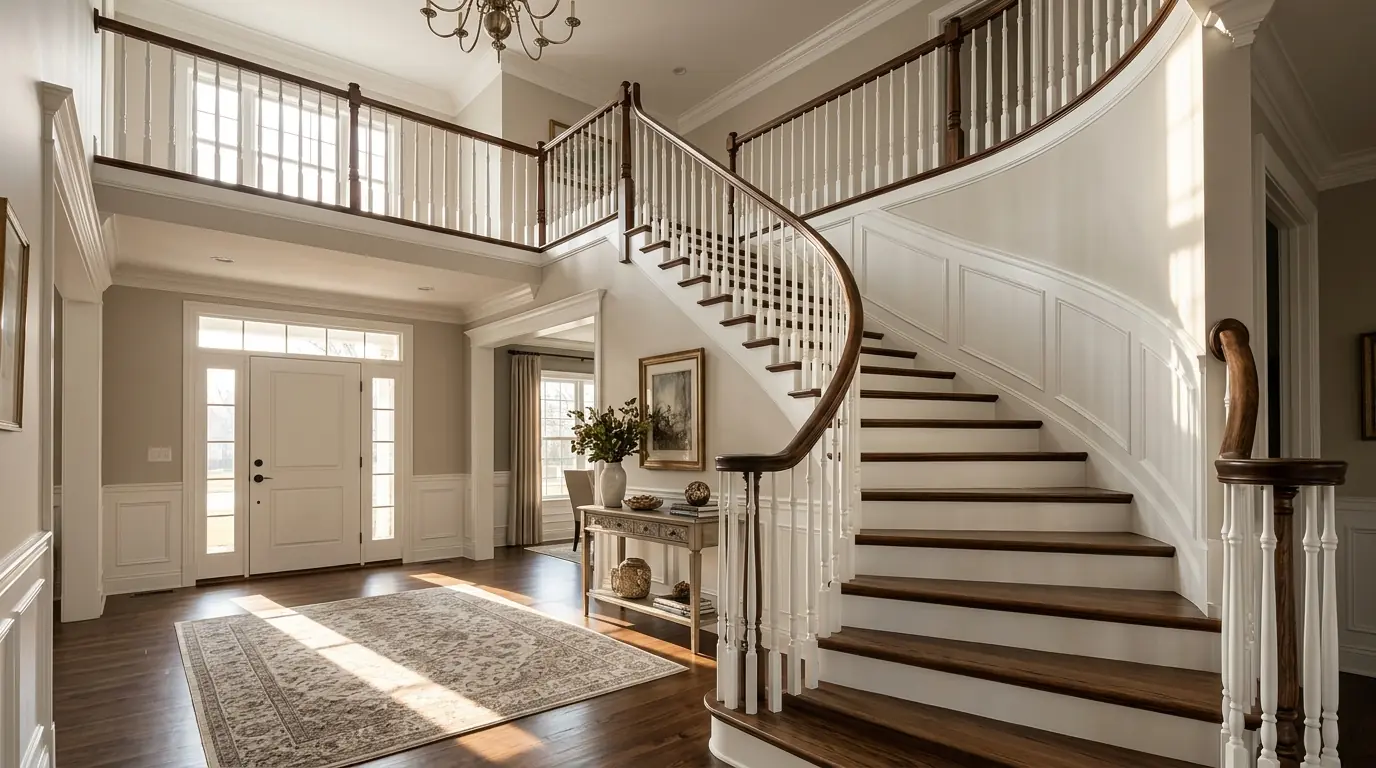
Stairs take more wear than any other woodwork in a house. Treads carry every footstep, handrails carry every hand, and risers get kicked by shoes on the way up. A wall paint or ordinary trim enamel on a tread wears through in months. So each part of a staircase gets a finish suited to the wear it takes: floor-grade clear coats on treads, a hard enamel on risers and spindles, a durable clear or stain on rails.
The other challenge is that you still need to use the stairs. We plan the work so the staircase stays usable, either by finishing every other step first or one side at a time, and we tell you when each part can take foot traffic.
What moves the price of staircase refinishing
Stairs are priced by the number of steps and spindles, since every piece is hand work.
- The number of treads, risers and landings
- Spindle count and how detailed they are
- Sanding treads to bare wood versus a recoat
- Carpet removal and repairs underneath
- Stain on treads and rails versus paint throughout
Painted Risers with Stained Treads
This is the most requested staircase look we see: white or soft-gray risers with treads in a darker stain. Treads are sanded to bare wood to remove the worn finish and get a fresh stain and a floor-grade clear coat. Risers are sanded, primed and painted in a hard enamel that wipes clean. The paint line along each tread edge is cut by hand, which is where most of the time goes. The contrast hides scuff marks and makes even a plain builder staircase look custom.
Spindles and Balusters
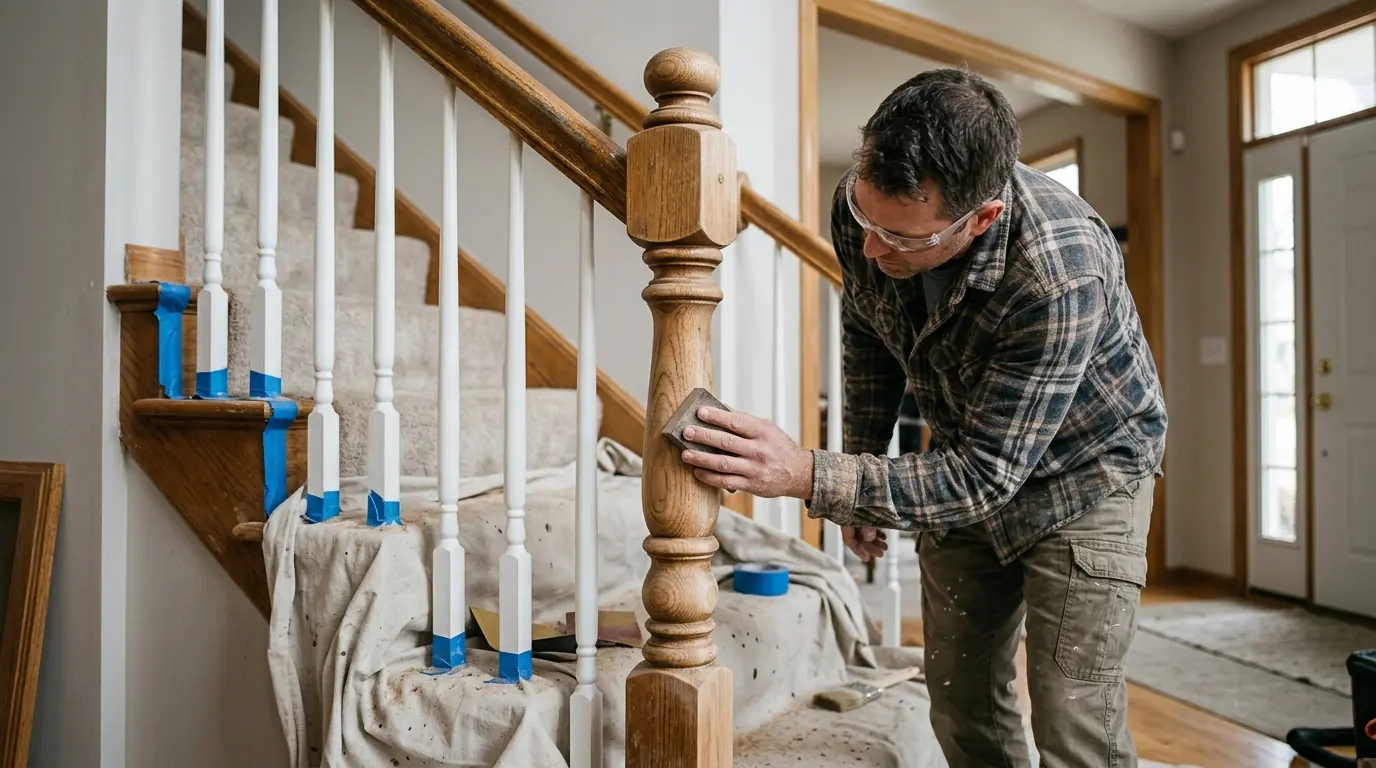
Spindles are the slowest part of any staircase, because each one needs sanding, priming and two coats on every face. We paint them by brush, never spray, so overspray does not land on treads and walls, and we work from the top down to avoid touching wet ones. Oak spindles turning white is a big change for little cost. Square spindles go quickly; turned ones with beads and coves take longer, and we count them before quoting. Spindle tops and bottoms are caulked where they meet the rail and tread so the lines look crisp.
Handrails and Newel Posts
Handrails and newel posts are touched every day, so their finish wears unevenly and hand oils build up on top. We clean and sand them, blend or restain to match the treads, and finish with a durable clear coat that can handle constant contact. Dark stains such as espresso or walnut on the rail with white spindles are the common pairing. Loose rails or wobbly newels are tightened first, since a fresh finish on a moving rail will crack at the joints.
Builder staircases in Naperville homes
At the 2000 census Naperville's median home dated to 1986, and staircases from that building era very often have their original builder finish: oak treads and rails under a clear coat that has worn through down the middle of each step, and spindles that went orange with age. That is why the two-tone repaint is our most common staircase job here; it keeps the oak where it still looks good and paints the parts that date the house.
How a staircase job runs
- 1
Protect the house
Floors, walls and the landing covered and masked.
- 2
Sand
Treads to bare wood, rails and spindles scuffed.
- 3
Stain and prime
Treads and rails stained; risers and spindles primed.
- 4
Coats in sequence
Every other step first so the stairs stay usable.
- 5
Final finish
Clear coats on treads, enamel on risers and spindles.
Refinishing stairs yourself: what to weigh
Staircase makeovers are a popular DIY project. Here is where they tend to go wrong.
Reasonable for a homeowner
- Painting risers on a short staircase
- Recoating treads that only need a fresh clear coat
- Touching up spindles that already have paint
Where pros earn their fee
- Sanding treads evenly without dips
- Cutting crisp paint lines on every tread edge
- Thirty or more turned spindles by brush
Keeping the stairs usable during the work
Stairs cannot simply be closed for days in most homes. We work every other tread first, so there is always a dry step to use, then come back for the rest. Spindles and risers are done while treads cure, and handrails last. Clear coats on treads need their full dry time before normal traffic and longer before rugs go back down, and we give you the exact times for the product we use.