Updated October 2026
The short version
Garage floor coating in Naperville, IL lasts when the concrete is ground first: grinding opens the surface so epoxy bonds instead of peeling under hot tires. We fill cracks and pits, lay a base coat, broadcast color flakes if you want them, and seal with a clear topcoat. Published guides put professional epoxy at about $3-$7 per square foot.
Why grinding decides whether the floor lasts
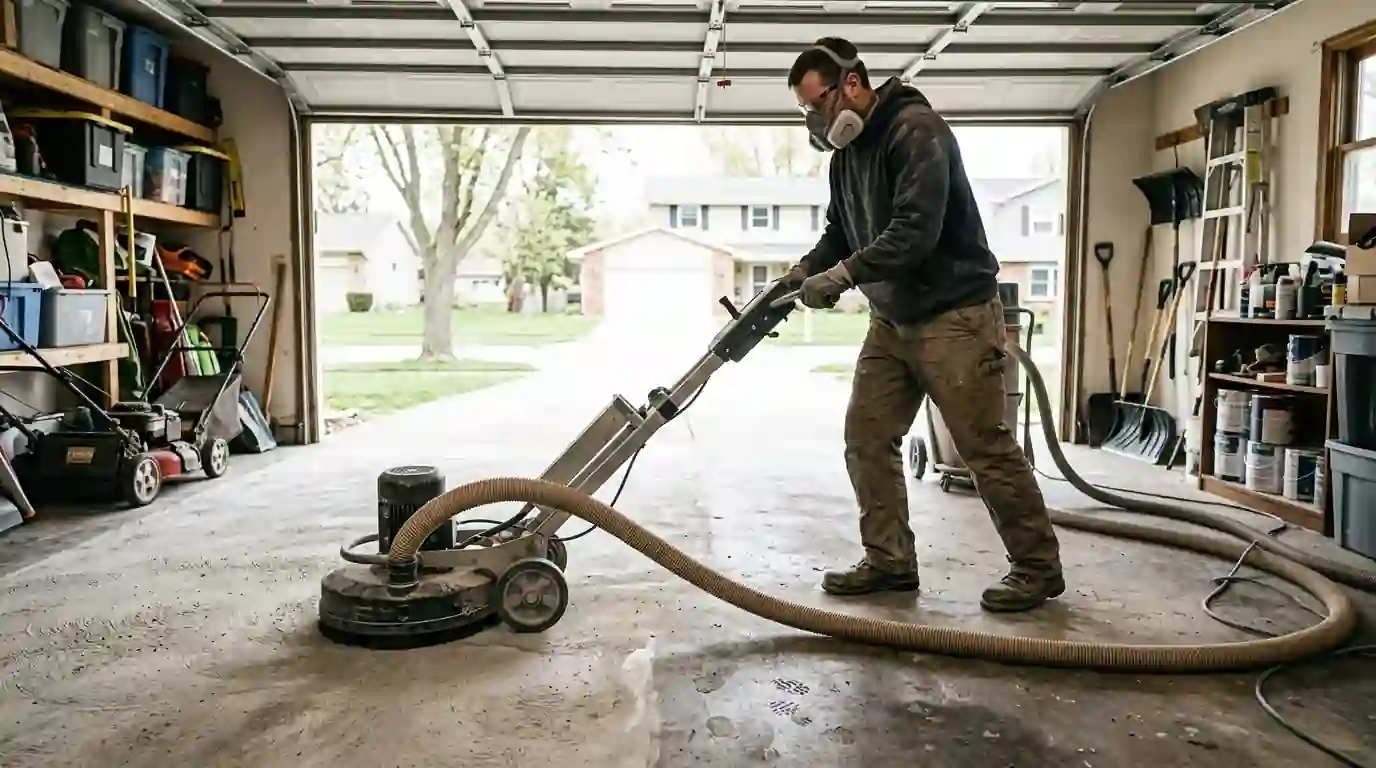
The most common floor coating failure is hot tire pickup: a car pulls in on a warm day and lifts patches of coating off the concrete. It happens when the coating was rolled onto smooth, sealed or dirty concrete it could not grip. Diamond grinding opens the surface so the epoxy soaks in and bonds, and it is the step that separates a professional floor from a kit.
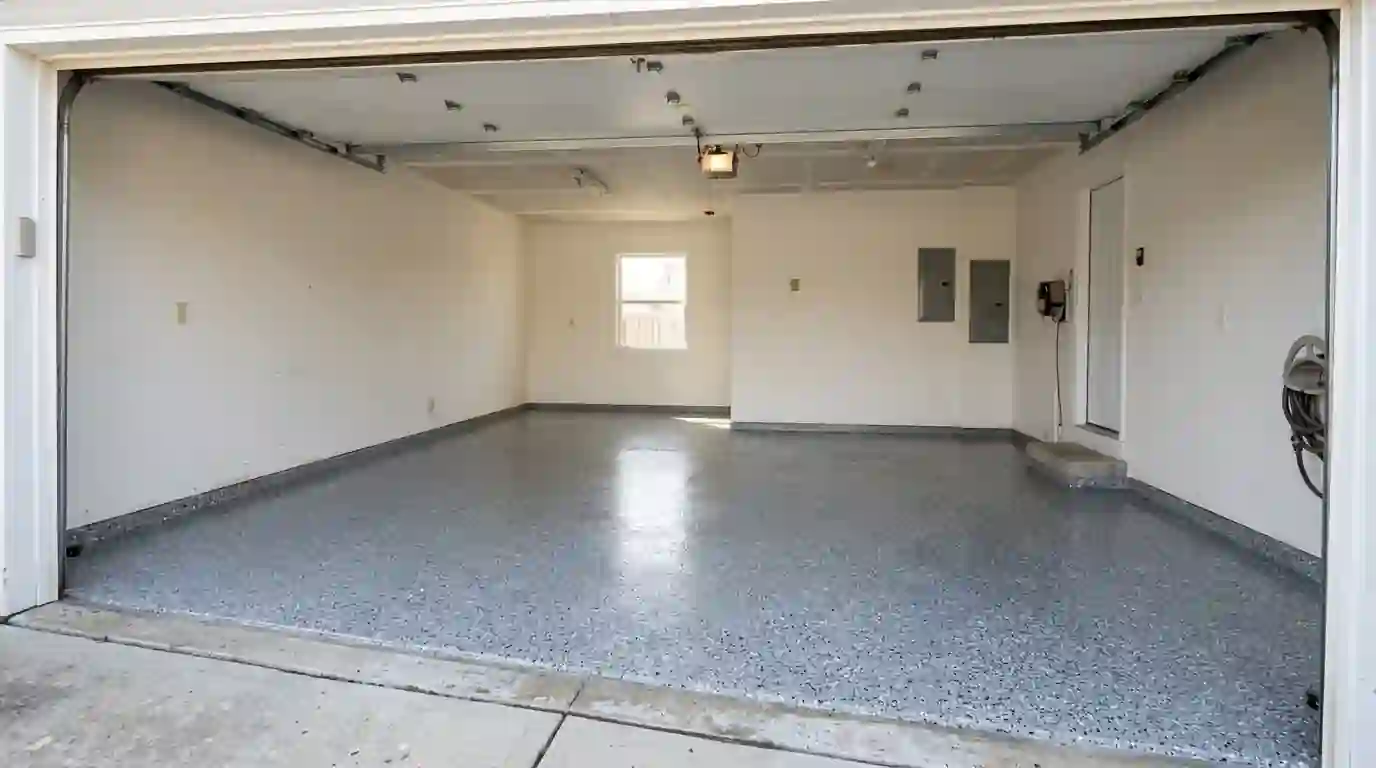
After grinding, cracks and pits are filled, the floor is vacuumed, and a base coat goes down. A flake floor gets colored vinyl chips broadcast into the wet base coat, which hides dirt and adds texture underfoot, and then a clear topcoat seals it all.
Solid color, flake or plain sealer
| Finish | How it looks | The trade-off |
|---|---|---|
| Solid-color epoxy | Even, glossy single color | Shows dust and tire marks more than flake |
| Flake broadcast | Speckled, textured, hides dirt | More material and labor; slightly rougher underfoot |
| Clear sealer only | Bare concrete look, less dust | Cheapest; does not hide stains or add color |
What moves the price of a floor coating
Coatings are priced by the square foot, with grinding and repairs listed separately.
- Floor area, one-, two- or three-car
- Grinding and the condition of the concrete
- Crack, pit and spall repairs
- Solid color versus flake broadcast
- Moving shelving, freezers and stored items
Solid-Color Epoxy
A solid-color epoxy floor gives a clean, uniform look, usually in gray, tan or white, and reflects light so a garage or workshop feels brighter. After grinding and crack repair, we roll a primer or base coat and a solid-color body coat, then seal with a clear topcoat that resists hot tires and chemicals. Solid colors show dust and tire marks more than flake floors, so they suit garages that are swept often and workshops more than busy family garages.
Flake Broadcast Floors
Flake floors are the most popular finish for family garages. Colored vinyl chips are broadcast by hand into the wet base coat until the floor is covered, then the loose flakes are scraped and swept, and a clear topcoat locks them in. The speckled pattern hides dirt, salt and small chips, and the texture gives a little more grip when the floor is wet. Flake blends are chosen from samples at the estimate to suit the house and the cars.
Basement Concrete Floors
Basement floors can take the same coatings, with one extra check first: moisture coming up through the slab. A slab that stays damp will push any coating off. We test for moisture, grind the floor, fill cracks and lay a coating suited to below-grade concrete. Coated basement floors suit workshops, gyms, laundry rooms and storage areas, and they wipe clean far more easily than bare or painted concrete, without the dust bare concrete keeps shedding. Floor drains and sump lids are masked so they stay clear and keep working.
Coating floors around the Chicago-area season
Floor coatings need the concrete and the air above a minimum temperature to cure properly, and an attached garage in winter is often colder than the house. O'Hare averages its last spring freeze around April 23 and its first fall freeze around October 13, so most garage floors are coated from late spring into early fall. Heated basements can be coated year-round once the slab passes a moisture check.
How a floor coating job runs
- 1
Clear and inspect
Garage emptied, cracks and moisture checked.
- 2
Grind
Diamond grinding with dust control opens the concrete.
- 3
Repair
Cracks, pits and spalls filled and ground flush.
- 4
Base coat and flakes
Base coat rolled, flakes broadcast if chosen.
- 5
Topcoat and cure
Clear topcoat, then cure time before cars return.
How long the garage is out of use
A garage floor is usually a two-stage job: grinding, repairs and base coat first, then flakes and topcoat once the base has set. After that, the floor needs to cure before foot traffic, and longer before cars park on it. Cure times depend on the product and the temperature, and we give you the exact times for the coating we use. Plan to park outside for those days and to clear the garage beforehand.