Updated October 2026
The short version
Warehouse painting in Naperville, IL and along the I-90 corridor is planned around operations: we work in sections, nights or weekends where needed, and keep aisles and docks open. Block walls take a block filler before finish coats, exposed steel gets a rust-inhibiting primer, and bollards and guards get high-visibility safety colors.
Painting a building that has to keep working
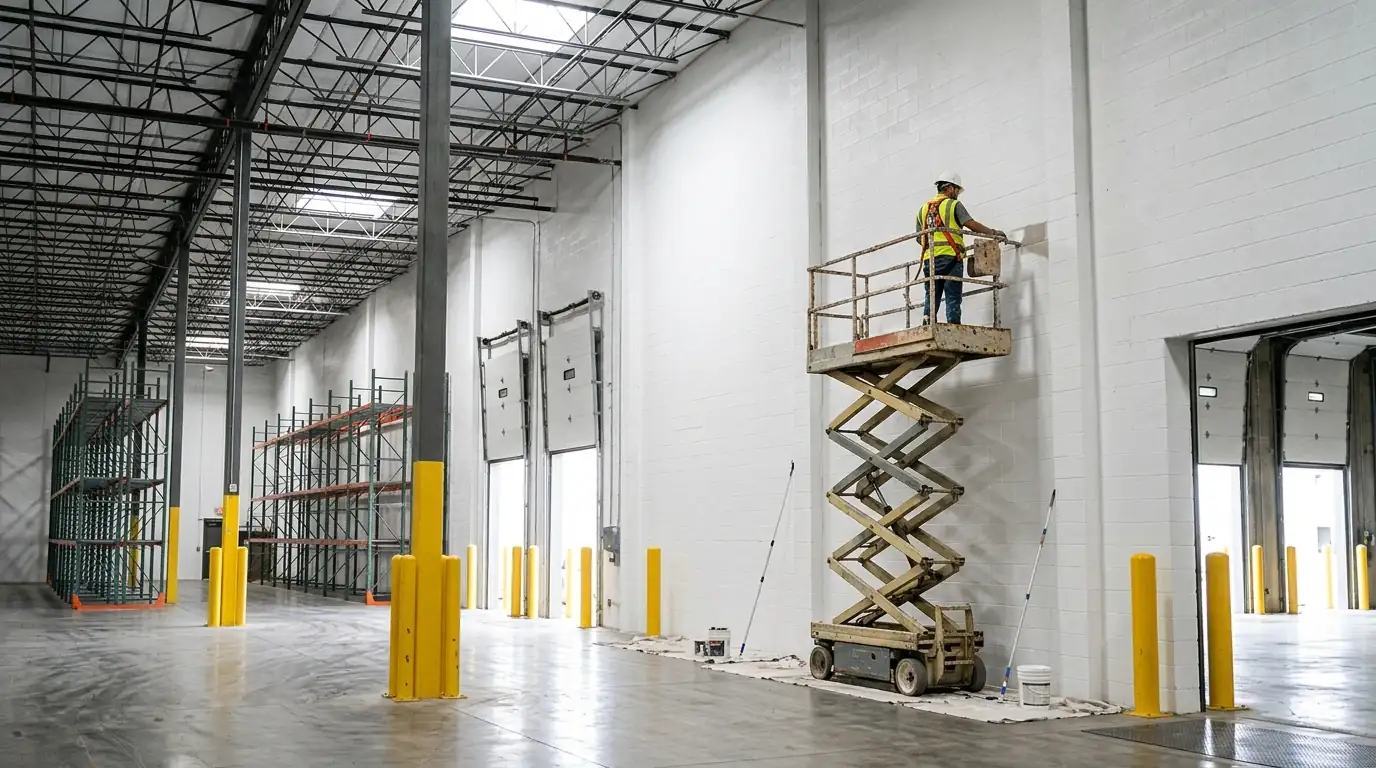
Industrial painting is mostly scheduling. Racking, forklifts, dock doors and staff do not stop for a paint crew, so the building is split into zones that can be closed one at a time, with work at night or on weekends where daytime traffic is heavy. We agree on the zones and the hours with your facility manager before the first lift arrives.
The coatings are chosen for the surface and the abuse it takes. Porous concrete block needs a block filler to fill its pores before the finish coats; tilt-up concrete needs cleaning and a masonry primer; steel needs rust treatment and a primer made for metal; and anything forklifts touch gets a hard, high-visibility finish.
What moves the price of warehouse painting
Industrial jobs are priced by area, height and the hours we can work.
- Wall area and ceiling height, which sets the lift size
- Block filler on porous concrete block
- Rust treatment on exposed steel
- Night, weekend or phased scheduling
- Masking racking, equipment and stored goods
Block and Tilt-Up Walls
Concrete block walls drink paint until their pores are filled, so the first coat is a block filler applied heavily and worked in, followed by finish coats in a scrubbable industrial enamel. Tilt-up concrete panels are smoother and need cleaning, patching at panel joints and a masonry primer instead. Light colors on the walls brighten a warehouse noticeably, which many facility managers want as much as the fresh look. Lower walls near traffic can be a darker, harder color that hides scuffs.
Exposed Steel and Deck
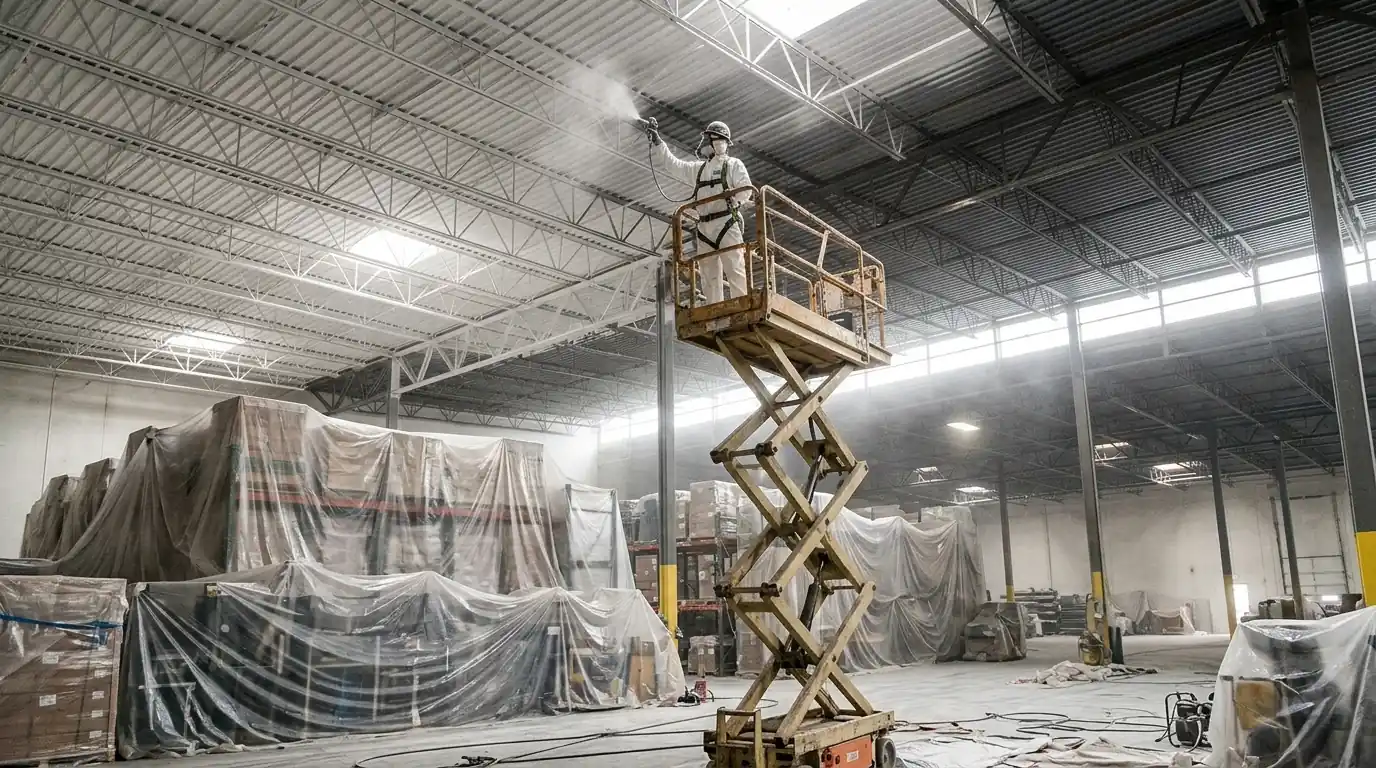
Roof joists, beams and the steel deck above them are usually sprayed from lifts, with everything below covered or moved. Rusted spots are cleaned and primed with a rust-inhibiting primer first. White or light gray overhead reflects light back down and makes a dark building feel open, while a dark color hides ducts and conduit. We plan the spray zones around racking and keep plastic over goods and equipment until the overspray risk is past. Sprinkler heads and light fixtures are bagged before any spraying starts.
Bollards and Safety Colors
Bollards, guard rails, rack ends and dock edges take hits every day and are part of how a building stays safe. We clean and scuff them, prime bare or rusted metal, and finish in a high-visibility safety yellow or the colors your safety program specifies. Pedestrian walkways and hazard zones can be marked at the same time. This work is often scheduled on weekends, since it is right in the traffic paths. Faded paint on these surfaces is a safety issue, not only a cosmetic one.
Our head office sits in an industrial park
The head office on Industrial Drive in Gilberts sits in an industrial park on the I-90 corridor, with access to Route 72 and Route 47. Buildings on that street include free-standing industrial space completed in 1995, with dock-high and grade-level doors. That is the kind of building we paint most often in commercial work: block or tilt-up walls, exposed steel overhead and docks that have to stay open.
What is included in a warehouse paint job
- Zones and hours agreed with your facility manager
- Racking, equipment and goods covered or moved
- Walls cleaned and repaired
- Block filler on porous block
- Rust treatment on exposed steel
- Two finish coats on walls
- Safety colors on bollards and guards
- Daily cleanup so the zone reopens on time
How an industrial job runs
- 1
Walk the building
Surfaces, heights and traffic patterns noted.
- 2
Plan the zones
Hours and closures agreed with the facility manager.
- 3
Protect and prepare
Goods covered, walls cleaned, rust treated.
- 4
Coat each zone
Filler, primer and finish coats in sequence.
- 5
Reopen and report
Zone handed back, next zone opened.
How we keep the building running
The schedule is built around your operation, not ours. Each zone is closed only while we are in it, aisles stay open, and dock doors are worked around delivery windows. Night and weekend work keeps the busiest zones untouched during shifts. We give the facility manager a zone-by-zone plan before we start and update it each day, so nobody is surprised by a closed aisle.