Updated October 2026
The short version
New construction and remodel painting in Naperville, IL starts with a primer made for new drywall, which evens out the different porosity of paper and joint compound so the finish coats dry uniformly. We spray-prime, paint ceilings and walls, then finish trim and doors, fitting around the flooring, cabinet and finish trades.
Why new drywall needs its own primer
Finished drywall is two different surfaces: paper and joint compound. They absorb paint at different rates, so a finish coat straight over them dries with dull patches over the seams and screw heads, a defect painters call flashing. A drywall primer seals both to the same porosity, and it also shows up any sanding marks or seam ridges while they can still be fixed.
Timing with other trades matters as much as the paint. Primer and ceilings usually go on before flooring and cabinets, and final wall coats and trim after, so the finish trades do not scuff fresh paint. We agree on that sequence with your builder or with you, if you are running the remodel yourself.
Spray, back-roll or brush and roll
| Method | Best for | The trade-off |
|---|---|---|
| Spray | Primer on new drywall, empty rooms | Fastest coverage; everything else has to be masked |
| Spray and back-roll | Walls that need an even, rolled texture | Two painters at once, but the most uniform finish |
| Brush and roll | Small additions and occupied homes | Slower, little masking, easy to stop and restart |
What moves the price of new construction painting
New work is priced by area and by how many trips the trade schedule requires.
- Wall and ceiling area to prime and paint
- Rooms empty enough to spray, or brush and roll only
- The number of colors and accent walls
- Trim and doors: primed, painted, or delivered prefinished
- How many separate visits the trade schedule needs
Published ranges, not our price. per square foot plus material, Naperville interiors: $1.40-$3.40 (source). These are area or national figures; we quote after we see the job.
Spray-Primed New Drywall
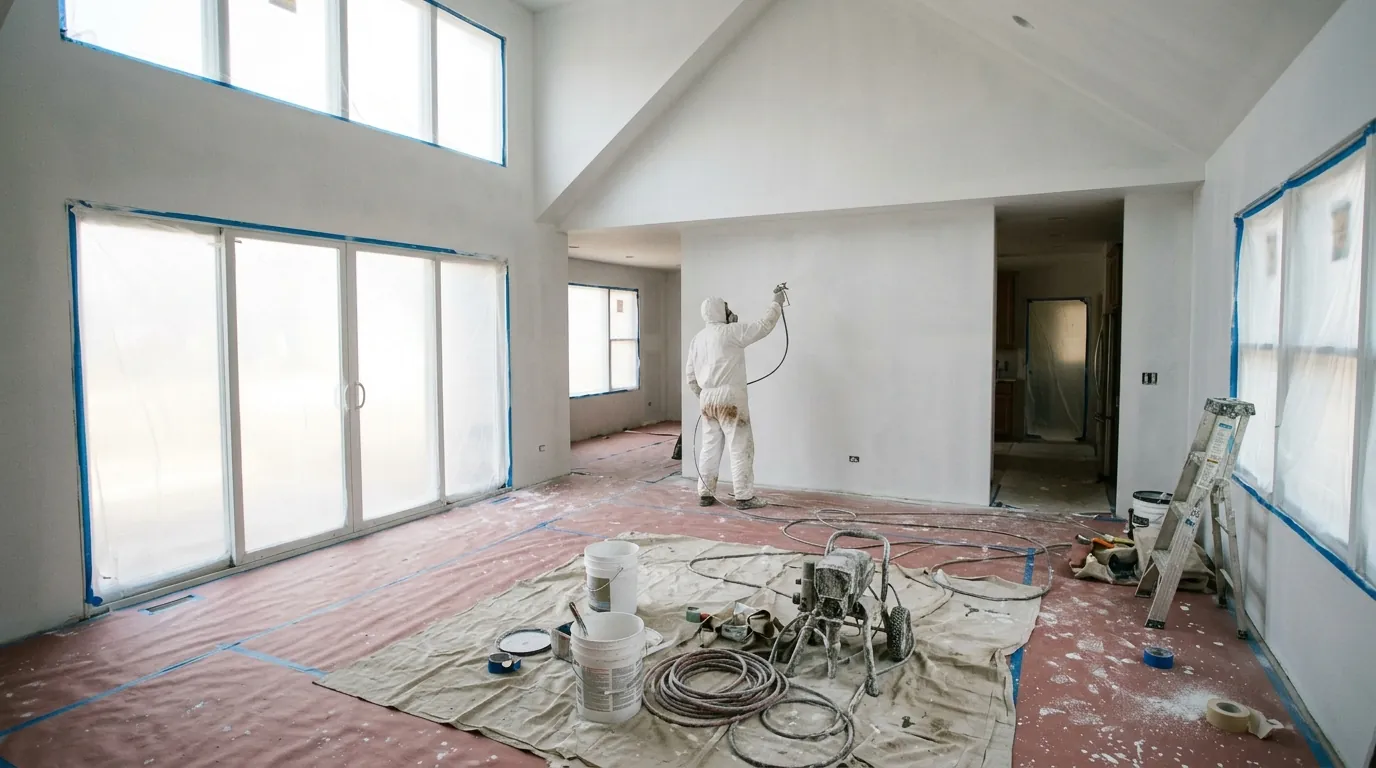
Spraying primer is the fastest and most even way to seal a large area of new drywall. Floors, windows and electrical boxes are masked, the primer goes on in one pass, and once dry it shows up any seams or sanding marks that need another skim. We point those out to the drywall finisher before the finish coats, while the fix is still cheap, rather than painting over defects that will show in every raking light for years. Outlets, switches and fixtures go in after the primer, so they stay clean.
Additions and Finished Basements
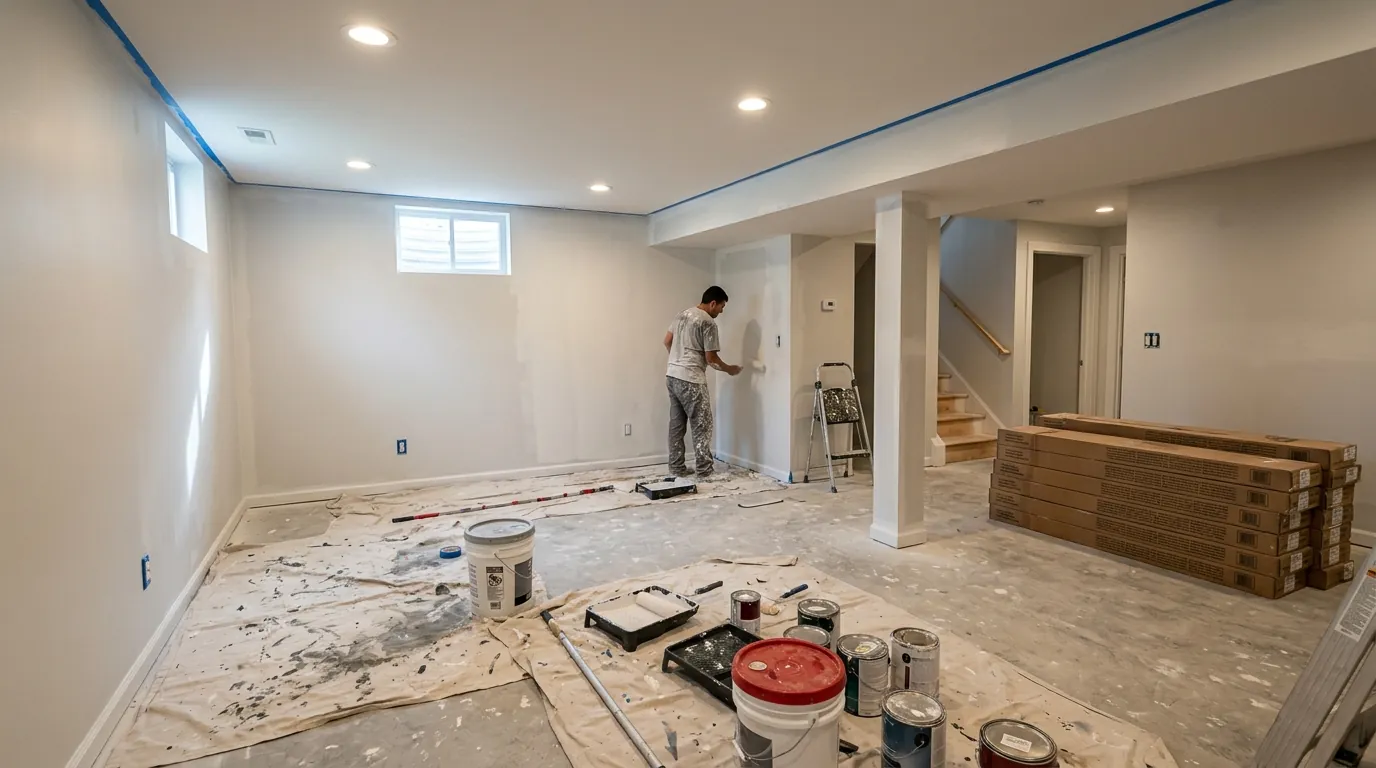
Additions and newly finished basements join new drywall to the existing house, and the color and sheen have to match across that line. We prime the new work, then carry the finish coats to a natural break in the old space, such as a corner or a doorway, so the transition does not show. In basements we keep low light in mind when choosing sheens and colors, and coordinate around the flooring installer. Ceilings in new spaces get the same white as the rest of the house.
Painting After a Remodel
Kitchen and bath remodels leave a mix of new drywall patches, moved outlets and scuffed existing walls. We treat the patched areas as new drywall, priming them before any color, and repaint whole walls rather than spot-painting, since old and new paint rarely match. If cabinets or counters are already installed, they are covered before we start. A short punch list at the end catches the nicks left by the other trades. Any leftover paint is labeled by room and left with you for future touch-ups.
New work in an established city
On the District 203 side of Naperville only about 11 percent of homes were built in 2000 or later, while about 71 percent date from 1970 to 1999. So most new-construction painting here is not a brand-new subdivision; it is additions, finished basements and gut remodels inside houses that are thirty to fifty years old, where fresh drywall has to sit next to original walls without looking like a patch.
How a new-construction job runs
- 1
Set the sequence
Painting visits agreed with the builder or with you.
- 2
Mask and prime
Drywall primer sprayed or rolled on every new surface.
- 3
Flag defects
Seams and sanding marks reported before finish coats.
- 4
Ceilings and walls
Finish coats in the agreed order around other trades.
- 5
Trim and punch list
Trim, doors and touch-ups after the finish trades.
Where painting fits in the build schedule
On most projects painting happens in two passes. The first comes right after drywall finishing: primer on everything and finish coats on ceilings, before flooring and cabinets arrive. The second comes after the finish trades: wall finish coats, trim, doors and a final touch-up of their nicks. Planning both visits at the start keeps the painter from becoming the trade everyone waits on.