Updated October 2026
The short version
Painting vinyl siding in Naperville, IL works when the color is vinyl-safe, meaning a shade no darker than the original or one from a maker's vinyl-safe list, so panels do not absorb heat and warp. Aluminum siding needs its chalky surface washed off first. Exterior painting here runs from late April into October.
When painting siding makes sense
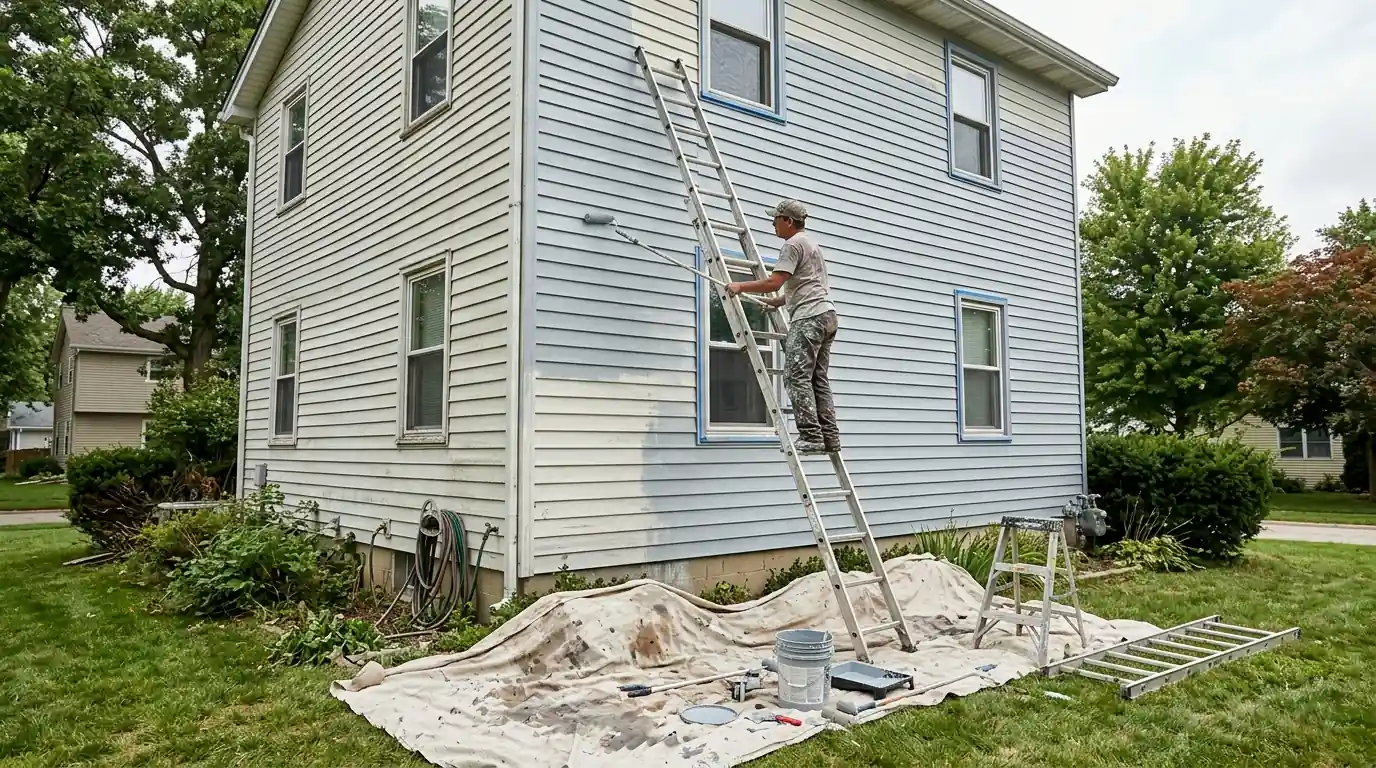
Vinyl and aluminum siding were sold as never needing paint, and for the first fifteen or twenty years that is mostly true. After that the color fades unevenly, aluminum turns chalky, and a house that is structurally fine looks tired. Painting fixes the look for a fraction of what new siding costs, as long as the panels are still flat and firmly attached.
The catch with vinyl is heat. Dark colors absorb sunlight, and vinyl softens and warps when it gets too hot. Paint makers publish vinyl-safe color lists for exactly this reason; Sherwin-Williams' VinylSafe range is one example. We choose from those lists, or stay at or lighter than the original color.
Vinyl, aluminum or hardboard: what changes
| Siding | Main prep step | Watch out for |
|---|---|---|
| Vinyl | Wash and rinse, no sanding | Colors darker than the original can warp panels |
| Aluminum | Wash off the chalk, bonding primer | Dents and loose panels show more once painted |
| Hardboard or fiber cement | Scrape, prime bare edges, caulk | Swollen hardboard edges need replacing first |
What moves the price of painting siding
Siding is priced like any exterior: by the wall area, the height and the prep.
- Wall area and the number of stories
- Chalky or mildewed surfaces that need extra washing
- Loose panels, dents and damaged trim to fix first
- Body color plus trim and door colors
- Ladder access over decks, roofs and landscaping
Vinyl-Safe Colors
Choosing the color is the real decision on vinyl. Going lighter is always safe; going darker needs a paint formula made for vinyl and a color from that formula's approved list. We bring the list to the estimate, so you choose from shades that will not overheat on a south or west wall in an Illinois July. If your HOA has its own approved palette, we cross-check it against the vinyl-safe list and show you which colors appear on both before anything is ordered.
Chalking Aluminum Siding
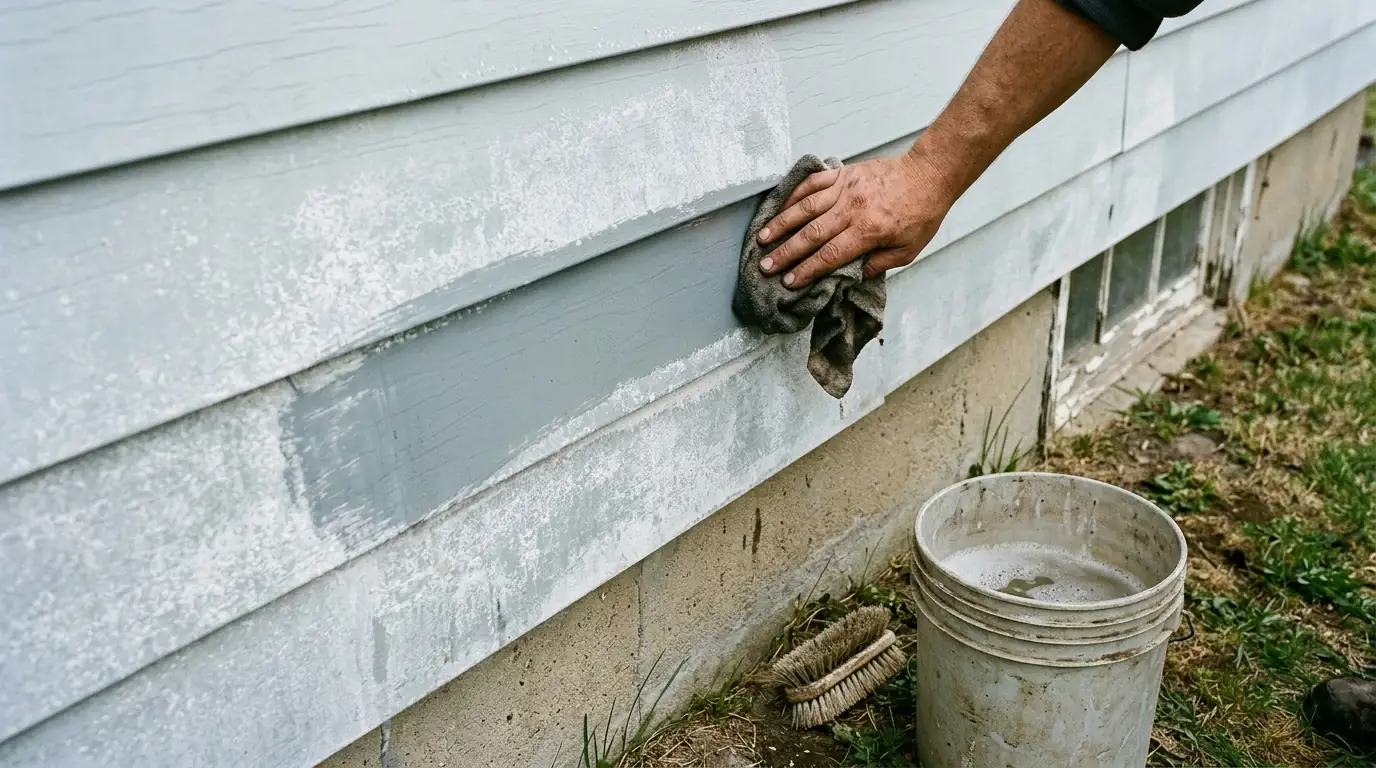
Rub your hand on old aluminum siding and it comes away white: that chalk is the factory coating breaking down, and paint will not stick to it. We wash it off thoroughly, let the siding dry, apply a bonding primer where bare metal shows, and then two coats of exterior acrylic. Done that way, aluminum takes paint very well, often better than vinyl. Dents stay visible under new paint, so we point out panels worth replacing before we start rather than after.
Hardboard and Fiber Cement
Some 1980s and 1990s houses here have hardboard or fiber cement lap siding instead of vinyl. Both are paintable and often were painted from the start. Hardboard needs its bottom edges checked for swelling, since soaked boards will not hold paint; we replace those boards first and prime every cut edge. Fiber cement mostly needs washing, caulking at the joints and fresh paint, and it holds a dark color without the heat problems vinyl has. Every replaced board is listed on the estimate.
Booking siding around Naperville's freeze dates
O'Hare averages its last spring freeze around April 23 and its first fall freeze around October 13, and the colder outlying suburbs can see one near October 3. Siding paint needs mild days and nights above freezing to cure, so we book siding from late April through early October and front-load the south and west walls, which fade the most, into the warmest part of that window.
What is included in a siding paint job
- Low-pressure wash of every wall
- Loose panels refastened
- Caulking at trim and corners
- Primer on chalky or bare spots
- Windows, fixtures and plants protected
- Two coats of exterior acrylic
- Trim and doors in their own colors
- Cleanup of the yard each day
How a siding job runs
- 1
Pick the color
From a vinyl-safe list, or lighter than the original.
- 2
Wash and dry
Chalk, dirt and mildew off; a full day to dry.
- 3
Repair and prime
Loose panels fixed, bare and chalky spots primed.
- 4
Two coats
Body first, then trim, then doors.
- 5
Walk the house
We circle it with you and touch up what you mark.
Signs your siding is ready for paint
Chalk on your hand
Aluminum that leaves white powder has lost its original coating.
Uneven fading
South and west walls lighter than the north side of the house.
Peeling on painted siding
Siding painted before that is now flaking needs scraping and priming.
Green streaks on shaded walls
Mildew on north walls has to be washed off before any paint.