Updated October 2026
The short version
Painting a fireplace in Naperville, IL starts with one decision: paint, which covers the brick completely, or limewash, which soaks in and lets the brick read through. Either way the brick is cleaned of soot first. The face around the opening gets a heat-tolerant masonry product, and the inside of the firebox is never painted.
What painting a brick fireplace involves
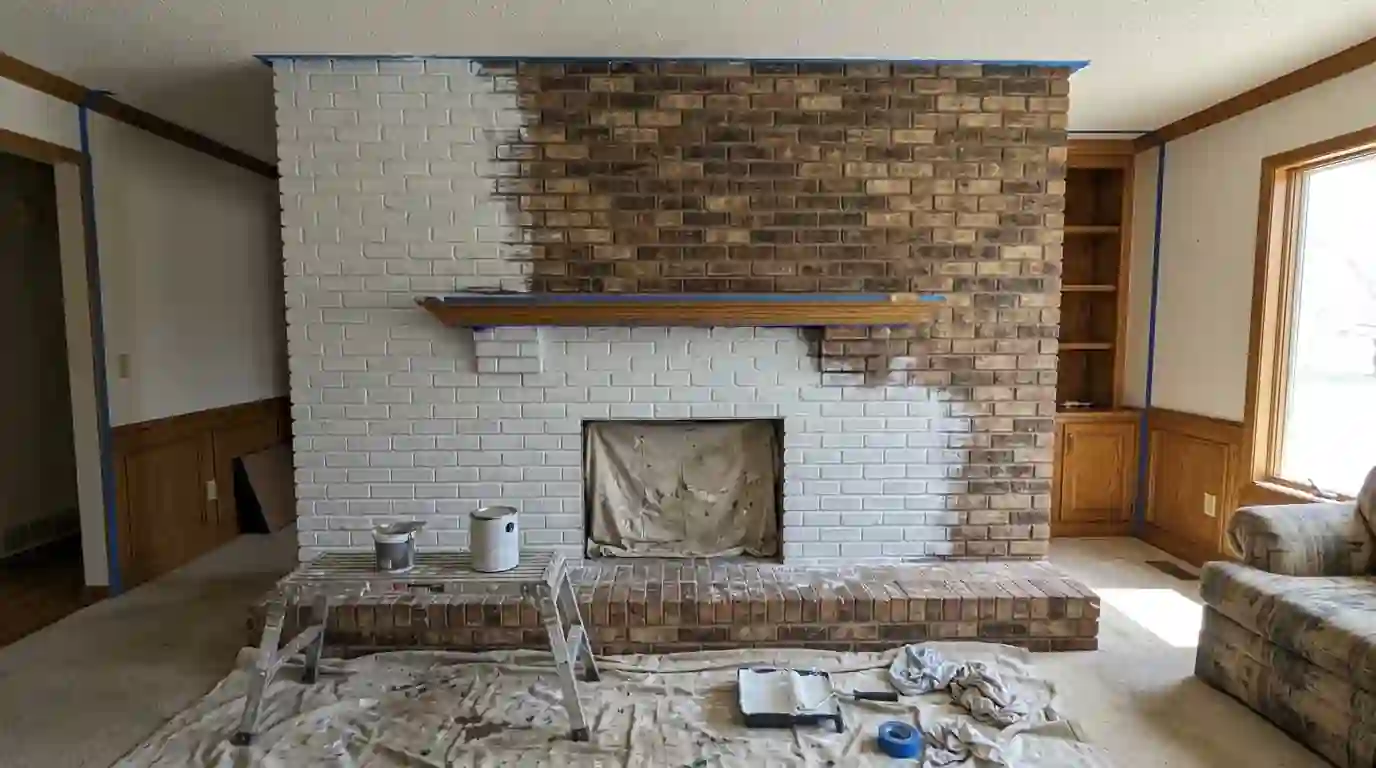
Brick looks solid but behaves like a sponge. It holds soot, smoke film and sometimes white salt deposits called efflorescence, and paint fails on all three. So the first visit is cleaning: a degreasing masonry cleaner, a stiff brush and enough dry time before anything goes on.
After that the job is straightforward. Paint goes on over a masonry primer in two coats, worked into the mortar joints with a brush. Limewash goes straight onto clean, unpainted brick in thin coats. The mantel is a separate piece of woodwork: sanded, primed and finished in enamel.
Paint, limewash or leave the brick
| Option | How it looks | Good to know |
|---|---|---|
| Paint | Solid, even color | Permanent in practice; removing it later is a stripping job |
| Limewash | Soft, chalky, brick still shows | Only on brick that has never been painted |
| Clean and seal only | The brick you have, brighter | Cheapest; does not change the color |
What changes the price of a fireplace job
Fireplace work is usually priced as one job rather than by the square foot, because setup and cleaning take as long as the coating.
- The size of the brick face, floor to ceiling or a short surround
- How much soot and smoke staining has to come off
- Brick that was already painted and is now peeling
- Repairs to a cracked or split wood mantel
- Whether the hearth is included
Painting a Brick Fireplace
Paint gives the cleanest change: a dark red or orange brick wall turns into one even color that matches the room. We use a masonry primer and a heat-tolerant finish on the face, brushed into every mortar joint so no red shows in the lines up close. Satin or matte reads like a finished wall; gloss on brick shows every bump and chip. White and warm grays are the usual choices, and we test a patch near the floor first so you can judge it in your own light.
Limewash on Fireplace Brick
Limewash is mineral, not a paint film, so it soaks into the brick and dries chalky and slightly uneven, which is exactly the look people want from it. It only works on brick that has never been painted, because it needs bare masonry to bond to. Two or three thin coats build the depth you choose, and more brick shows through with fewer coats. It can be partly washed back while wet for a worn look, and over the years it softens rather than peels.
Wood Mantels and Surrounds
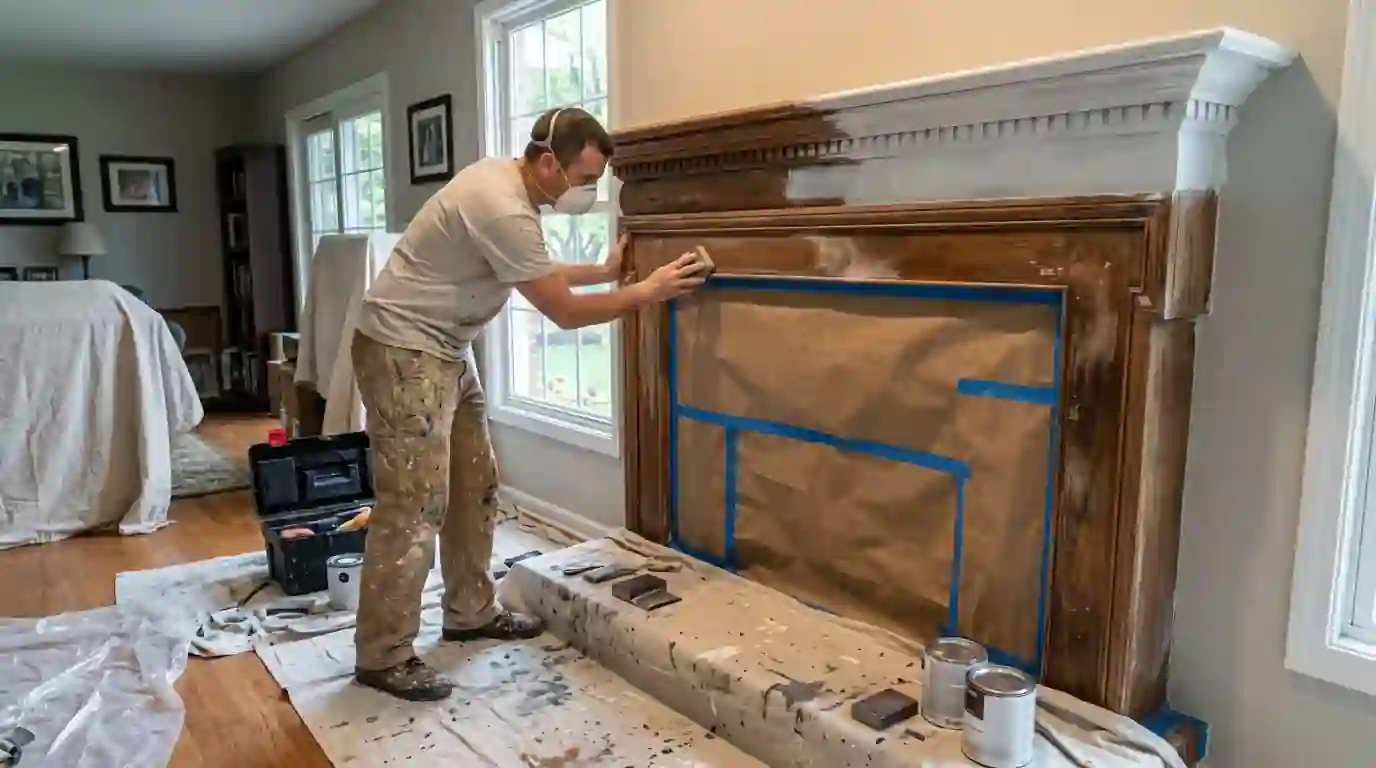
Many fireplaces from the 1990s have an oak or pine mantel shelf with side legs. We sand them, fill splits and nail holes, prime and finish in enamel to match the room's trim, or restain if you would rather keep the wood. The mantel is masked off from the brick so each surface gets its own product, and the shelf gets the hardest enamel since it holds candles, frames and holiday decorations. Gas fireplace surrounds get the same care, with the glass and controls covered.
Fireplaces in Naperville family rooms
At the 2000 census Naperville's median home was built in 1986, and that era of family room very often centers on a wood-burning or gas fireplace with a brick face. Thirty years of fires leave soot deep in the brick above the opening, so in these rooms we plan the cleaning as a full step of its own rather than a quick wipe before primer.
How we paint a fireplace
- 1
Protect the room
Floor, hearth and nearby walls covered; the firebox opening sealed off.
- 2
Clean the brick
Degreasing cleaner and brushing, then full dry time.
- 3
Prime or wet the brick
Masonry primer for paint, a light misting for limewash.
- 4
Coat the brick
Two coats brushed into the joints, or limewash in thin layers.
- 5
Finish the mantel
Sanded, primed and enameled or restained.
Doing it yourself: what to watch
A fireplace is a common weekend project. Three things decide whether it lasts.
Doable for a careful homeowner
- A short brick surround with little soot
- Paint, not limewash, over a masonry primer
- Brushing every mortar joint by hand
Where it tends to fail
- Paint over soot, which peels near the opening
- Limewash over old paint, which will not bond
- Wall paint on the face, which discolors with heat