Updated October 2026
The short version
Most professionally applied exterior paint jobs last about 5 to 10 years. Published ranges put painted wood siding at about 3 to 7 years, vinyl and aluminum at about 5 to 10, and painted brick much longer. Stained decks need a fresh coat about every two to three years. Sun, moisture and prep decide where your house lands.
Typical repaint cycles by surface
Published guidance from painting companies and home guides lines up reasonably well. Treat these as typical ranges, not promises:
| Surface | Typical range | Source |
|---|---|---|
| Most professional exterior jobs | About 5-10 years | CertaPro |
| Painted wood siding | About 3-7 years | Hunker |
| Vinyl and aluminum siding | About 5-10 years | Hunker |
| Painted wood in a Midwest climate | About 3-6 years; stained about 4 | CertaPro Twin Cities East |
| Painted brick | Ranges widely, up to 15-20 years | CertaPro Twin Cities East |
| Stained decks | Restain every 2-3 years | HomeLight |
What shortens paint life
- Sun. South and west walls fade and chalk well before the shaded sides.
- Moisture. Shaded, damp walls grow mildew, and water behind the paint pushes it off.
- Prep. Paint over chalk, dirt or failing paint is the most common cause of early failure.
- Caulk and joints. Once caulk cracks, water gets into the wood behind the film.
- Coverage. One thin coat rarely lasts as long as two full ones.
Cedar and stained wood
Stain wears differently from paint. Penetrating and semi-transparent stains fade rather than peel, so they need recoating more often but are simpler to renew. Solid stains last longer on weathered wood but can peel if applied thickly. Cedar shakes on sunny walls usually need attention first.
Trim usually goes first
Even when the siding still looks fine, trim, sills and the bottoms of doors and garage frames tend to fail sooner. They hold water on flat surfaces and end grain, and they are where caulk joints open first. A trim-only repaint between full jobs, with any soft wood repaired, often buys the siding several more years.
Watch the joints where trim meets siding and the outer edges of window sills each spring; that is where the next repaint usually starts.
Brick: painted or limewashed
Painted brick can hold up for many years when a breathable masonry paint goes on clean, dry brick. Limewash on unpainted brick can outlast film-forming paint, because it wears gently instead of peeling, and touch-ups are simple.
Signs it is time
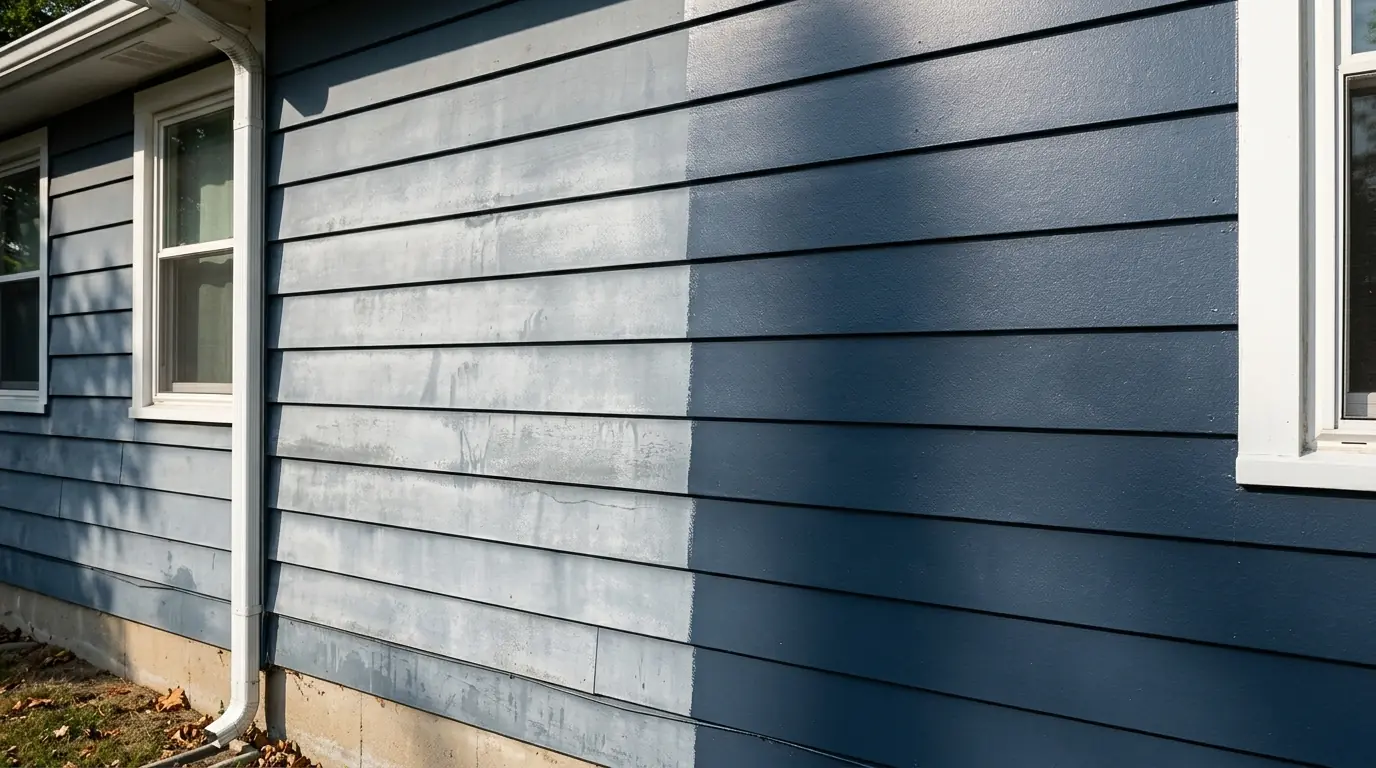
- Chalk on your hand when you rub the siding.
- Fading that is clearly worse on sunny walls.
- Peeling or cracking, especially at trim joints and the bottoms of boards.
- Bare wood showing on sills, rails or trim.
- Caulk that has split or pulled away.
Catching these early usually means a lighter, cheaper repaint, because there is less scraping and repair.
How to stretch the time between repaints
Wash the house once a year to remove grime and mildew, keep gutters flowing so water does not sheet down the walls, trim shrubs away from the siding and recaulk joints as they open. Small touch-ups on trim and sills between full repaints keep water out of the wood.
Written by Gloria Fenwick, Painting Guides Editor at Call Tip Top. Figures in this guide come from the published sources listed below and are checked when those sources update.
Sources used in this guide: