Updated October 2026
The short version
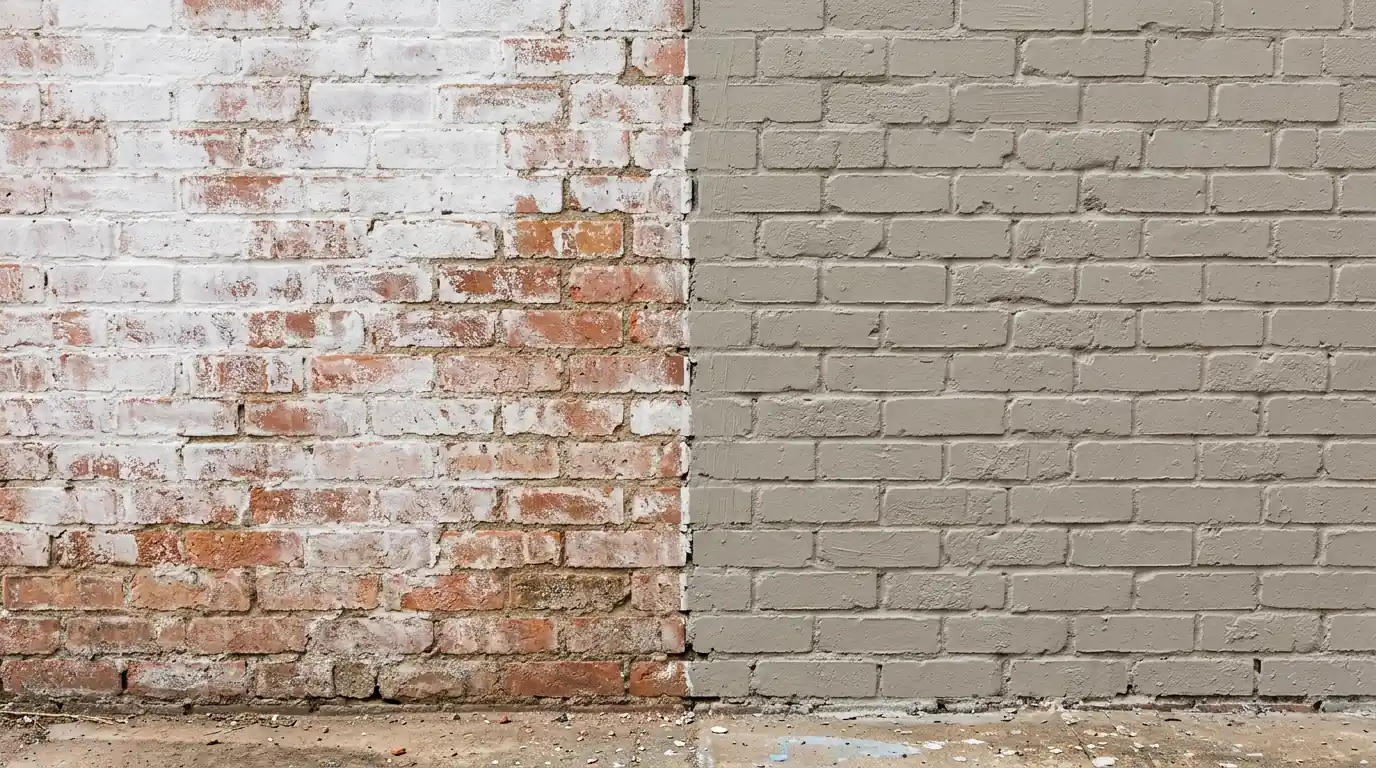
Limewash suits unpainted brick when you want a soft, mineral look that weathers gradually; masonry paint suits brick that has been painted before or when you want a solid color. Angi puts professional limewash at about $1.50-$5 per square foot, and HomeAdvisor puts painting brick at about $1.40-$4.20 per square foot.
The one rule that decides it
Limewash only works on brick that has never been painted. It needs bare masonry to soak into, and on unpainted brick it can last far longer than a film-forming exterior paint, wearing down gently instead of peeling. Once brick has been painted, limewash is off the table, and the choice becomes which breathable paint to use.
Limewash and masonry paint side by side
| Question | Limewash | Masonry or mineral paint |
|---|---|---|
| Look | Soft, chalky, brick texture shows | Solid color, flat to low sheen |
| Works on | Unpainted brick only | Unpainted or previously painted brick |
| Breathability | Very high; it is mineral | High, if a breathable product is chosen |
| How it ages | Wears gradually, no peeling | Holds color; can peel if moisture is trapped |
| Undoing it | Partly washable soon after | Hard to remove |
What published prices say
Angi's figure for professional limewash runs about $1.50-$5 per square foot, and HomeAdvisor's figure for painting brick runs about $1.40-$4.20 per square foot. The ranges overlap, so the decision usually comes down to the look you want and whether the brick has been painted before, not the price.
Prep matters more than the coating
Either way, the brick is washed, loose mortar is repointed and white efflorescence is cleaned off first. Efflorescence means water is moving through the wall, and that has to be addressed, or any coating will fail. The wall then needs to dry before limewash or primer goes on.
Choosing the color
Brick reads differently in different light. A soft white limewash that looks warm on a south wall can look gray on a north one, and a greige paint can turn green next to certain roof colors. The only reliable test is a sample panel on your own brick, ideally on a sunny wall and a shaded one, checked in morning and evening light.
With limewash, the color also depends on how much brick you let show. A thin coat wiped back while wet lets the red come through; two full coats look almost solid. Decide how much brick you want to see before the work starts, because it is easy to add coverage later and hard to take it away.
Inside: brick fireplaces
The same logic applies to an interior fireplace surround. Unpainted brick can take a limewash for a softer look; painted brick gets a masonry primer and paint. Near the firebox opening, use only products rated for the heat.
Approvals before a big change
A whole-house brick color change is one of the biggest visual changes a home can make. Many Naperville and Plainfield homes fall under HOA or historic guidelines where exterior colors go to a committee first, and in the Naperville Historic District most exterior alterations need a Certificate of Appropriateness. Check before you test colors on the wall.
Written by Gloria Fenwick, Painting Guides Editor at Call Tip Top. Figures in this guide come from the published sources listed below and are checked when those sources update.
Sources used in this guide: