Updated October 2026
The short version
For homes built before 1978, EPA's Renovation, Repair and Painting rule requires anyone paid to disturb painted surfaces to be certified and to use lead-safe work practices. Inside the home, the rule covers jobs that disturb more than six square feet of lead paint. About three-quarters of pre-1978 US homes still contain some lead-based paint, so the build year is the first question for any older house.
Why 1978 is the line
Lead-based paint was banned for residential use in 1978, but it did not disappear from older houses; it was painted over. EPA estimates that about three-quarters of US homes built before 1978 still contain some lead-based paint, often buried under several newer coats on trim, windows, doors and porches.
Intact paint under newer layers is not the main hazard. The risk comes when it is disturbed: dry scraping, sanding and heat create fine dust and chips that settle on floors, window sills and soil, where children and pets pick them up.
What the rule requires of painters
EPA's Renovation, Repair and Painting rule applies to anyone paid to disturb painted surfaces in a pre-1978 home. The firm must be certified, the work must be supervised by a certified renovator, and the crew must follow lead-safe work practices. Inside the home, the rule covers work that disturbs more than six square feet of lead paint, which a single room's worth of trim scraping easily passes.
What lead-safe work looks like
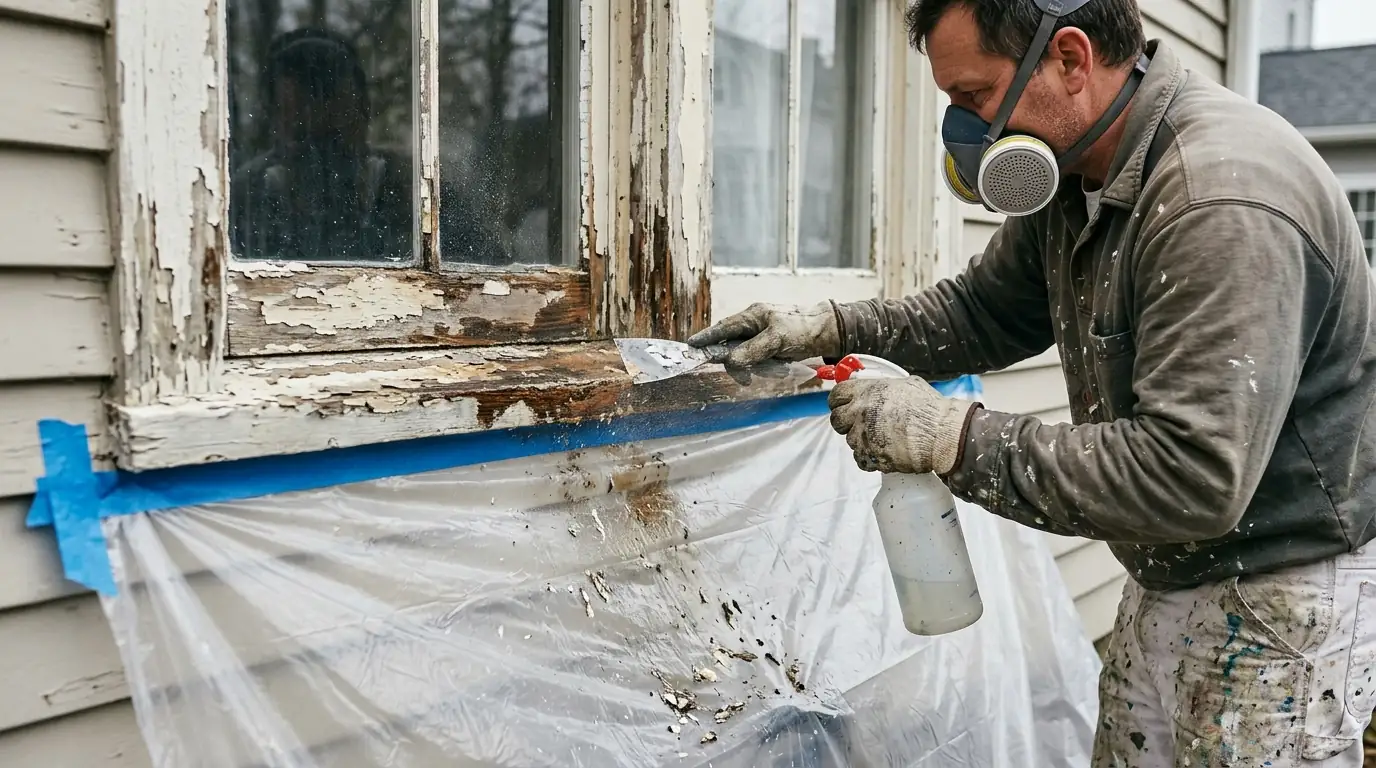
EPA sums up lead-safe work as three steps: contain the work area, minimize dust and clean up thoroughly. On a real job that looks like this:
- Plastic sheeting on floors and over doorways inside, and on the ground below the work area outside.
- Signs and closed-off rooms so family members and pets stay clear.
- Misting surfaces and scraping by hand rather than dry sanding or burning paint off.
- HEPA vacuums for dust, and wet cleaning of every horizontal surface afterward.
- Debris bagged, sealed and removed, and a final check that the area is clean.
How it changes your estimate and schedule
Lead-safe work adds setup, containment and cleanup to every area where paint is disturbed, so expect it to show up in the estimate and the schedule for an older home. That is a good sign: a quote for scraping a pre-1978 exterior that never mentions containment or cleanup is a quote to question.
How common is this around Naperville?
Less common than in older cities, but far from rare. In the Naperville CUSD 203 area, about 17.6 percent of housing structures were built before 1970, and at the 2000 census the city's median year built was 1986. Downtown blocks, older neighborhoods and many nearby river towns have plenty of houses old enough for the rule to apply.
What homeowners should not do themselves
The rule covers paid work, but the dust is just as harmful when homeowners make it. If you are preparing an older house yourself, avoid dry sanding, power sanding without dust collection and heat guns on old paint, and keep children and pregnant family members away from the work. When in doubt, test first or leave the scraping to a certified firm.
Written by Gloria Fenwick, Painting Guides Editor at Call Tip Top. Figures in this guide come from the published sources listed below and are checked when those sources update.
Sources used in this guide: