Updated October 2026
The short version
The Naperville Historic District, created in 1986, covers roughly 320 to 350 structures, and owners need a Certificate of Appropriateness before most exterior alterations. Check with the City of Naperville before changing exterior colors or materials, plan lead-safe prep for old paint, and repair original wood rather than replacing it where you can.
What the district is
Naperville's local Historic District was created in 1986 and covers roughly 320 to 350 structures near downtown. Its houses span several eras and styles, including Greek Revival and Italianate homes, and the point of the district is to keep that character intact as houses are maintained and updated.
The Certificate of Appropriateness
Owners in the district need a Certificate of Appropriateness before most exterior alterations. Whether a repaint needs one, and what the review looks at, is a question for the City of Naperville, so ask before you book: a change of colors or materials is the kind of exterior change a review is meant to see, while keeping what is there tends to be simpler.
If a review is needed, apply before the work is scheduled, with color names and numbers, product information and photos of the house. Painting first and asking later risks repainting.
Planning the job around a review
Build the review into the schedule rather than the other way around. Choose colors and test samples on the house first, assemble the application, and book the start date once you know when a decision is expected. Prep that does not change the house's appearance, such as washing or wood repair in kind, can sometimes be planned around the review, but ask the city before starting anything visible.
Keep copies of the approved colors and products with the house records. The next repaint, years from now, will be much simpler when the approved scheme is already on file.
Choosing colors for a historic house
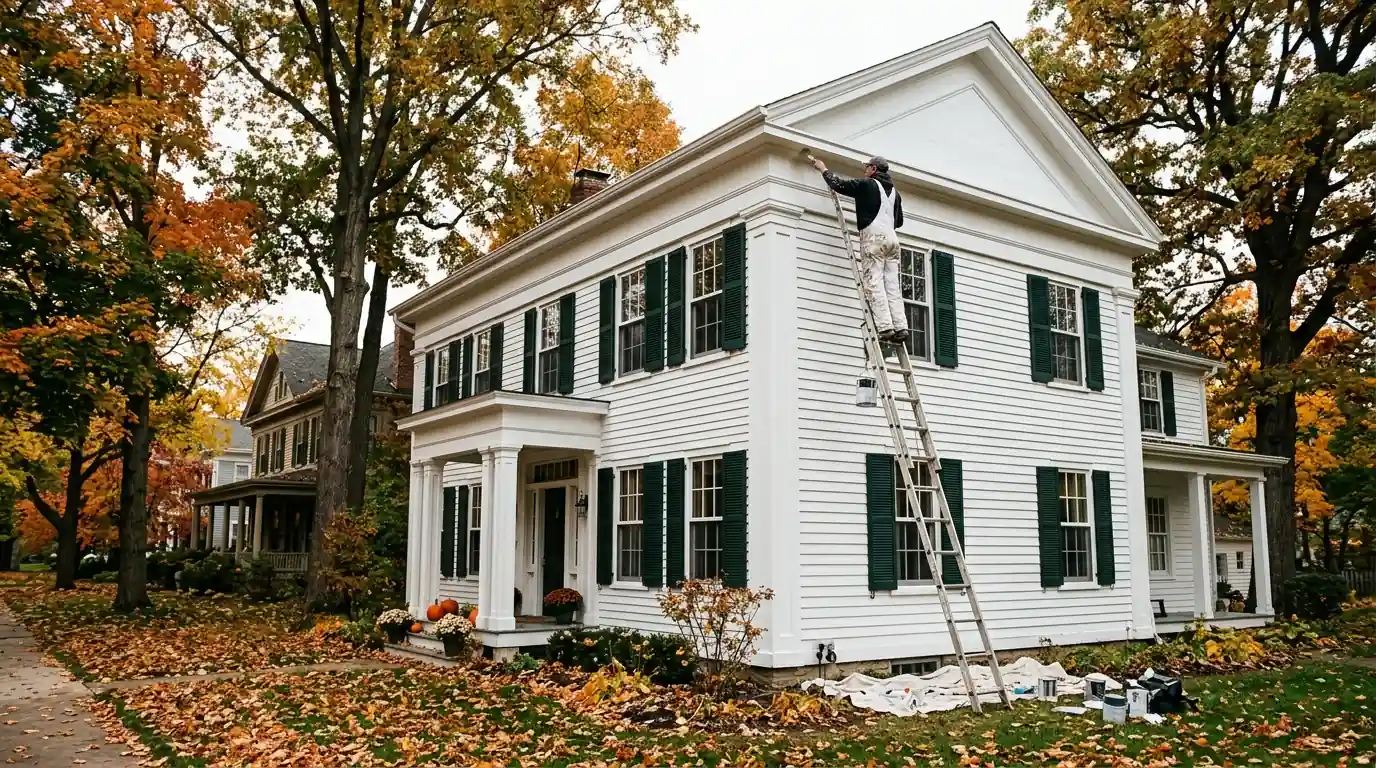
Color schemes that suit a house usually follow its era. Greek Revival houses are often light-bodied with dark shutters and doors; Italianate houses can carry richer body colors with contrasting trim to show off their brackets and window hoods. Whatever you choose, test large samples on the house in daylight, and bring photos of the samples to any review.
Old paint means lead-safe prep
Nearly every house in a historic district predates 1978, so the exterior almost certainly has old paint layers. EPA's Renovation, Repair and Painting rule requires anyone paid to disturb that paint to be certified and to use lead-safe work practices: containment on the ground, misting and hand scraping instead of dry sanding, and careful cleanup.
Repair the wood, do not replace it
Original siding, trim, sills and porch parts are a big part of a historic house's character, and much of it is old-growth wood that repairs well. Small soft spots can be consolidated and rebuilt with epoxy; larger rot can be cut out and spliced with matching profiles. Replacing whole elements is the last resort, and in the district it may itself need review.
Gentle cleaning
High-pressure washing can drive water into old wood and gouge soft clapboards. Historic exteriors are better washed with low pressure and a mild cleaner, then left to dry fully before scraping and priming.
Written by Gloria Fenwick, Painting Guides Editor at Call Tip Top. Figures in this guide come from the published sources listed below and are checked when those sources update.
Sources used in this guide: